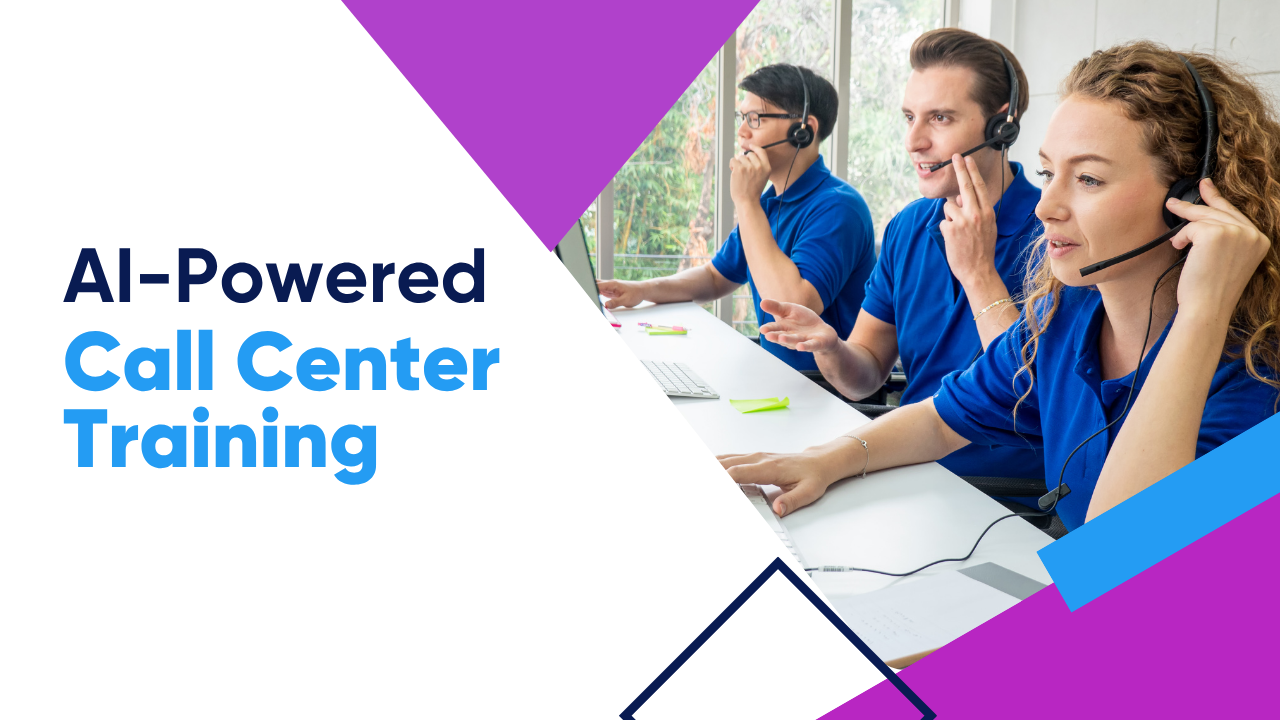
Customers today expect more than just scripts – they want to be able to communicate effectively and empathize with one another. A new generation of AI-powered training tools is reshaping how contact centers develop high-performing teams today.
AI enables training to be more adaptive, data-driven, and impactful through real-time coaching and personalized feedback. Learn how AI can enhance customer experience and boost team performance in Call Center Training.
Why AI-Powered Call Center Training Matters
Traditional training methods — workshops, manuals, and one-time sessions — often fail to keep up with changing customer expectations. AI changes that by offering continuous learning experiences.
With AI tools, you can:
- Monitor performance in real-time
- Identify skill gaps instantly
- Deliver personalized feedback
- Simulate real-world conversations
The result? Faster onboarding, better retention, and more confident agents ready to handle any situation.
1. Personalized Learning Paths for Every Agent
No two agents learn the same way. AI analyzes an individual’s strengths, weaknesses, and performance data to create personalized learning paths.
This ensures:
- New agents get focused onboarding support
- Experienced agents receive targeted upskilling
- Every team member learns at their own pace
Example: AI can detect an agent’s recurring struggle with empathy during calls and suggest modules or simulations focused on emotional intelligence.
2. Real-Time Feedback and Coaching
Imagine having a digital coach that listens, evaluates, and guides — all in real time. AI systems can now analyze live conversations and provide instant suggestions to agents.
For example:
- Highlighting missed upselling opportunities
- Flagging compliance issues
- Suggesting tone adjustments to improve customer satisfaction
This immediate feedback loop helps agents learn by doing, resulting in faster skill mastery and improved performance.
3. Interactive Voice Simulations For Call Center Training
AI-driven voice simulation platforms allow agents to practice conversations in realistic, risk-free environments. These simulations mimic customer emotions, accents, and scenarios to help agents build confidence before handling real calls.
Benefits:
- Safe space to practice soft skills
- Exposure to diverse customer types
- Improved communication and problem-solving
Such immersive experiences are proven to enhance call handling quality and first-call resolution rates.
4. Gamification for Engagement
Training doesn’t have to be boring. AI can gamify call center training with challenges, leaderboards, and rewards — turning routine learning into a fun, competitive experience.
Gamification encourages:
- Higher participation rates
- Friendly competition among agents
- Long-term retention of key skills
A motivated team is a productive team, and AI ensures learning stays both exciting and rewarding.
5. Predictive Analytics for Performance Improvement
AI uses predictive analytics to forecast performance trends. For example, if data shows a pattern of long call durations, AI might identify underlying training gaps in product knowledge or communication style.
By acting proactively, managers can implement targeted training interventions before small issues become major problems.
6. Data-Driven Quality Assurance For Call Center Training
Gone are the days of manually reviewing call recordings. AI automates Quality Assurance (QA) by analyzing every call for tone, sentiment, and accuracy.
This means:
- 100% of calls can be reviewed (not just samples)
- Bias-free evaluations
- Consistent scoring and feedback
QA insights can then be integrated back into the training program — making it smarter and more personalized over time.
7. Continuous Learning Through Microlearning
Instead of long, draining sessions, AI can deliver bite-sized microlearning modules directly to agents based on performance data.
For instance, after an agent struggles with handling irate customers, the system might assign a short, focused module on de-escalation techniques.
Microlearning ensures continuous growth without interrupting daily workflows.
8. Sentiment and Emotion Analysis
AI tools analyze tone, pacing, and word choice to understand how customers feel during interactions. This sentiment analysis helps identify empathy gaps and areas for emotional intelligence training.
Over time, agents learn to adapt their communication style — improving overall customer satisfaction (CSAT) and brand loyalty.
9. Seamless Integration with LMS and E-Learning Platforms
Modern AI-powered call center training solutions integrate effortlessly with existing Learning Management Systems (LMS) and E-Learning platforms.
This means organizations can continue using their preferred tools — while AI adds layers of automation, personalization, and analytics for a more robust training ecosystem.
10. Building a Culture of Continuous Improvement
AI doesn’t just improve individual agents — it transforms organizational culture. By making feedback and learning a daily habit, teams become more proactive, adaptable, and growth-oriented.
This continuous learning approach helps businesses:
- Keep agents updated on new technologies and policies
- Maintain high morale
- Deliver consistent, top-tier customer service
How Vocaliv’s AI Coach Transforms Call Center Training
Vocaliv’s AI Coach is designed to make learning smarter and performance-driven. It empowers call center teams through:
- Interactive AI simulations
- Automated skill assessments
- Personalized coaching insights
- Real-time performance analytics
Whether you’re an L&D manager or training consultant, Vocaliv helps you streamline and supercharge your Call Center Training program.
FAQs
1. How is AI used in call centers?
AI is used in call centers to automate customer interactions, analyze conversations for insights, provide real-time agent assistance, and enhance customer experience through chatbots and voice analytics.
2. Can AI replace human trainers in call centers?
No. AI enhances trainers’ capabilities by handling repetitive tasks and data analysis, allowing human trainers to focus on strategy and mentorship.
3.How long is call center training?
Call center training typically lasts 2 to 6 weeks, depending on the company, role complexity, and products or services being supported.
4. What is the best training for call center agents?
The best training for call center agents includes communication skills, product knowledge, customer service techniques, and AI-powered tools like Vocaliv for interactive, performance-based learning.
Ready to Transform Your Call Center Training?
Empower your call center agents with smarter, AI-driven learning.
Explore how Vocaliv’s AI Coach can help you build high-performing, customer-focused teams that thrive in today’s digital-first world.