
Health and Safety Training Courses in Dubai You Shouldn’t Miss

Health and safety training courses in Dubai include HSE core training, NEBOSH and IOSH certifications, fire safety, hazardous materials handling, emergency preparedness, risk assessment, and work at height programs. These courses are governed by UAE regulatory bodies including KHDA and Dubai Civil Defense, and they are mandatory across construction, oil and gas, manufacturing, and logistics sectors. Delivery timelines typically range from one day to eleven days depending on certification level. If your training company operates in the UAE, you already feel what the market demands: faster builds, faster updates, faster deployment. A regulation shift. A client needs compliance training by next week. The brief is ready, but the program is not. This guide covers what’s actually driving the demand for occupational health and safety training in Dubai, which courses matter most right now, and how forward-thinking providers are cutting delivery time from weeks to days using AI. What Is Health and Safety Training in Dubai? Health and safety training in Dubai refers to structured learning programs that equip employees and organizations with the skills, knowledge, and certifications required to meet UAE and international occupational health and safety (OHS) standards. These programs range from foundational HSE awareness courses to advanced qualifications such as NEBOSH diplomas and ISO lead auditor certifications. In Dubai, health and safety training is regulated primarily by the Knowledge and Human Development Authority (KHDA), the Dubai Civil Defense (DCD) for fire-specific programs, and internationally by bodies including NEBOSH, IOSH, OPITO, and OSHA. Courses may be delivered in classroom, blended, or fully online formats depending on the accrediting body’s requirements. Why Is Health and Safety Training Mandatory in Dubai? Health and safety training is legally required in Dubai because UAE Federal Law No. 8 of 1980 (Labour Law) and the UAE Occupational Safety and Health System framework require employers to protect workers from workplace hazards. Non-compliance can lead to fines, operational shutdowns, and loss of eligibility for contracts, especially in government-linked and enterprise procurement processes. HSE regulations in the GCC are updated frequently, particularly in high-risk sectors. When a new standard is issued, organizations must update their training programs and re-certify affected employees, often within tight deadlines. This creates consistent, recurring demand for training providers across the region. What Are the Most In-Demand Health and Safety Training Courses in Dubai? 1. HSE Core Training (Health, Safety & Environment) The baseline program for any workplace operating in the UAE. Covers hazard identification, risk assessment, incident reporting, PPE standards, and regulatory compliance across industries. Required for employee onboarding, contract renewals, and site entry across construction and industrial sectors. Who needs it: Safety officers, operations managers, site supervisors, facility management teams. 2. Fire Safety Training (DCD Approved) Mandatory across hospitality, commercial, and industrial facilities in Dubai. Delivered under Dubai Civil Defense standards. Programs range from fire warden certification to advanced suppression system management. 3. Hazardous Materials Handling Required for organizations working with chemicals, fuels, and industrial substances. Based on COSHH (Control of Substances Hazardous to Health) principles, adapted for GCC regulatory requirements. Industries: Oil and gas, manufacturing, pharmaceuticals, construction. 4. Emergency Preparedness and Business Continuity As GCC organizations prioritize resilience, emergency response training has shifted from optional to contractually required in many enterprise and government supplier agreements. Programs cover crisis protocols, evacuation planning, command structure, and post-incident recovery. 5. Risk Assessment and Incident Investigation Practical training focuses on identifying and controlling hazards before they escalate. Covers root cause analysis methodologies, corrective action frameworks, and safety culture development. 6. NEBOSH, IOSH, and OSHA Certifications Internationally recognized qualifications with high market demand in Dubai’s HSE job market. NEBOSH certifications are requested by more than 90% of HSE recruiters across the GCC. 7. Work at Height Safety Legally required for workers operating at elevated positions on construction, maintenance, and industrial sites. Covers fall prevention, PPE standards including harness fitting, and risk assessment for elevated work environments. Which HSE Certification Is Most Recognized in Dubai? NEBOSH (National Examination Board in Occupational Safety and Health) is the most widely recognized health and safety certification in Dubai and across the GCC. The NEBOSH International General Certificate (IGC) is the most commonly held qualification among HSE professionals in the UAE and is accepted across construction, oil and gas, manufacturing, and facility management sectors. IOSH Managing Safely is the most common entry-level certification, while OSHA 30-Hour is favored in American-aligned organizations and free zone businesses. How Long Does Health and Safety Training Take in Dubai? Course Duration Delivery Mode Governing Body NEBOSH International General Certificate 10–11 days Classroom / Blended NEBOSH (UK) IOSH Managing Safely 4 days Classroom / Online IOSH (UK) Fire Safety – DCD Approved 1–2 days Classroom Dubai Civil Defense Hazardous Materials (COSHH) 3–5 days Classroom KHDA / HABC Emergency Preparedness 1–3 days Blended KHDA / Highfield OSHA 30-Hour General Industry 4 days Classroom OSHA (US) Work at Height Safety 1 day Classroom / Practical IPAF / PASMA NEBOSH International Diploma 17+ days Classroom / Distance NEBOSH (UK) What Is the Difference Between NEBOSH and IOSH? NEBOSH is a deeper, examination-based qualification that assesses both knowledge and the practical application of health and safety management. It is internationally recognized across high-risk sectors and usually takes 10 or more days to complete. IOSH Managing Safely is a shorter, unit-based certification aimed at managers and supervisors who need to understand their safety responsibilities without becoming dedicated HSE professionals. It takes approximately four days and does not require a formal examination. For career-level HSE professionals in Dubai, NEBOSH is the standard. For team leaders and operations managers needing working-level awareness, IOSH is the more practical starting point. The Delivery Gap That Most Providers Don’t Talk About Here is what the course listings don’t say. When GCC regulations change, which happens several times a year across key sectors, training providers typically spend three to six weeks rebuilding programs. That’s three to six weeks of exposure for the client and three to six weeks for a faster competitor to win the renewal. The problem isn’t expertise. Trainers know the material. The
Why Cyber Security Staff Training Is Essential for UAE Companies
Cyber security staff training is essential for UAE companies because 80% of security breaches involve human error. With the UAE’s rapid digitalization and position as a regional business hub, untrained employees create vulnerabilities that cost millions in data breaches, regulatory penalties, and reputational damage. Training transforms staff from security risks into active defenders. The UAE’s digital transformation is accelerating at breakneck speed. From smart cities to cashless transactions, businesses across Dubai, Abu Dhabi, and beyond are embracing technology like never before. But here’s the uncomfortable truth: your most expensive firewall won’t save you if an employee clicks the wrong email link. Recent data shows that over 80% of security breaches involve human error. For companies operating in the UAE’s competitive landscape, especially those in AI, EdTech, SaaS, and e-learning sectors, this statistic should be a wake-up call. Cyber security staff training isn’t just an IT department concern anymore. It’s a business survival strategy. What Are the Real Costs of Untrained Staff for UAE Businesses? Untrained staff cost UAE businesses through three primary channels: immediate financial losses from breaches, regulatory penalties under UAE data protection laws, and long-term reputational damage that affects customer retention and acquisition. Financial Impact Breakdown Immediate costs include: Long-term costs include: Industry-specific risks: What Cyber Threats Specifically Target UAE Companies? UAE companies face five primary cyber threat categories: phishing attacks customized for regional business culture, social engineering exploiting multilingual workforces, ransomware targeting high-value intellectual property, insider threats from untrained employees, and supply chain attacks through third-party vendors. UAE-Specific Threat Landscape Threat Type How It Targets UAE Companies Risk Level Phishing Arabic/English bilingual scams mimicking UAE government, banks Critical Social Engineering Exploits diverse workforce, cultural communication norms High Ransomware Targets companies with valuable IP, low security maturity Critical Insider Threats Unintentional data sharing, weak password practices High Supply Chain Attacks Third-party vendor compromises, integration vulnerabilities Medium-High Why UAE is a prime target: What Should Cyber Security Staff Training Include? Effective cyber security staff training must cover seven core components: phishing recognition, password management, data classification, device security, incident reporting, social engineering awareness, and compliance requirements. Training should be role-specific, regularly updated, and include practical simulations. Essential Training Framework 1. Phishing Recognition and Response 2. Password Management and Authentication 3. Data Handling and Classification 4. Device Security and Remote Work 5. Incident Recognition and Reporting 6. Social Engineering Awareness 7. Compliance and Legal Requirements Industry-Specific Training Modules EdTech and E-Learning: SaaS Companies: AI Services: How Do You Build a Security-Conscious Culture? Building a security-conscious culture requires five elements: leadership commitment, no-blame reporting systems, regular communication, security champions program, and integration of security into existing workflows. Culture change takes 6-12 months with consistent reinforcement. Culture-Building Framework Step 1: Leadership Commitment (Weeks 1-4) Step 2: No-Blame Reporting System (Weeks 2-6) Step 3: Continuous Communication (Ongoing) Step 4: Security Champions Program (Months 2-3) Step 5: Workflow Integration (Months 3-6) How Do You Measure Training Effectiveness? Measure training effectiveness through six key metrics: phishing simulation click rates (target: below 5%), security incident reports (higher is better), mean time to detect threats (target: under 24 hours), policy compliance rates (target: 95%+), training completion rates, and employee confidence surveys. Measurement Framework Metric Target Measurement Frequency Tool/Method Phishing simulation click rate <5% Monthly Automated phishing tools Security incidents reported Trending up initially Weekly Incident tracking system Time to detect simulated threats <24 hours Quarterly Penetration testing Policy compliance rate >95% Monthly Automated compliance scans Training completion rate 100% Quarterly LMS tracking Employee confidence score >7/10 Bi-annually Anonymous surveys How to interpret results: What Are UAE’s Cyber Security Compliance Requirements? UAE companies must comply with the UAE Data Protection Law (Federal Decree-Law No. 45 of 2021), which requires documented security training, breach notification within 72 hours, and demonstrable security measures. Additional requirements vary by sector and international client base. Compliance Checklist for UAE Companies UAE Data Protection Law Requirements: Sector-Specific Requirements: International Compliance (if applicable): What Is the ROI of Cyber Security Training? Cyber security training delivers 3:1 to 5:1 ROI through reduced breach costs, lower insurance premiums (10-20% reduction), decreased incident response expenses, and improved customer trust. The average training investment of $500-$1,500 per employee prevents average breach costs of $200,000+. ROI Calculation Framework Investment Costs: Measurable Returns: Typical ROI Timeline: FAQs About Cyber Security Staff Training Q1: What is cyber security awareness training for staff? Cybersecurity awareness training for staff teaches employees how to recognize threats, follow security best practices, and protect company data from cyber attacks. Q2: How to train employees on cyber security? Train employees on cybersecurity through awareness sessions, phishing simulations, clear security policies, regular assessments, and ongoing AI powered training programs. Q3: What type of training is required for cyber security? Cybersecurity training includes awareness training, phishing simulation, secure password practices, data protection, threat detection, and incident response training. Conclusion: Cyber security staff training is non-negotiable for UAE companies in 2024. With 80% of breaches stemming from human error, comprehensive training programs that cover phishing recognition, password management, data handling, and compliance requirements transform employees from vulnerabilities into assets. Effective programs include industry-specific modules, regular simulations, measurable KPIs, and culture-building initiatives that deliver 3:1 to 5:1 ROI. Every day your team operates without proper cyber security training is another day of unnecessary risk. The threats facing UAE businesses aren’t going away. They’re getting more sophisticated, more targeted, and more costly. Your employees are either your strongest defense or your weakest link. The choice is yours. At Vocaliv, we understand the unique challenges facing AI, EdTech, SaaS, and e-learning companies in the UAE market. Our specialized cyber security staff training programs combine technical expertise with industry-specific scenarios, delivering practical skills your team can apply immediately. Key benefits of Vocaliv’s training: Don’t wait for a breach to take security seriously. Contact Vocaliv today to schedule a demo and discover how we can build a security-conscious culture that protects your business, your customers, and your reputation. Let’s turn your team into your best defense against cyber threats.
Cyber Security Training in Dubai for SMEs and Enterprises (2026)
Cyber security training is a structured educational program that teaches employees to identify, prevent, and respond to digital threats. In Dubai, these programs focus on compliance with UAE data protection laws, threat recognition, and building security-conscious organizational cultures. Training Duration: 4-8 hours (basic) to 40+ hours (advanced certifications) Cost Range: AED 1,500-5,000 per employee annually ROI: 70% reduction in security incidents for trained organizations Dubai’s digital landscape is booming, but so are the threats lurking in cyberspace. Last year alone, Middle Eastern businesses faced over 30 billion cyberattack attempts, with Dubai-based companies among the prime targets. If you’re running an SME or managing an enterprise in the UAE, the question isn’t whether you’ll face a cyber threat, but when. Here’s the reality: your weakest link isn’t your firewall or antivirus software. It’s your people. That’s exactly why investing in cyber security training in Dubai has become non-negotiable for businesses serious about protecting their digital assets. Why Dubai Businesses Need Cyber Security Training: 5 Critical Reasons Reason 1: High Attack Volume Dubai businesses face an average of 50,000+ cyberattack attempts weekly due to the city’s status as a regional business hub and financial center. Reason 2: Regulatory Compliance UAE Federal Decree-Law No. 45 of 2021 mandates that organizations implement “appropriate technical and organizational measures,” explicitly including employee security training. Reason 3: Financial Impact The average cost of a data breach in the UAE is $6.5 million. For SMEs with revenues under $50 million, a single breach can result in business closure. Reason 4: Human Error Statistics 82% of data breaches in the Middle East involve a human element, including phishing, misuse of credentials, or social engineering attacks. Reason 5: Digital Transformation Acceleration Dubai’s smart city initiatives and mandatory digital transformation across government and private sectors have increased attack surfaces by 340% since 2020. The Cyber Threat Landscape in Dubai: Key Statistics Threat Type Frequency in Dubai Average Cost Impact Phishing Attacks 64% of incidents AED 180,000-450,000 Ransomware 23% of incidents AED 890,000-2.3M Insider Threats 8% of incidents AED 1.2M-3.8M Supply Chain Attacks 5% of incidents AED 2.1M-5.7M Most Targeted Industries in Dubai: What Should Cyber Security Training Cover? The Complete Framework Module 1: Threat Recognition (Foundation Level) Learning Objectives: Time Required: 2-3 hours Assessment Method: Simulated phishing tests Module 2: Access Management and Authentication Core Competencies: Practical Application: Employees must demonstrate ability to enable MFA on company systems and create compliant passwords. Module 3: Data Protection and Privacy Compliance UAE-Specific Requirements: Industry Applications: For EdTech Companies: For SaaS Providers: For L&D Services: Module 4: Remote Work Security Critical Skills: Dubai Context: With 68% of Dubai businesses operating hybrid models, remote work security is no longer optional. Module 5: Incident Response and Reporting Response Framework (5-Step Process): Reporting Channels: How to Choose Cyber Security Training Providers in Dubai Evaluation Criteria Checklist Certification and Accreditation: Customization Capabilities: Delivery Methods: Measurable Outcomes: Questions to Ask Training Providers Question 1: “What is your pass rate for simulated phishing tests 90 days post-training?” Why It Matters: Industry benchmark is 85%+ pass rate. Lower rates indicate ineffective training. Question 2: “How do you customize content for UAE regulatory requirements?” Why It Matters: Generic international training may miss Dubai-specific compliance needs. Question 3: “What ongoing reinforcement do you provide after initial training?” Why It Matters: Security awareness decays 40-60% within 6 months without reinforcement. Question 4: “Can you provide client references from our industry sector?” Why It Matters: EdTech challenges differ from SaaS; industry experience ensures relevance. Question 5: “What is your incident response support model?” Why It Matters: Some providers offer 24/7 consultation during actual security events. Building a Security-Conscious Culture: Implementation Framework Phase 1: Foundation (Months 1-2) Actions: Success Metrics: Phase 2: Reinforcement (Months 3-6) Actions: Success Metrics: Phase 3: Optimization (Months 7-12) Actions: Success Metrics: ROI Calculator: Cyber Security Training in Dubai Cost-Benefit Analysis Training Investment (Per Employee/Year): Average Savings (Prevented Incidents): ROI Formula: ROI = (Prevented Losses – Training Costs) / Training Costs × 100 Example for 50-employee company: Training Cost = 50 × AED 3,000 = AED 150,000 Prevented Incidents = 3 phishing attacks = AED 540,000 ROI = (540,000 – 150,000) / 150,000 × 100 = 260% Payback Period: 2-4 months for organizations with effective training implementation. Dubai Regulatory Compliance Requirements Mandatory Training Components by Sector Financial Services (DIFC/ADGM): Healthcare and EdTech: General Business (Dubai Mainland): Penalty Structure for Non-Compliance Violation Type Penalty Range Additional Consequences Inadequate security measures AED 500,000 – 3,000,000 Business license suspension Data breach non-reporting AED 1,000,000 – 3,000,000 Criminal liability for executives Repeat violations AED 2,000,000 – 5,000,000 Permanent business closure Cross-border data violations AED 1,000,000 – 3,000,000 International legal action Future Trends: Emerging Threats and Training Adaptations 2026-2027 Threat Predictions for Dubai AI-Powered Attacks: Training Response: Implement AI literacy modules teaching employees to verify unusual requests through multiple channels. IoT and Smart City Vulnerabilities: Training Response: Expand training to include IoT device security, vendor risk assessment, and smart device best practices. Quantum Computing Threats: Training Response: Introduce quantum awareness training for technical staff and prepare for cryptographic migrations. Advanced Training Modules for 2026 Module: AI Security Awareness Module: Supply Chain Security Module: Zero Trust Architecture Frequently Asked Questions (FAQ) Q1: What is the best training for cyber security? The best training for cybersecurity combines hands-on labs, real world simulations, certification prep, and practical threat detection skills. Vocaliv can also help by offering AI guided training and adaptive exercises for teams. Q2: How much is a cyber security course in the UAE? In the UAE, short professional cybersecurity courses can cost from around AED 100 up to AED 18,000 depending on duration and provider, while more advanced certifications or university degrees like a bachelor’s or master’s in cybersecurity range much higher (e.g., tens of thousands of AED to over AED 80,000+). Q3: What are the big 5 cybersecurity companies? The big five cybersecurity companies are Palo Alto Networks, CrowdStrike, Fortinet, Cisco, and Check Point Software Technologies. Protect Your Business with Expert Cyber Security Training from Vocaliv
AI Cybersecurity Training Tools: Features to Look for in 2026
AI cybersecurity training tools use machine learning to deliver personalized, adaptive security education that responds to individual employee vulnerabilities. The top features to look for in 2026 include adaptive learning paths, realistic threat simulations, behavioral analytics, automated content generation, real-time feedback, and seamless integration capabilities. Cybercriminals are no longer working alone. They’re using artificial intelligence to craft perfect phishing emails, create deepfake videos of your CEO, and launch attacks that adapt in real time. If your training program still relies on annual compliance videos and static modules, you’re bringing a knife to a gunfight. The cybersecurity training landscape has transformed dramatically. With 74% of data breaches caused by human error and AI-powered threats becoming indistinguishable from legitimate communications, organizations need training solutions that are just as intelligent as the attacks they’re defending against. What Makes AI Cybersecurity Training Different? AI cybersecurity training is an intelligent, adaptive learning system that uses machine learning algorithms to analyze employee behavior, identify vulnerabilities, and deliver personalized security education based on individual risk profiles. Key Differences from Traditional Training Traditional Training AI Cybersecurity Training One-size-fits-all approach Personalized learning paths Static annual modules Continuous adaptive content Generic test scenarios Realistic, evolving simulations Completion-based metrics Behavior-based risk scoring Manual content updates Automated threat intelligence integration AI training platforms continuously adapt based on: Essential AI Cybersecurity Training Features for 2026 1. Adaptive Learning Paths Dynamic training experiences that evolve based on individual user performance and learning speed. Key capabilities: Why it matters: A finance employee struggling with invoice fraud receives targeted training different from an executive vulnerable to business email compromise. 2. Realistic Threat Simulations What to expect: Hyperrealistic attack scenarios that mirror actual cybercriminal techniques used today. Must-have simulation types (2026 standard): Advanced features: 3. Behavioral Analytics and Risk Scoring What it measures: Individual employee risk levels based on actual behavior, not just test scores. Critical metrics tracked: Individual risk scores that enable targeted intervention before breaches occur. Business value: Identifies high-risk employees for priority training rather than treating all staff equally. 4. Automated Content Generation Automatically creates new training scenarios based on emerging threats detected across networks. How it works: Your team trains against current threats, not outdated examples from previous years. 5. Real-Time Feedback and Microlearning Digestible 3-5 minute learning modules delivered at point of need. Key components: Creates lasting behavioral change superior to annual compliance courses. 6. Integration Capabilities Essential integrations for 2026: Security stack: Communication platforms: HR and learning systems: API capabilities: Automatically trigger training based on real security events (e.g., clicking suspicious links initiates immediate targeted training). Leading AI Cybersecurity Training Solutions in 2026 Vocaliv AI Training Platform Comprehensive AI-powered cybersecurity education platform designed for AI, EdTech, SaaS, and Learning & Development organizations. Key differentiators: Best for: Organizations seeking comprehensive, automated training that evolves with emerging threats. Comparison Framework for Other Tools Platform Primary Strength Best Use Case Adaptive Security Personalized risk remediation Behavioral analytics focus Immersive Labs Hands-on virtual environments Incident response practice KnowBe4 Extensive content libraries Large enterprise deployments CybeReady Automated training programs Deepfake awareness training Evaluation criteria: Assess based on organization size, industry requirements, specific security challenges, and budget constraints. Measuring Training Effectiveness Key Performance Indicators (KPIs) Behavioral metrics: Organizational metrics: ROI calculation framework: Selection Criteria Checklist Critical Questions for 2026 Technical requirements: Reporting and compliance: Operational efficiency: Red flag: If your security team spends hours manually creating content or managing campaigns, you’re not getting full value from AI-powered training. Building a Security-First Culture Transform employees from your biggest vulnerability into your strongest defense through lasting behavioral change. Required elements: Security becomes part of daily decision-making, not an afterthought. Implementation Best Practices for 2026 Phase 1: Assessment (Weeks 1-2) Phase 2: Platform Selection (Weeks 3-4) Phase 3: Deployment (Weeks 5-8) Phase 4: Optimization (Ongoing) Frequently Asked Questions Q1: Can cyber security be done by AI? Yes, cybersecurity can be done with AI. AI helps by detecting threats, monitoring unusual behavior, preventing attacks in real time, and responding faster than manual systems, while human experts still handle strategy and critical decisions. Q2: What are the 7 types of cyber security? The seven types of cybersecurity are network security, application security, cloud security, endpoint security, data security, identity and access management, and operational security. Q3: Which AI is best for cyber security? For cybersecurity, AI tools like Darktrace and CrowdStrike lead threat detection, while vocaliv is best for AI driven cybersecurity training and awareness. Conclusion The cyber threat landscape isn’t slowing down. Every day your team goes without effective AI-powered training is another day of vulnerability. Don’t wait for a breach to realize your current program isn’t working. Vocaliv specializes in delivering cutting-edge AI cybersecurity training solutions tailored for modern organizations. Our platform combines adaptive learning technology, realistic threat simulations, and comprehensive analytics to build genuine security readiness across your entire team. Contact Vocaliv today to book a demo and discover how our AI-powered training platform can transform your organization’s security posture. Let’s build a cyber-resilient workforce together.
Top 9 Cybersecurity Trainings to Protect Your Organization
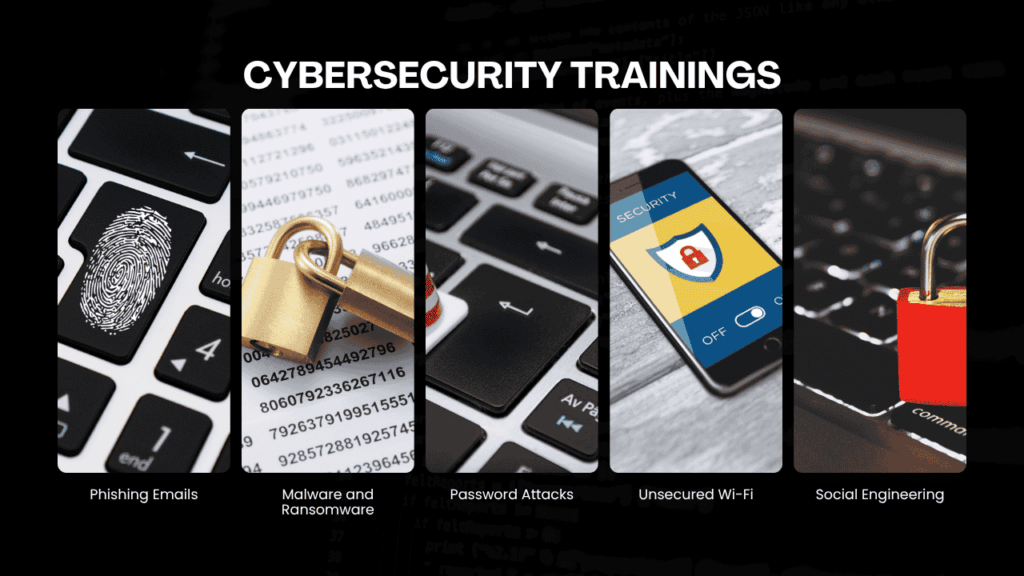
Increasing cyberattacks targeting organizations of all sizes are making cybersecurity a necessity for business survival. As cyberattacks become increasingly common, companies are realizing that cybersecurity training is one of the most effective ways to safeguard their digital assets, data, and customer trust.. Let’s explore the top cybersecurity trainings shaping modern workplaces — including AI-powered learning programs from Vocaliv, a leading name in AI, EdTech, SaaS, and Learning & Development (L&D) that’s helping organizations strengthen their digital defense strategies. The Growing Importance of Cybersecurity Learning According to Cybersecurity Ventures, global cybercrime costs will reach $10.5 trillion annually by 2025. With such staggering risks, upskilling employees in cybersecurity isn’t optional — it’s essential. Modern cybersecurity isn’t about just firewalls or antivirus software anymore. It’s about empowering people to detect, prevent, and respond to threats effectively — and that’s exactly what Vocaliv’s AI-powered training model achieves. 1. CompTIA Security+ A staple in the cybersecurity world, CompTIA Security+ provides a foundational understanding of network security, risk management, and threat mitigation.It’s ideal for beginners aiming to kickstart a cybersecurity career or professionals looking to validate their skills with a globally recognized certification. 2. Certified Ethical Hacker (CEH) Ethical hacking has become one of the most in-demand skills in cybersecurity. The CEH certification by EC-Council teaches how to think like a hacker to prevent potential breaches. 3. CISSP – Certified Information Systems Security Professional If you’re aiming for leadership in cybersecurity, CISSP is the gold standard. It focuses on developing strategies for securing organizational infrastructure and managing risk across enterprise environments. 4. Google Cybersecurity Professional Certificate Offered through Coursera, Google’s program blends accessibility with industry relevance. It’s beginner-friendly and includes hands-on projects that simulate real-world attacks and incident responses. 5. Certified Cloud Security Professional (CCSP) With businesses moving to the cloud, cloud security has become critical. CCSP, offered by (ISC)², trains professionals in cloud data protection, identity management, and compliance. 6. Cybersecurity for Business Leaders (Harvard Online) For executives and decision-makers, Harvard’s Cybersecurity for Business Leaders program explains how cybersecurity impacts operations and strategy. It helps leadership teams understand risks and align security with business growth. 7. IBM Cybersecurity Analyst Professional Certificate IBM’s online certification is highly practical and industry-oriented. It focuses on incident detection, penetration testing, and SIEM tools (Security Information and Event Management). 8. SANS Cyber Aces Online SANS Institute is known for some of the best cybersecurity courses worldwide. The Cyber Aces Online program is free and beginner-friendly, offering a great foundation in operating systems, networking, and system administration security. 9. MIT Professional Education – Cybersecurity: Technology, Application, and Policy For advanced learners, MIT’s course dives deep into policy, technology, and real-world applications of cybersecurity. It’s designed for professionals wanting to integrate technical expertise with strategic understanding. Why Choose Vocaliv For Cybersecurity Trainings? Choosing Vocaliv means you’re selecting a modern, AI-driven cybersecurity training platform that adapts to real-world business needs. Vocaliv’s solution allows you to upload existing policies or training content and instantly convert them into dynamic, interactive modules—complete with narrated lessons, simulation-based exercises, quizzes, and multilingual delivery. According to their website, the platform drives measurable results in productivity and reduces training time by integrating AI, voice-cloning, and custom dashboards for monitoring learner progress in real time. Topics covered span threat detection, data protection, remote-work security, and compliance—giving teams the technical knowledge and behavioral awareness needed to stay ahead of evolving cyber risks. FAQs 1. What are the AI Powered Education Platforms for Cybersecurity Trainings? AI-powered education platforms for cybersecurity training include Vocaliv, IBM SkillsBuild, Cyber School Israel, and NobleProg, offering adaptive learning and real-world simulations. 2. Why is cybersecurity training important for employees? Cybersecurity training is important for employees because it helps prevent data breaches, reduces human error, and strengthens an organization’s overall security posture. Cybersecurity training is no longer a luxury — it’s a strategic investment. From AI-enhanced learning platforms like Vocaliv to globally recognized certifications, the opportunities to strengthen your defenses are vast. If your organization wants to build cyber resilience with cutting-edge AI learning solutions, explore Vocaliv’s Cybersecurity Programs today — and stay one step ahead of tomorrow’s digital threats.
AI Cybersecurity Training: Everything You Need to Know in 2025
It is no longer uncommon to suffer a cyber attack – they have become a daily reality. Global cybercrime costs are expected to reach $10.5 trillion annually by 2025, according to Cybersecurity Ventures. The scary part? The majority of these breaches are caused by simple human mistakes – clicking on a malicious email link, using a weak password, or neglecting security updates. That’s where cybersecurity awareness training and well-structured cyber security courses come in. Whether you’re a business leader trying to secure your team or an individual looking to break into the cybersecurity field, 2025 offers more resources than ever to get you started. In this article, we’ll explore why cybersecurity training is crucial, where to find free options, the best professional training courses, and how to choose the right one for your needs. Why Cybersecurity Awareness Training Matters in 2025 Cybersecurity awareness training is designed to teach individuals and teams how to recognize, avoid, and respond to online threats. In 2025, phishing emails, ransomware, and social engineering attacks are more sophisticated than ever. A single careless click can compromise entire networks. Businesses face regulatory requirements like GDPR and ISO 27001, making staff training not just a choice but a necessity. Benefits of cybersecurity awareness training include: Simply put, cybersecurity training is the most cost-effective way to avoid expensive security incidents. Free Cyber Security Training Options for Beginners If you’re new to the cybersecurity world, you don’t have to spend thousands to start learning. Free resources in 2025 are better than ever. Some excellent free cybersecurity training options include: Free training helps you get familiar with basic concepts like firewalls, malware, encryption, and risk management before investing in paid certifications. Comprehensive Cyber Security Training for Professionals For IT professionals, a comprehensive cyber security course goes beyond awareness — it includes hands-on labs, penetration testing, and compliance strategies. Professional training covers: Popular certifications to pursue in 2025: According to Payscale, certified cybersecurity professionals earn 25–30% higher salaries, making this training a wise investment. Cyber Security Awareness Training Online – Free & Paid Options Online cybersecurity awareness training remains the most convenient option for both businesses and individuals. Benefits of online training include: Top online cybersecurity training platforms in 2025: Best Free Cyber Security Awareness Courses in 2025 If you prefer free cyber security courses, here are some of the best to try this year: Start with a free course, then move to a certification like CompTIA Security+ or Certified Ethical Hacker when ready. Cybersecurity threats aren’t slowing down — and neither should you. Whether you’re a student, IT professional, or biness owner, cybersecurity awareness training and cyber security courses are your first line of defense. Start small with free courses, upgrade to certifications when you’re ready, and stay consistent with ongoing learning. The best protection in 2025 is a well-informed mind and a trained team. FAQs Q1: Which certificate is best for cyber security? The best cybersecurity certificate depends on your career goals, but popular choices include CompTIA Security+ for beginners, CEH (Certified Ethical Hacker) for ethical hacking, and CISSP (Certified Information Systems Security Professional) for advanced security management roles. Q2: How do I train for cyber security? You can train for cybersecurity by learning the basics of networking and security, taking online courses or certifications like CompTIA Security+, practicing in virtual labs, and staying updated with the latest threats and tools. Q3: How can educational institutions better prepare students for careers in cybersecurity given the constantly evolving landscape of threats?Educational institutions can better prepare students by offering up-to-date curricula, hands-on labs, real-world simulations, and industry-recognized certifications, while encouraging continuous learning and critical thinking. Q4: How much is cyber security course? Cybersecurity course costs vary widely — starting from a few hundred dollars for basic online programs to over $10,000 for advanced bootcamps. Prices depend on course level, duration, and included certifications.