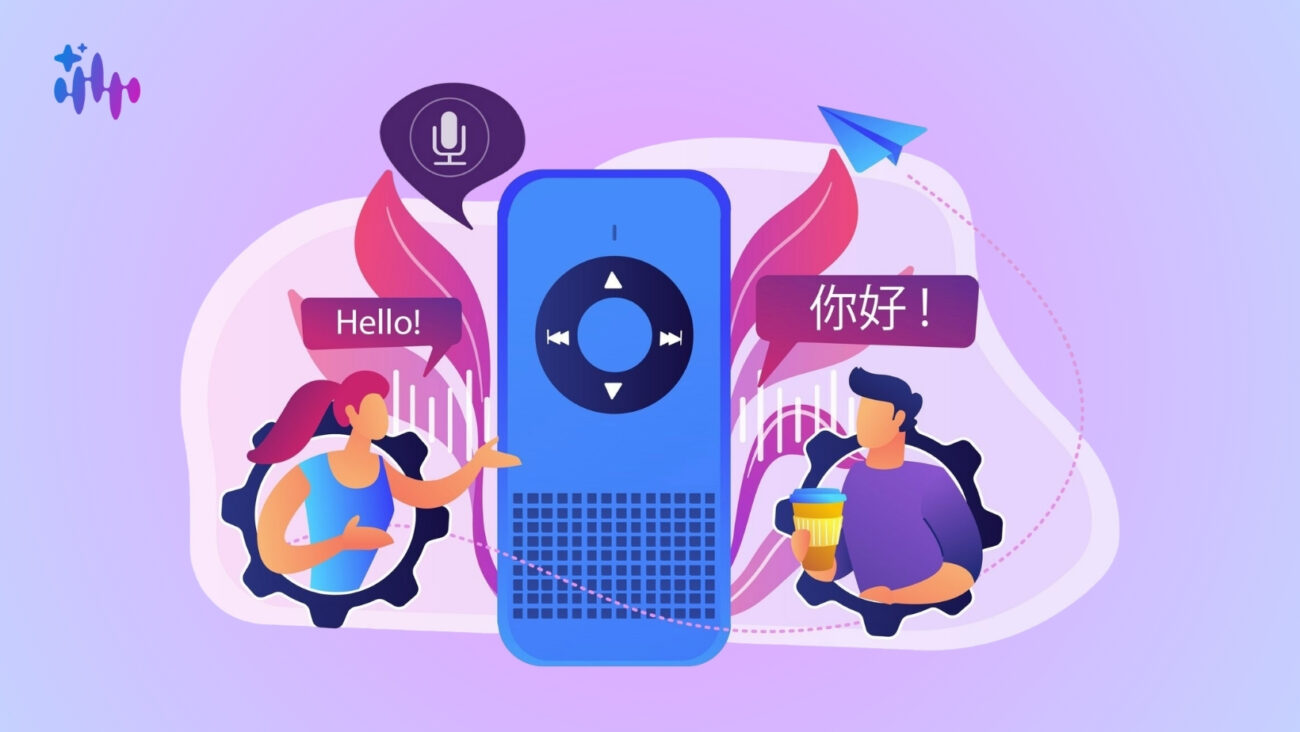
Voice cloning technology advancements in 2026, now applied to training delivery through tools like Vocaliv’s AI voice cloning, center on four breakthroughs: prosody modeling for natural emotional delivery, cross-lingual cloning that preserves a speaker’s identity across languages, real-time voice conversion under 300ms latency, and clone generation from as little as 10 seconds of audio.
Key Takeaways:
- Prosody modeling is the defining 2026 breakthrough: voices now carry rhythm, emphasis, and emotional inflection instead of flat, timbre-matched narration.
- Cross-lingual cloning lets one recorded voice deliver content in Mandarin, Spanish, or Japanese while keeping the speaker’s identity intact.
- Real-time voice conversion now runs at sub-300ms latency, enabling live dubbing and voice agents that feel conversational, not delayed.
- Minimum audio requirements dropped sharply: some APIs clone convincingly from 10 seconds of source audio, though fine-tuned clones still use 30+ minutes for maximum fidelity.
- The global voice cloning market reached $4.9 billion in 2026, growing 27% annually, with consent and disclosure now the central compliance issue.
Voice cloning crossed a threshold in 2026 that took the industry nearly a decade to reach. Synthetic speech is now good enough that audio engineers need specialized detection tools to tell it apart from a real recording. For anyone producing training content, marketing voiceovers, or multilingual media, that shift changes the calculation entirely: a single recorded voice can now narrate unlimited content, in multiple languages, updated instantly whenever the script changes.
Here’s what actually advanced this year, the technical breakthroughs behind it, and what it means if you’re evaluating voice cloning for real production use.
Breakthrough 1: Prosody Modeling Solves the “Flat Voice” Problem
Earlier voice clones nailed timbre (how a voice sounds) but missed prosody: the rhythm, stress, and emotional inflection that make speech sound human rather than read aloud. The 2026 models predict not just which sounds to produce, but how to deliver them: where to pause, which words to emphasize, when to speed up.
The practical result is synthetic speech that sounds like someone meaning what they say, not a narrator reading a transcript. For training content specifically, this is the difference between a course that feels automated and one that feels taught.
Breakthrough 2: Cross-Lingual Cloning Preserves Identity Across Languages
The technical advance most relevant to global organizations: clone a voice from English audio, then generate speech in another language, and the cloned voice keeps the original speaker’s identity, tone, and cadence. A single instructor recording once in English can now deliver the same course in Spanish, Mandarin, or Arabic without a re-record or a different narrator breaking brand continuity.
Breakthrough 3: Real-Time Voice Conversion Hits Production Latency
Instead of generating speech from a script, real-time systems now transform a live speaker’s voice into a target voice as they talk, with latency as low as 200 to 300 milliseconds. That’s fast enough for live dubbing, real-time meeting translation, and voice agents that don’t feel like they’re on a delay. This was the hardest technical problem in the field, since any noticeable lag breaks the conversational illusion.
Breakthrough 4: Cloning Requirements Dropped Sharply
Two paths exist in 2026, and the difference matters for anyone deciding how to build:
- Instant cloning: convincing results from as little as 10 seconds of audio, ready for real-time streaming.
- Fine-tuned cloning: 30 minutes to several hours of source recording, producing higher fidelity and better handling of distinctive vocal characteristics.
Instant cloning wins for speed and experimentation; fine-tuned cloning wins whenever the voice needs to carry a brand or an instructor’s authority over hundreds of hours of content.
2026 Voice Cloning Landscape at a Glance
| Capability | What Changed in 2026 | Best Use Case |
| Prosody modeling | Emotional inflection, natural pacing | Instructor-led course narration |
| Cross-lingual cloning | Identity preserved across languages | Global training rollout, localization |
| Real-time conversion | Sub-300ms latency | Live dubbing, voice agents |
| Instant cloning | Convincing results from 10 seconds of audio | Rapid prototyping, quick updates |
| Fine-tuned cloning | 30+ minutes of source, highest fidelity | Long-form branded course libraries |
Where This Is Already Changing Corporate Training
The clearest real-world application isn’t marketing, it’s course production. A single senior instructor can record their voice once, and every future course update, translation, or new module gets narrated in that same voice without booking studio time again. For a training provider running multiple programs across regions, this collapses what used to require a voiceover budget and a multilingual production team into one recording session and a text update.
That shift also changes what “keeping content current” costs. A policy update that used to mean re-recording an entire module now means editing the script and regenerating narration in minutes, in the instructor’s own voice, in every language the program runs in. For the full technical and practical picture of how this applies specifically to course and training production, read our companion deep dive on voice cloning technology in 2026 for implementation details and platform comparisons.
The Compliance Question Nobody Can Skip
Voice cloning creates a synthetic model of a real person’s identity, and that carries obligations distinct from other AI capabilities. No voice should be cloned without the explicit, informed consent of the person it belongs to, regardless of whether the source recording is publicly available. Responsible platforms enforce this contractually and, increasingly, technically, and any organization deploying cloned voices at scale should confirm both before choosing a vendor.
Frequently Asked Questions
Voice cloning technology uses AI to learn a person’s voice from audio samples and generate realistic speech from text in the same voice.
No, voice cloning itself is legal in many countries. However, using someone’s voice without their consent for fraud, impersonation, or other unlawful purposes may be illegal.
AI voice cloning typically costs $5 to $100+ per month, depending on the platform, voice quality, usage limits, and available features.
Prosody modeling is the defining breakthrough: cloned voices now carry natural rhythm, emphasis, and emotional inflection instead of flat, timbre-only narration. Combined with cross-lingual cloning, this makes 2026 voice clones genuinely difficult to distinguish from real recordings.
Yes. Real-time voice conversion systems now operate at sub-300ms latency, enabling live dubbing, real-time translation, and conversational voice agents that don’t feel delayed.
Voice cloning stopped being a novelty in 2026 and became production infrastructure. The organizations getting the most value aren’t chasing the flashiest demo; they’re using it to keep instructor-led content current, consistent, and multilingual without re-recording every time something changes.