
Workplace training programs are structured learning paths that close skill gaps across onboarding, compliance, and role-specific skills, and with Vocaliv’s AI-powered build and coaching layer, the traditional multi-week cycle of needs analysis, content development, and delivery produces a launch-ready program in days.
Key Takeaways:
- The traditional build cycle (needs analysis, design, authoring, delivery, evaluation) averages 6–12 weeks per program; AI compresses the middle stages to minutes.
- Speed comes from repurposing, not writing: your SOPs, decks, and policy docs already contain 80% of the content, and AI conversion unlocks it.
- Keep two stages human: the needs assessment up front and the expert review before launch. Automate everything between them.
- Delivery speed means nothing without completion: automated learner support and engagement nudges move completion from the 35–50% norm toward 60%+.
- Measure programs by ramp time, behavior change, and completion evidence, not by how many courses you shipped.
Here’s the timeline problem every HR and L&D team knows. A department head requests a training program in January. Needs analysis takes two weeks, content development takes six, review cycles add three more, and by launch, the process the training covers has already changed. Multiply that across onboarding, compliance, safety, and skills programs, and the backlog becomes permanent.
The standard advice (better project management, more instructional designers) treats the symptom. The faster way changes what each stage actually requires.
The Old Timeline vs. The New One
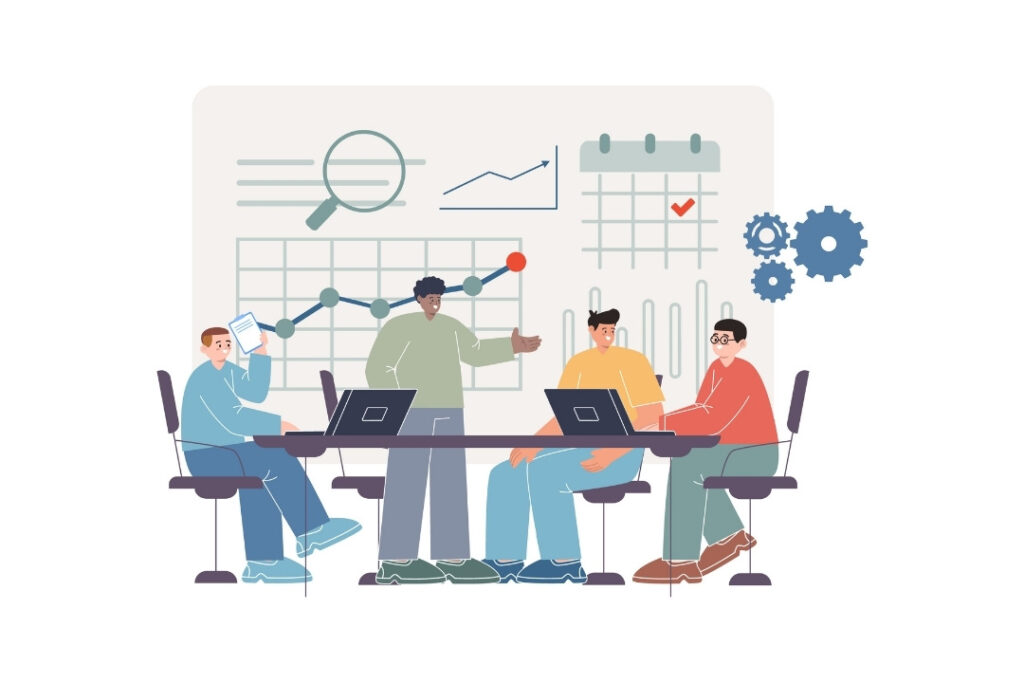
A typical workplace training program follows five stages. Only the timeline needs to change, not the sequence:
- Needs assessment: identify the skill gap and write one measurable objective. Human work, 2–5 days. Don’t compress this.
- Source material audit: gather existing SOPs, decks, recordings, and policies. 1–2 hours instead of weeks of SME interviews.
- Build: AI converts the source material into structured modules with quizzes. Under 15 minutes for a reviewable draft, versus 30–50 authoring hours.
- Expert review: a subject-matter pass for accuracy and context. 3–5 hours instead of 40 hours of expert authoring.
- Launch and support: automated learner Q&A, completion tracking, and engagement nudges replace ongoing instructor babysitting.
Total: days, not quarters. The stages that made programs slow (authoring and review cycles) are exactly the ones AI absorbs.
Where the Speed Actually Comes From
Three shifts drive the compression:
- Repurposing beats writing. Most workplace knowledge already exists in documents. Converting a 20-page SOP into a course takes minutes; writing that course from scratch took weeks.
- Review replaces authoring. Your busiest experts stop writing content and start validating drafts, cutting their involvement by roughly 85%.
- Support gets automated. The hidden post-launch cost, employees asking the same policy and process questions repeatedly, moves to an AI assistant that handles 70%+ of them instantly.
Build Approach Comparison
| Approach | Time to Launch | Cost Per Program | Expert Hours Needed | Updates When Things Change |
| In-house manual build | 6–12 weeks | High (staff time) | 30–50 hrs | Full rebuild cycle |
| Outsourced development agency | 8–16 weeks | $5K–$30K per course | 10–20 hrs (interviews) | New contract |
| Off-the-shelf course libraries | Instant | $20–$60 per user/yr | None | Generic, never matches your process |
| AI build + automated support | Days | Platform fee | 3–5 hrs (review only) | Re-generate in minutes |
The off-the-shelf row explains why speed alone was never the answer: instant generic content doesn’t teach your processes. The AI approach is the first to deliver speed and specificity together.
The One Program Type Where Fast Can’t Mean Loose
Speed has a boundary condition. Compliance programs (anti-harassment, data privacy, safety, conduct rules) aren’t just training, they’re legal evidence. A fast build still has to produce version control on every policy update, completion records that survive an audit, and assessments proving comprehension rather than click-through. Regulators are also raising the bar on how AI-built content is governed, which changes what “audit-ready” means in practice. Before applying the fast-build workflow to regulated content, read our analysis of workplace compliance training in the AI era to see the requirements that don’t compress.
Fast to Build, Built to Finish
A program nobody completes is a fast failure instead of a slow one. The completion problem follows a predictable pattern: engagement drops at weeks 4–6 of longer programs, and industry completion rates sit at 35–50%.
The same automation that speeds the build also fixes this:
- AI coaching support answers learner questions the moment they arise, removing the “stuck and waiting” drop-off trigger.
- Confusion detection flags which lessons generate repeated questions, so you fix content before the next cohort hits it.
- Engagement nudges re-activate stalled learners automatically instead of relying on manager follow-up.
Teams running this stack consistently hold completion above 60%, which is the number that makes the training defensible at budget time.
A 30-Day Rollout Plan
- Week 1: Pick one high-pain program (usually onboarding). Run the needs assessment, gather source documents.
- Week 2: Generate, review with one SME, and pilot with 5–10 employees.
- Week 3: Launch to the full audience with automated support switched on.
- Week 4: Review completion data and the learner question log, revise the two weakest lessons, and template the workflow for the next program.
Frequently Asked Questions
Five steps: assess the skill gap and set one measurable objective, gather existing source documents, generate the course structure and content, run an expert accuracy review, then launch with completion tracking. AI now compresses the middle steps from weeks to days.
Traditionally 6–12 weeks per program. With AI-assisted building, a reviewable draft takes under 15 minutes and a launch-ready program takes days, including expert review.
Clear objectives tied to job tasks, content specific to your actual processes, built-in assessments, and reinforcement after launch. Completion rates and behavior change are the effectiveness measures, not attendance.
The core set: onboarding, compliance, role-specific technical skills, product knowledge, and safety training. Most organizations run several simultaneously, refreshed on different cycles.
The teams clearing their training backlogs in 2026 didn’t hire their way out. They changed the economics of one stage, the build, and reinvested the recovered time in the stages machines can’t do: knowing what to teach and making sure people finish.