
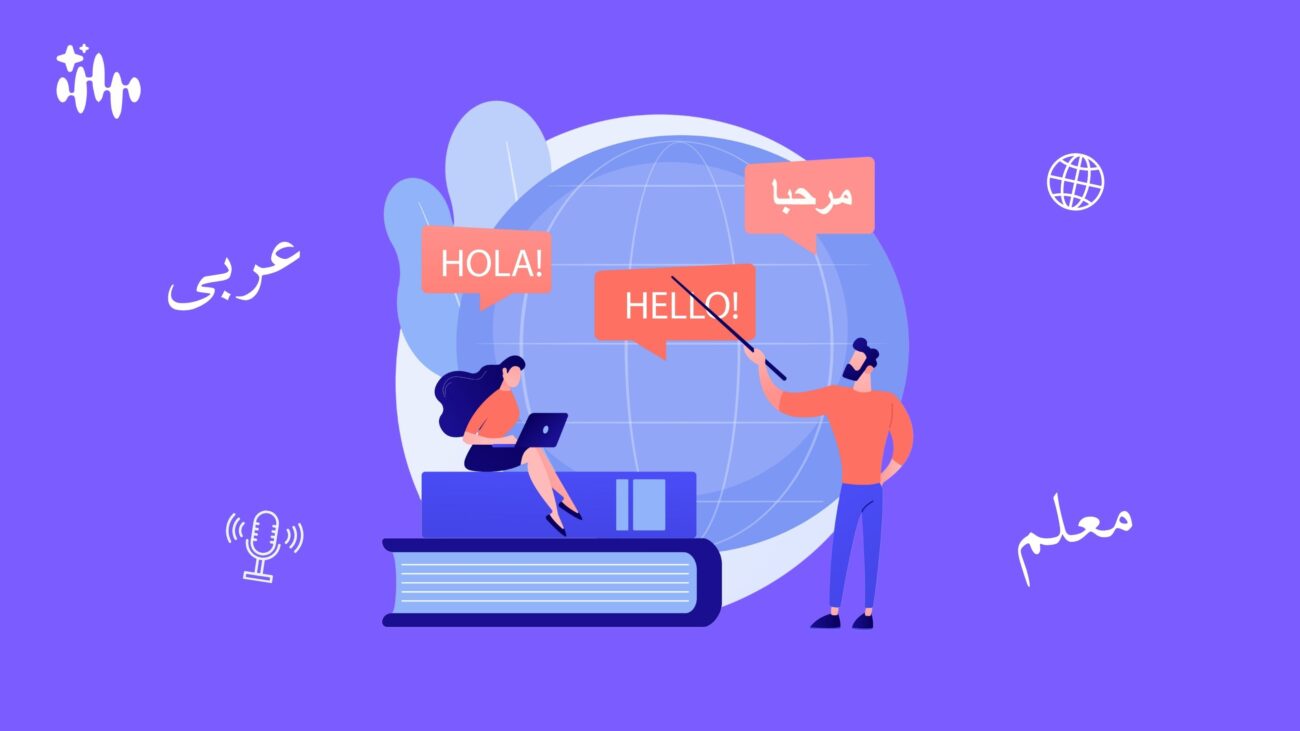
What Training Leaders Should Know
- Bilingual delivery in the GCC is not just a language problem it is an operational one
- The shortage of qualified Arabic-English bilingual instructors is a structural constraint, not a recruitment failure
- Inconsistent support quality across languages is the primary driver of completion rate gaps in GCC programs
- Solving bilingual learner support requires infrastructure, not just more instructors
What Is Bilingual Learner Support in the GCC?
Bilingual learner support in the GCC refers to the operational systems that allow corporate training providers to deliver consistent, high-quality learner assistance in both Arabic and English across the Gulf Cooperation Council region covering Saudi Arabia, UAE, Qatar, Kuwait, Bahrain and Oman. It goes beyond translation. It covers how the operation answers learner questions, resolves confusion, and keeps engagement consistent in both languages, at the pace the program demands.
Why Bilingual Training Delivery in the GCC Is Operationally Complex
Corporate training in the GCC operates in one of the most linguistically complex environments in the world. The workforce includes Arabic-speaking nationals and English-speaking expatriates. A significant proportion of learners speak both languages but reach for Arabic when processing technical concepts and switch to English for interpersonal communication.
For training providers, this creates a challenge that goes well beyond translation. Delivering bilingual learner support in the GCC means maintaining consistent quality. Response times and pedagogical accuracy across two languages simultaneously while managing the operational reality that qualified Arabic-English bilingual instructors are in short supply across the region.
The Saudi Arabia corporate training market reaches USD 3.59 billion in 2024 and grows at 7.1 percent annually through 2033, driven in large part by Vision 2030 workforce development priorities. The GCC Soft Skills Training market, valued at USD 570.5 million in 2023, reaches USD 1.57 billion by 2032.. The demand for bilingual corporate training is growing faster than the supply of instructors who can deliver it reliably.
This is not a future problem. Training providers operating in the GCC are navigating it right now.
The Core Challenges of Bilingual Learner Support in the GCC

Challenge 1: The Bilingual Instructor Shortage
The most immediate constraint facing training providers in the GCC is finding instructors who can deliver with equal competence in Arabic and English not just translate between them.
Subject matter expertise and bilingual fluency rarely coexist in the same profession. An instructor who is an expert in compliance, leadership, or technical operations in English may not have the Arabic vocabulary to explain the same concepts with the precision learners expect. An Arabic-speaking subject matter expert may not be comfortable fielding questions from English-speaking learners in real time.
The result is a structural gap. Training providers either run parallel programs in each language doubling instructor cost and operational complexity or they compromise on one language’s quality, which shows up directly in completion rates and learner satisfaction among the underserved group.
Alpen Capital research shows the GCC continues to rely on expatriate professionals in specialized roles because local expertise in many disciplines remains limited. For training providers, this means the bilingual instructor pool is not expanding fast enough to meet growing program demand.
Challenge 2: Inconsistent Support Quality Across Languages
Even when training providers have bilingual instructors, the support experience for Arabic-speaking and English-speaking learners is rarely equivalent.
Most training materials, platforms and support systems are built in English first. This gives English-speaking learners faster responses, better documentation and more consistent availability. Arabic-speaking learners wait longer, receive shorter answers and hit interface friction before they can even submit a question.
This inconsistency does not stay invisible. It shows up in completion rate data, in cohort satisfaction scores and in renewal conversations. With clients whose Arabic-speaking employees had a materially different experience from their English-speaking colleagues.
For enterprise clients in the GCC particularly government entities and large organisations under Vision 2030 mandates this disparity is increasingly unacceptable. Equal quality across both languages is becoming a contractual expectation, not just a best practice.
Challenge 3: Content Localization vs. Content Translation
There is a meaningful difference between translating training content into Arabic and localizing it for a GCC audience. Training providers who conflate the two consistently underperform with regional clients.
Translation converts words. Localization converts meaning.
A compliance training module translated directly from English into Modern Standard Arabic may be technically accurate. But still fail with a Saudi or Emirati audience because the scenarios, examples, and cultural references do not reflect the reality of the workplace the learner operates in.
GCC learners are sophisticated. They recognize content that was built for a Western audience and adapted for them versus content that was built with their context in mind. The former feels generic. The latter feels relevant. And relevance is one of the most consistent predictors of whether a learner completes a program or drops off in the middle.
Challenge 4: Platform and Interface Limitations
Most learning management systems are designed for left-to-right language interfaces. Arabic is right-to-left. This creates operational friction that accumulates across every learner interaction navigation, question submission, assessment completion, progress tracking.
When the interface itself requires effort to use, the cognitive load on Arabic-speaking learners increases before they have engaged with a single piece of content. Learners submit support queries through interfaces that were not built for their language. Those queries sit unanswered longer as a result. Progress feels slower because the system communicates it less clearly.
Platform limitations are rarely the headline challenge in bilingual training delivery. But they compound every other problem on this list.
Challenge 5: Scaling Bilingual Support Without Scaling Headcount
The operational math of bilingual training support is more demanding than single-language programs. If an instructor team can support 30 learners in English, they cannot simply support 30 additional Arabic-speaking learners without additional capacity.
Yet most training providers are expected to deliver bilingual programs at the same price point as single-language ones. The margin compression is immediate and the quality compromise follows.
This is the scaling problem in its most acute form. The bilingual support burden grows faster than the economics of adding bilingual instructors can sustain. And unlike single-language support, where operational infrastructure can progressively handle more of the routine load, bilingual support has historically required human fluency at every touchpoint.
Practical Solutions for Bilingual Learner Support in the GCC

Solution 1: Separate Content Delivery from Learner Support
The most effective operational shift a training provider can make is to stop treating content delivery and learner support as a single function delivered by the same person.
An instructor who delivers content in English does not need to be the same person who answers Arabic learner questions in real time. A dedicated support infrastructure handles learner queries in both languages accurately, consistently and instantly. This takes the pressure off bilingual instructors to cover everything themselves.
This separation is particularly powerful in the GCC context. Because it means instructors can operate at their highest level delivering programs. Building client relationships, improving content quality while the support layer handles the volume that has historically consumed the majority of their time.
Solution 2: Build Arabic-First, Not Arabic-After
The most successful bilingual training programs in the GCC treat Arabic as a primary language. They do not adapt English content into Arabic after the fact.
This means scenarios and examples are drawn from GCC workplace contexts. Assessment questions use terminology that Arabic-speaking learners encounter in their actual roles. The support infrastructure is designed to field Arabic questions with the same speed and accuracy as English ones, not as a translated version of an English-language support system.
Arabic-first design requires more upfront investment. It produces consistently better outcomes in GCC markets than translation-based approaches.
Solution 3: Standardize Support Quality Across Both Languages
The support experience for an Arabic-speaking learner should be operationally identical to the support experience for an English-speaking learner. Same response time. Same accuracy and same ability to escalate to a human instructor when the question genuinely requires judgment.
Achieving this in practice means the support infrastructure must handle Arabic learner queries with the same capability it handles English ones not routing Arabic questions to a separate, slower queue staffed by fewer people.
Training providers who achieve this consistently see completion rate parity across language. Groups as a commercial differentiator in GCC markets, where clients become skilled at spotting completion data that is aggregated to conceal per-language performance differences.
Solution 4: Plan for Regulatory and Cultural Context
GCC training delivery operates within a regulatory and cultural environment that affects content, scheduling, assessment design and learner communication.
Ramadan scheduling, prayer times, gender-separated cohorts in some Saudi contexts. Content that avoids examples in conflict with Islamic values these are operational requirements, not edge cases. Training providers who build them into their program design from the contracting stage avoid the last-minute modifications that erode quality and instructor confidence.
Saudi Arabia’s Vision 2030, the UAE’s National Agenda, and Qatar’s National Vision 2030 all create specific workforce development. Priorities that enterprise clients expect training providers to understand. A provider who demonstrates genuine regional awareness at the proposal stage wins trust that generic providers cannot replicate.
Solution 5: Use Operational Data to Demonstrate Per-Language Performance
GCC clients are increasingly sophisticated buyers of training services. The renewal conversation in a bilingual program context is not just about overall completion rates. It is about completion rates by language group, satisfaction scores by language group, and support response time data by language.
Training providers who can produce this analysis demonstrate operational maturity that generic competitors cannot match. It is also the most credible way to show a client that the Arabic-speaking cohort received the same quality of experience as the English-speaking one or to identify where the gap exists and what the remediation plan is.
Common Questions About Bilingual Training in the GCC
The most significant challenges include the shortage of qualified Arabic-English bilingual instructors, inconsistent support quality between language groups. Content that is translated rather than localized for regional contexts, platform limitations for Arabic-language interfaces, and the difficulty of scaling bilingual support without proportional headcount increases.
Consistency requires separating the content delivery function from the learner support function. When learner support operates as a dedicated infrastructure rather than an instructor responsibility, it can maintain consistent response times and quality in both languages regardless of cohort size. Arabic-first content design and platform localization are also essential foundations.
Translation converts words from one language to another. Localization adapts meaning, context, scenarios and examples to reflect the reality of the audience’s workplace. GCC learners, particularly in Saudi Arabia and the United Arab Emirates, recognize content that is built for a Western context and translated, versus content that is designed with regional workplace realities in mind. Localized content produces consistently higher engagement and completion rates.
Saudi Arabia’s Vision 2030 drives significant demand for workforce development across the private sector, with particular focus on digital skills, leadership development and compliance training. It also creates expectations around Saudization increasing the proportion of Saudi nationals in skilled roles which shapes training program design, language requirements and the types of outcomes enterprise clients need to demonstrate to government stakeholders.
The completion rate gap between language groups in the same program almost always traces back to support infrastructure. Arabic-speaking learners typically wait longer for responses to questions, encounter interfaces that create more friction, and receive support that is less consistent in quality than their English-speaking counterparts. The content is often the same. The operational experience around the content is not.
The most important factors are Arabic-first content design rather than translation from English, support infrastructure that operates with equal speed and accuracy in both languages, platform localization for right-to-left interface requirements, awareness of regional regulatory and cultural context, and the ability to report per-language performance data to clients in renewal conversations.
The Practical Starting Point
If bilingual delivery is creating operational strain in your GCC programs, the most useful diagnostic question is this: are Arabic-speaking learners and English-speaking learners receiving support of equal speed and quality, or is one group waiting longer and receiving less consistent answers?
That single measurement will tell you more about the health of your bilingual operation than any content audit or instructor assessment. And in most cases, the answer points to the same root cause a support infrastructure that was built for one language and adapted for a second, rather than built to operate in both simultaneously.
See how Vocaliv delivers bilingual learner support in the GCC in Arabic and English, instantly, at scale.

One thought on “Bilingual Learner Support in the GCC: Challenges and Solutions”