
Bilingual Learner Support in the GCC: Challenges and Solutions
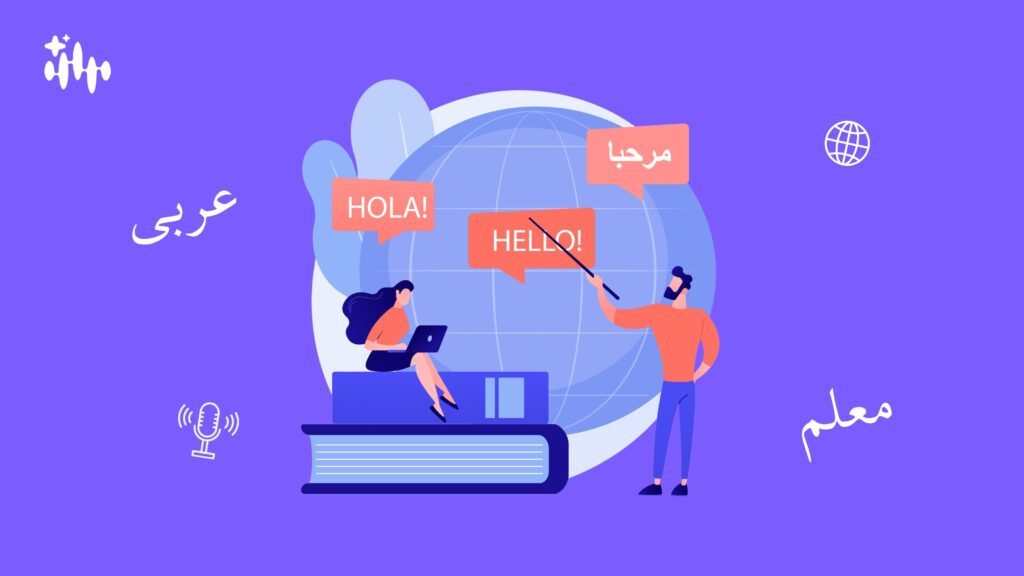
What Training Leaders Should Know What Is Bilingual Learner Support in the GCC? Bilingual learner support in the GCC refers to the operational systems that allow corporate training providers to deliver consistent, high-quality learner assistance in both Arabic and English across the Gulf Cooperation Council region covering Saudi Arabia, UAE, Qatar, Kuwait, Bahrain and Oman. It goes beyond translation. It covers how the operation answers learner questions, resolves confusion, and keeps engagement consistent in both languages, at the pace the program demands. Why Bilingual Training Delivery in the GCC Is Operationally Complex Corporate training in the GCC operates in one of the most linguistically complex environments in the world. The workforce includes Arabic-speaking nationals and English-speaking expatriates. A significant proportion of learners speak both languages but reach for Arabic when processing technical concepts and switch to English for interpersonal communication. For training providers, this creates a challenge that goes well beyond translation. Delivering bilingual learner support in the GCC means maintaining consistent quality. Response times and pedagogical accuracy across two languages simultaneously while managing the operational reality that qualified Arabic-English bilingual instructors are in short supply across the region. The Saudi Arabia corporate training market reaches USD 3.59 billion in 2024 and grows at 7.1 percent annually through 2033, driven in large part by Vision 2030 workforce development priorities. The GCC Soft Skills Training market, valued at USD 570.5 million in 2023, reaches USD 1.57 billion by 2032.. The demand for bilingual corporate training is growing faster than the supply of instructors who can deliver it reliably. This is not a future problem. Training providers operating in the GCC are navigating it right now. The Core Challenges of Bilingual Learner Support in the GCC Challenge 1: The Bilingual Instructor Shortage The most immediate constraint facing training providers in the GCC is finding instructors who can deliver with equal competence in Arabic and English not just translate between them. Subject matter expertise and bilingual fluency rarely coexist in the same profession. An instructor who is an expert in compliance, leadership, or technical operations in English may not have the Arabic vocabulary to explain the same concepts with the precision learners expect. An Arabic-speaking subject matter expert may not be comfortable fielding questions from English-speaking learners in real time. The result is a structural gap. Training providers either run parallel programs in each language doubling instructor cost and operational complexity or they compromise on one language’s quality, which shows up directly in completion rates and learner satisfaction among the underserved group. Alpen Capital research shows the GCC continues to rely on expatriate professionals in specialized roles because local expertise in many disciplines remains limited. For training providers, this means the bilingual instructor pool is not expanding fast enough to meet growing program demand. Challenge 2: Inconsistent Support Quality Across Languages Even when training providers have bilingual instructors, the support experience for Arabic-speaking and English-speaking learners is rarely equivalent. Most training materials, platforms and support systems are built in English first. This gives English-speaking learners faster responses, better documentation and more consistent availability. Arabic-speaking learners wait longer, receive shorter answers and hit interface friction before they can even submit a question. This inconsistency does not stay invisible. It shows up in completion rate data, in cohort satisfaction scores and in renewal conversations. With clients whose Arabic-speaking employees had a materially different experience from their English-speaking colleagues. For enterprise clients in the GCC particularly government entities and large organisations under Vision 2030 mandates this disparity is increasingly unacceptable. Equal quality across both languages is becoming a contractual expectation, not just a best practice. Challenge 3: Content Localization vs. Content Translation There is a meaningful difference between translating training content into Arabic and localizing it for a GCC audience. Training providers who conflate the two consistently underperform with regional clients. Translation converts words. Localization converts meaning. A compliance training module translated directly from English into Modern Standard Arabic may be technically accurate. But still fail with a Saudi or Emirati audience because the scenarios, examples, and cultural references do not reflect the reality of the workplace the learner operates in. GCC learners are sophisticated. They recognize content that was built for a Western audience and adapted for them versus content that was built with their context in mind. The former feels generic. The latter feels relevant. And relevance is one of the most consistent predictors of whether a learner completes a program or drops off in the middle. Challenge 4: Platform and Interface Limitations Most learning management systems are designed for left-to-right language interfaces. Arabic is right-to-left. This creates operational friction that accumulates across every learner interaction navigation, question submission, assessment completion, progress tracking. When the interface itself requires effort to use, the cognitive load on Arabic-speaking learners increases before they have engaged with a single piece of content. Learners submit support queries through interfaces that were not built for their language. Those queries sit unanswered longer as a result. Progress feels slower because the system communicates it less clearly. Platform limitations are rarely the headline challenge in bilingual training delivery. But they compound every other problem on this list. Challenge 5: Scaling Bilingual Support Without Scaling Headcount The operational math of bilingual training support is more demanding than single-language programs. If an instructor team can support 30 learners in English, they cannot simply support 30 additional Arabic-speaking learners without additional capacity. Yet most training providers are expected to deliver bilingual programs at the same price point as single-language ones. The margin compression is immediate and the quality compromise follows. This is the scaling problem in its most acute form. The bilingual support burden grows faster than the economics of adding bilingual instructors can sustain. And unlike single-language support, where operational infrastructure can progressively handle more of the routine load, bilingual support has historically required human fluency at every touchpoint. Practical Solutions for Bilingual Learner Support in the GCC Solution 1: Separate Content Delivery from Learner Support The most effective operational shift a training