

What Training Leaders Should Know
- Adaptive assessment measures where each learner actually is, not where the program assumes they should be
- It reduces wasted training time by eliminating content learners have already mastered
- The data adaptive assessments generate is the most credible evidence training providers can bring to client renewal conversations
- Adaptive assessment only works when the support infrastructure around it can respond to what the data reveals
What Is Adaptive Assessment?
Adaptive assessment is a testing approach that adjusts the difficulty and content of questions in real time based on how a learner responds. Instead of giving every learner the same fixed set of questions, the system uses each answer to determine what to ask next. A correct answer triggers a harder question. An incorrect one triggers a simpler one or routes the learner back to a concept that needs reinforcement. The result is a precise measurement of what each learner knows, reached faster and with fewer questions than a traditional fixed assessment.
Why Traditional Assessments Are Failing Corporate Training Programs
Most corporate training programs still rely on fixed assessments. Every learner sits the same test, answers the same questions in the same order, and receives the same pass or fail outcome. The score tells the training provider whether a learner reached the threshold. It does not tell them much else.
This is a problem for three reasons that training providers feel directly in their operations and in their client conversations.
First, fixed assessments waste time. A learner who already understands the content still works through every foundational question before reaching anything that challenges them. A learner who is genuinely struggling receives the same questions as everyone else, regardless of where the confusion actually sits. Neither learner gets an efficient or accurate experience.
Second, fixed assessments produce weak data. A pass rate tells you how many learners crossed a line. It does not tell you where knowledge is strong, where it is fragile, or what specific gaps need to be addressed before the next cohort runs. That data is what enterprise clients increasingly ask for at renewal.
Third, fixed assessments create instructor bottlenecks. When assessments cannot identify which learners need what support, instructors fill the gap reactively. They field questions from learners who passed but remain confused. They chase down learners who failed without understanding why. The assessment creates work rather than reducing it.
Adaptive assessment addresses all three of these problems directly.
Related: Proving Training ROI to Corporate Clients: A Practical Guide
How Adaptive Assessment Works
The mechanics of adaptive assessment are straightforward. The system starts each learner at a calibrated entry point based on prior knowledge or program prerequisites. From there, every question the learner answers determines the next one.
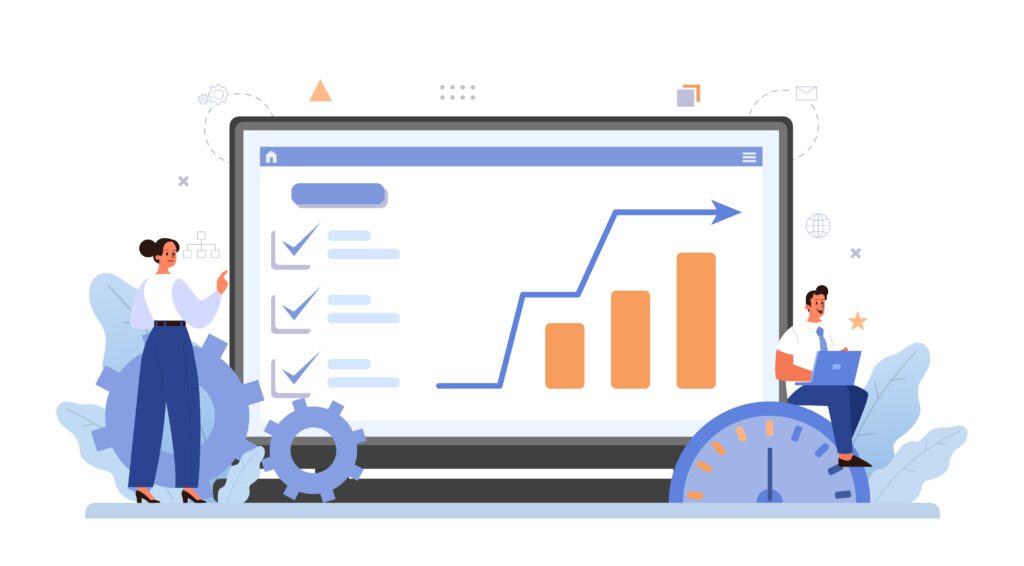
A learner who answers correctly receives a more challenging question in the same topic area. The system is building confidence that the learner genuinely understands the concept, not just guessing correctly. A learner who answers incorrectly receives a simpler question or a targeted piece of content that addresses the specific gap the wrong answer revealed. The system is not penalizing the learner. It is routing them to where they actually need to be.
This process continues until the system has mapped the learner’s knowledge with sufficient precision to generate a meaningful assessment outcome. The learner spends less time on content they have already mastered and more time where they genuinely need it.
There are two primary formats in corporate training contexts:
Question-level adaptive testing: adjusts every individual question based on the previous answer. It is the most precise format and works well for knowledge verification in compliance, technical skills and certification programs.
Multistage adaptive testing: presents a set of questions, assesses the overall performance, and then selects the next set based on that performance. It is less granular but more practical for longer programs where single-question adaptation would be too disruptive to the learner experience.
Both formats generate significantly richer data than fixed assessments and create a materially better experience for learners at every knowledge level.
What Adaptive Assessment Changes for Training Providers
The shift from fixed to adaptive assessment is not just a technology change. It changes the operational reality of running a training program in four specific ways.
1. It Reduces the Volume of Reactive Support
The most direct operational benefit of adaptive assessment for training providers is a measurable reduction in the volume of reactive learner support.
Fixed assessments create confusion signals that instructors have to chase manually. A learner fails a module. The instructor does not know whether the failure reflects a genuine knowledge gap, a misread question, an interface problem or anxiety about assessment format. They have to ask. The learner has to explain. The instructor has to diagnose and respond. That cycle repeats across every cohort.
Adaptive assessment identifies where confusion exists at the question level. The system knows which specific concepts a learner struggled with and has already begun routing them toward the right remediation content. The instructor receives a clear picture of where each learner needs support, rather than a binary pass or fail that tells them nothing actionable.
Instructors who spend 40 to 60 percent of their time on reactive learner support are often responding to confusion that adaptive assessment would have identified and begun addressing automatically. That time does not need to be spent the way it currently is.
2. It Produces the Evidence Data Clients Actually Want
Enterprise clients in 2025 do not renew contracts on the basis of completion rates and satisfaction scores alone. They want to know what changed in their workforce as a result of the training. Adaptive assessment generates exactly the data that answers that question.
Because adaptive assessment maps each learner’s knowledge at a granular level, training providers can produce reports that show not just who passed but what each cohort understood well, what they struggled with, and how knowledge levels shifted from the program’s diagnostic entry point to its completion.
This data answers the questions clients are actually asking at renewal. Which concepts did the cohort find most challenging? Where do knowledge gaps persist that the next program iteration should address? How did the training change what learners actually know, not just whether they sat through the content?
Training providers who bring this analysis to renewal conversations are operating as strategic partners. Those who bring completion rates and satisfaction scores are defending a metric.
3. It Improves Completion Rates in Extended Programs
One of the most consistent drivers of drop-off in extended corporate programs is the experience of sitting through content a learner has already mastered. It feels like a waste of time because it is a waste of time. Learners who feel their time is not being respected disengage.
Adaptive assessment allows programs to move learners through content at a pace that reflects what they actually know. A learner who demonstrates mastery of foundational concepts moves directly to more advanced material. A learner who shows gaps receives targeted reinforcement before progressing. Neither learner wastes time.
The data on this is consistent. Programs that incorporate adaptive elements see meaningfully higher completion rates than fixed-format equivalents, particularly in extended programs where learner fatigue is a significant drop-off driver.
Related: Training Completion Rates: Why 35-50% Is Normal and What to Do About It
4. It Enables Proactive Instructor Involvement
The most valuable thing an instructor can do in a training program is engage with learners at precisely the moment their expertise adds real value. That moment is when a learner has a genuine knowledge gap that routine support cannot address.
Fixed assessments do not identify those moments reliably. Adaptive assessment does. When the system flags that a learner is consistently struggling with a specific concept across multiple questions, that is the signal for instructor involvement. Not to answer a routine question. To provide the kind of nuanced explanation or contextual framing that only an expert can offer.
This is what instructor capacity should look like. Not answering the same question for the tenth time across the same cohort. Engaging with the learners who genuinely need their expertise, at the moment that expertise is most valuable.
What Adaptive Assessment Requires to Work Well

Adaptive assessment is not a plug-in solution. It requires operational conditions to deliver on its potential. Training providers who deploy adaptive assessment without these conditions in place will see its benefits significantly diluted.
Accurate content mapping: Adaptive assessment can only route learners to the right content if the content is mapped accurately to specific knowledge areas. Programs where content is organized by module rather than by learning objective will struggle to make adaptive assessment work effectively.
Fast support response: Adaptive assessment identifies knowledge gaps in real time. If the operational infrastructure around the assessment cannot respond to those gaps at the same pace, the precision of the diagnosis is wasted. A learner who the system identifies as struggling at 9pm needs support before 9am the next morning, not three days later when the instructor has time.
Consistent data review: The data adaptive assessment generates is only useful if someone is reviewing it. Training providers who deploy adaptive assessment but do not build a regular cadence of data review into their operations will find that the richer data it produces goes unused. The value is in acting on what the data shows, not in having it available.
Client communication frameworks: Adaptive assessment produces data that most clients have not seen before from a training provider. Presenting it effectively requires a reporting framework that translates assessment data into business language. Completion rates by concept area. Knowledge improvement from entry diagnostic to program completion. Specific gaps that the next program iteration will address. Training providers who present raw assessment data without framing it around client priorities lose the commercial advantage that adaptive assessment creates.
Frequently Asked Questions
An adaptive assessment is a testing method that adjusts the difficulty of questions in real time based on a learner’s responses, providing a more personalized and accurate measure of their skill level.
An example of an adaptive test is the GRE, where the difficulty of questions changes based on your previous answers to accurately assess your skill level.
The 4 S’s of adaptive teaching are structure, support, stretch, and self regulation, which focus on guiding learners with clear frameworks, providing help, challenging them appropriately, and encouraging independent learning.
The 10 adaptive skills are adaptability, communication, problem solving, critical thinking, emotional intelligence, creativity, resilience, collaboration, time management, and learning agility.
Conclusion
If you are running corporate training programs with fixed assessments, the most useful shift is not immediately replacing them with adaptive ones. It is asking a simpler question first: what does your current assessment data actually tell you about individual learner knowledge, and is that enough to have a confident renewal conversation with your clients?
If the honest answer is no, adaptive assessment is worth exploring. The data it generates changes what is possible in those conversations. But the data only creates value when the operational infrastructure around it can act on what it reveals at the pace learners need.
See how Vocaliv combines adaptive assessment data with instant learner support to close the gap between what the assessment identifies and what learners actually receive.
Published by Vocaliv – the AI Operational Layer for corporate training firms.
