
The Rise of AI Voice Coach in Personalized Learning

AI voice coaches are conversational AI systems that use natural language processing and machine learning to provide personalized, voice-based learning experiences. They analyze speech patterns, adapt to individual learning styles, and offer real-time feedback, making them 50% more effective at knowledge retention than passive learning methods. Remember when personalized learning meant a teacher occasionally checking in on your progress? Those days are fading fast. Today’s learners are having conversations with AI voice coaches that adapt to their speaking style, understand their struggles, and provide real-time feedback that feels surprisingly human. The education technology landscape is experiencing a seismic shift, and AI voice coaches are leading the charge. Companies like Vocaliv are at the forefront of this transformation, developing AI-powered voice solutions that make personalized learning accessible to organizations worldwide. These intelligent systems aren’t just recording your responses anymore. They’re analyzing your tone, detecting hesitation, offering encouragement, and adjusting their teaching approach based on how you learn best. What Is an AI Voice Coach? An AI voice coach is an artificial intelligence system that combines conversational AI, natural language processing (NLP), and machine learning to deliver interactive learning through spoken dialogue. Unlike traditional e-learning, it engages learners in real-time conversations that adapt based on individual responses and performance. Core components of AI voice coaches: Key distinguishing features: Vocaliv’s approach to AI voice coaching emphasizes natural conversational flow and cultural adaptability, ensuring that learners across different regions and industries receive contextually relevant training experiences. Why Voice-Based Learning Works: The Science Research-backed benefits of voice learning: Voice interaction activates different cognitive pathways than reading or typing, leading to measurably stronger retention. According to learning science research, verbal practice improves memory recall by up to 50% compared to passive learning methods. The cognitive advantage explained: Measurable outcomes in corporate training: Organizations working with Vocaliv have reported completion rates at the higher end of this spectrum, with some enterprise clients achieving 82% completion rates through carefully designed conversational experiences that maintain learner engagement throughout the training journey. How AI Voice Coaches Personalize Learning The 4-Stage Personalization Process: Stage 1: Initial Assessment Stage 2: Real-Time Adaptation Stage 3: Continuous Feedback Loop Stage 4: Long-Term Optimization Personalization vs. Traditional E-Learning: Feature AI Voice Coach Traditional E-Learning Adaptation Speed Real-time, conversation-by-conversation Fixed or module-level only Feedback Timing Immediate Often delayed or end-of-course Learning Path Dynamically generated Pre-programmed sequence Engagement Style Conversational dialogue Click-through content Memory of Learner Comprehensive history Limited progress tracking Vocaliv’s AI voice coaching platform incorporates all four personalization stages, with particular emphasis on long-term optimization. By analyzing patterns across thousands of learner interactions, the system continuously refines its approach to deliver increasingly effective personalized experiences. AI Voice Coach Applications by Industry Corporate Training & L&D Primary use cases: Typical implementation: Integrated with existing LMS platforms, deployed for 15-30 minute daily practice sessions Vocaliv client example: A multinational technology company implemented Vocaliv’s AI voice coaching for sales enablement, reducing new hire ramp-up time by 38% while improving qualification call quality scores by 42%. Language Learning Primary use cases: Typical implementation: Mobile app or web-based platform, 10-20 minute sessions, 3-5 times weekly Healthcare & Medical Education Primary use cases: Typical implementation: Simulation-based modules within medical education curricula Vocaliv healthcare solution: Vocaliv has developed specialized voice coaching modules for healthcare providers, focusing on empathetic patient communication and cultural sensitivity, areas where voice-based training shows 67% better skill transfer than text-based alternatives. Compliance & Regulatory Training Primary use cases: Typical implementation: Annual or quarterly refresher courses, 20-40 minute sessions The Technology Stack Behind AI Voice Coaches Required technologies and their functions: 1. Automatic Speech Recognition (ASR) 2. Natural Language Processing (NLP) 3. Dialogue Management 4. Text-to-Speech (TTS) Synthesis 5. Learning Analytics Engine 6. Integration Layer Vocaliv’s technology approach: Vocaliv builds on enterprise-grade AI infrastructure while adding proprietary algorithms for industry-specific language models. This combination enables Vocaliv’s solutions to understand technical terminology, industry jargon, and specialized contexts that generic voice AI often misses. The platform supports seamless integration with major LMS providers including Cornerstone, SAP SuccessFactors, and Workday Learning. Implementation Guide: 5 Steps to Deploy AI Voice Coaches Step 1: Define Learning Objectives Step 2: Choose Deployment Model Vocaliv deployment options: Vocaliv offers both rapid-deployment SaaS solutions for standard use cases and fully customized platforms for organizations with unique requirements. The company’s modular approach allows clients to start with core functionality and add advanced features as needs evolve. Step 3: Content Development Vocaliv content services: Vocaliv provides instructional design support to help organizations transform traditional training content into effective conversational experiences. The team includes learning experience designers, conversation designers, and subject matter experts who ensure voice interactions feel natural while achieving learning objectives. Step 4: Pilot Testing Step 5: Full Deployment and Optimization Critical success factors: Vocaliv’s implementation methodology: Vocaliv follows an agile implementation approach with bi-weekly sprints, ensuring clients see working functionality quickly and can provide feedback throughout the process. The company assigns a dedicated implementation team that remains available through deployment and the first 90 days of operation. Overcoming Common Implementation Challenges Challenge 1: Budget Constraints Vocaliv pricing approach: Vocaliv offers tiered pricing models starting with per-learner-per-month subscriptions for small deployments and volume-based enterprise licenses for large organizations. The company provides ROI calculators and business case templates to help justify investment. Challenge 2: Technical Integration Complexity Challenge 3: Privacy and Data Security Concerns Vocaliv security standards: Vocaliv maintains SOC 2 Type II certification and is GDPR and CCPA compliant. All voice data is encrypted using AES-256 encryption, and the platform offers data residency options for organizations with specific geographic requirements. Vocaliv also provides detailed data processing agreements and supports customer data deletion requests. Challenge 4: User Adoption Resistance Challenge 5: Accent and Speech Recognition Accuracy Challenge 6: Content Development Resources AI Voice Coach Effectiveness: Key Metrics and Benchmarks Engagement Metrics: Learning Outcome Metrics: Business Impact Metrics: User Satisfaction Metrics: Vocaliv client results: Organizations using Vocaliv’s AI voice coaching solutions report metrics consistently at or above industry benchmarks. A recent financial services client achieved 84% completion rates and
The 5 Best Online Learning Platforms for Smarter Training
Do you remember what corporate training was like – sitting through daylong PowerPoint presentations in a stuffy conference room? Now that those days are over, the learning landscape has transformed entirely, and businesses that have not yet caught up are already falling behind. The shift to digital learning isn’t just a trend, it’s a fundamental change in how organizations develop their teams. Companies using the best online learning platforms report 42% higher revenue per employee and see completion rates that blow traditional methods out of the water. But here’s the challenge: with hundreds of platforms claiming to be the solution, how do you choose the right one? Let’s cut through the noise and explore five platforms that are actually transforming how businesses train their teams. Why Your Choice of Learning Platform Matters More Than Ever Before we dive into the platforms, let’s talk about what’s at stake. The right learning management system doesn’t just deliver courses it becomes the backbone of your talent development strategy. A poor choice can mean wasted budgets, frustrated learners, and skills gaps that never close. The best online learning platforms share three critical traits: they engage learners, provide measurable results, and scale with your organization. Keep these in mind as we explore your options. 1. Vocaliv: Your Partner in AI-Powered Learning Solutions When it comes to creating truly customized learning experiences that align with your business goals, Vocaliv stands in a category of its own. Unlike off-the-shelf platforms, Vocaliv specializes in building tailored AI-driven learning solutions that address your unique challenges. What sets Vocaliv apart: Vocaliv works with organizations across industries to transform generic training into strategic learning experiences. Whether you need compliance training that people actually complete or technical upskilling that drives measurable performance improvements, Vocaliv’s team brings the EdTech expertise to make it happen. Best for: Organizations seeking customized learning solutions with dedicated support, AI integration capabilities, and content that reflects their unique brand and processes. 2. Coursera for Business: Enterprise-Grade Content That Actually Works When you need recognized credentials and university-level content, Coursera for Business stands out. This platform gives your team access to over 7,000 courses from institutions like Stanford, Yale, and Google. Coursera works best for organizations that value academic rigor and want employees to earn recognized credentials. The content quality is consistently high, though the corporate features can feel less developed than purpose-built LMS solutions. 3. LinkedIn Learning: The Power of Professional Context LinkedIn Learning brings something unique to the table—it connects learning directly to career growth within the world’s largest professional network. With over 20,000 courses taught by industry experts, it covers everything from software development to leadership skills. The platform shines in its ability to recommend content based on job titles, career goals, and trending skills in your industry. Every completed course appears on learners’ LinkedIn profiles, creating built-in motivation. The platform works brilliantly for continuous learning cultures but may need supplementing with your own custom content for company-specific training needs. 4. Udemy Business: Budget-Friendly Without Compromising Quality If you’re working with tighter budgets but still need comprehensive training options, Udemy Business deserves serious consideration. The platform offers over 25,000 curated courses at a fraction of what enterprise platforms typically cost. What sets Udemy apart is its practitioner-led approach. Courses come from professionals actively working in their fields, bringing real-world perspective that academic content sometimes lacks. The AI-powered recommendations get smarter as your team uses the platform. The trade-off? Less polish than premium platforms and variable content quality, though Udemy’s business curation helps filter out weaker courses. 5. Docebo: The AI-Powered Learning Ecosystem When you need a true learning management system that goes beyond content delivery, Docebo enters the conversation. This platform uses AI to personalize learning experiences, automate administrative tasks, and predict what training your team needs next. Docebo’s learning intelligence automatically suggests relevant content, identifies skills gaps, and creates customized learning paths for each user. The platform also excels at social learning, turning your organization’s collective knowledge into a searchable resource. The learning curve is steeper than simpler platforms, and you’ll need dedicated resources to maximize its potential. But for organizations serious about strategic learning and development, that investment pays dividends. How to Choose Your Perfect Platform Selecting from the best online learning platforms isn’t about finding the objectively “best” option, it’s about finding your best fit. Start by asking these questions: What’s your primary training goal—compliance, skills development, or culture building? How much customization do you need? What’s your realistic budget, including implementation and ongoing management? Does your team need mobile access and offline capabilities? Most platforms offer free trials. Take advantage of them. Get actual users on the system before committing, and pay attention to adoption rates during your trial period. FAQs Q1:Which is the best online platform for learning? The best online learning platforms include Vocaliv which excels in custom AI-powered solutions, Coursera, Udemy, and edX, offering a wide range of certified courses from top universities and experts. Q2:What are the 7 types of learning? The 7 types of learning are visual, auditory, verbal, physical (kinesthetic), logical, social, and solitary learning. Q3:Which is the world’s biggest free education platform? The world’s biggest free education platform is Khan Academy, offering thousands of free courses across subjects like math, science, and computer programming. The right learning platform isn’t an expense, it’s an investment in your organization’s future capabilities. Whether you’re building technical skills, developing leaders, or ensuring compliance, these platforms provide the foundation for measurable growth. At Vocaliv, we help organizations design and implement learning strategies that actually drive results. Our expertise in AI-powered EdTech and learning development means we can guide you beyond platform selection to create training programs your team will actually use and benefit from. Let’s talk about your learning goals. Contact Vocaliv today for a consultation on building a training strategy that matches your ambitions. We’ll help you choose the right platform, develop compelling content, and create a learning culture that turns training into competitive advantage.
Best Moodle Alternatives in 2025

As online learning evolves at lightning speed, so do the platforms that power it. While Moodle has long been a leading name in learning management systems (LMS), organizations and educators in 2025 will increasingly seek solutions that are flexible, intuitive, and based on artificial intelligence. You can significantly impact engagement, performance, and learner satisfaction when you choose the right LMS, whether you are an educational institution, corporate trainer, or L&D professional. A comparison of the best Moodle alternatives in 2025, along with how AI-driven platforms like Vocaliv are reshaping the future of digital education, will be presented in this article.. Why Look for Moodle Alternatives in 2025? Moodle remains popular for its open-source nature and wide customization capabilities. However, as learning needs evolve, users often face challenges like: Educators and organizations now prefer platforms that combine simplicity, adaptability, and intelligence, something many modern LMS solutions deliver far better than traditional Moodle setups. Top Moodle Alternatives for 2025 Let’s explore the platforms making waves in the E-Learning and corporate training space this year. 1. Vocaliv – Your Personalized AI Coach Vocaliv stands out as one of the best Moodle alternatives in 2025, thanks to its focus on AI-driven learning, personalization, and performance analytics. Unlike traditional LMS systems, Vocaliv’s ecosystem integrates AI coaching, e-learning personalization, and voice-based interaction tools to create immersive learning journeys. This makes it ideal for organizations that want to go beyond static courses and engage learners through real-time insights and adaptive training paths. Key Features: Vocaliv is not just a replacement for Moodle — it’s a next-generation learning platform that bridges the gap between AI, learning, and performance development. 2. Canvas LMS Canvas has consistently ranked among the best Moodle alternatives due to its sleek interface and user-friendly design. It’s widely used in higher education and corporate environments because it simplifies course creation, collaboration, and grading. 3. TalentLMS TalentLMS is known for its efficiency and straightforward setup, making it a top choice for businesses that need to deploy training programs quickly. It’s particularly strong for corporate learning, onboarding, and compliance training. 4. LearnWorlds LearnWorlds is perfect for educators and content creators looking to monetize online courses. It offers robust tools for branding, video interactivity, and learner engagement — areas where Moodle feels outdated. LearnWorlds suits professionals who want more control over course design and student engagement without relying on IT teams. 5. Docebo Docebo has gained traction in the corporate training market, offering a fully AI-driven LMS that focuses on personalized learning paths and automation. It’s particularly popular among enterprises with large, distributed teams. Docebo combines enterprise-level power with modern user experiences, making it a strong contender for large organizations. 6. Google Classroom For educational institutions, Google Classroom remains a simple yet powerful alternative to Moodle. While not as advanced in analytics or customization, it integrates seamlessly with Google Workspace and provides an easy entry point for schools transitioning to digital learning. Google Classroom’s simplicity makes it perfect for schools that want an accessible, no-cost LMS. 7. Blackboard Learn Ultra Blackboard Learn Ultra offers a more advanced and modern LMS experience compared to its legacy version. It’s designed for both higher education and corporate learning environments, emphasizing accessibility and learner engagement. Although Blackboard requires a subscription, its enterprise-grade reliability makes it one of Moodle’s strongest commercial competitors. How Vocaliv Leads the New Wave of E-Learning Platforms What sets Vocaliv apart is its commitment to AI-driven, human-centric learning. It goes beyond traditional LMS capabilities by integrating voice AI, adaptive coaching, and real-time analytics to elevate both learner engagement and organizational efficiency. Vocaliv enables: In essence, Vocaliv represents the future of intelligent learning, where education meets automation and human interaction. FAQs 1. What is similar to Moodle? Platforms similar to Moodle include Vocaliv, Google Classroom, Blackboard, and TalentLMS, offering online learning and course management features. 2. Is Moodle outdated? No, Moodle isn’t outdated, it’s still widely used, though newer LMS platforms offer more modern interfaces and integrations for improved user experience. 3. Is there any free LMS? Yes, there are free LMS platforms available, such as Moodle which is open-source and free to use. The e-learning landscape in 2025 is more innovative than ever, and choosing the right LMS is crucial for long-term success.If you’re ready to embrace the next generation of online learning, explore Vocaliv’s AI-driven solutions, where intelligent design meets transformative education.
AI-Powered Call Center Training: 10 Ways to Boost Team Performance
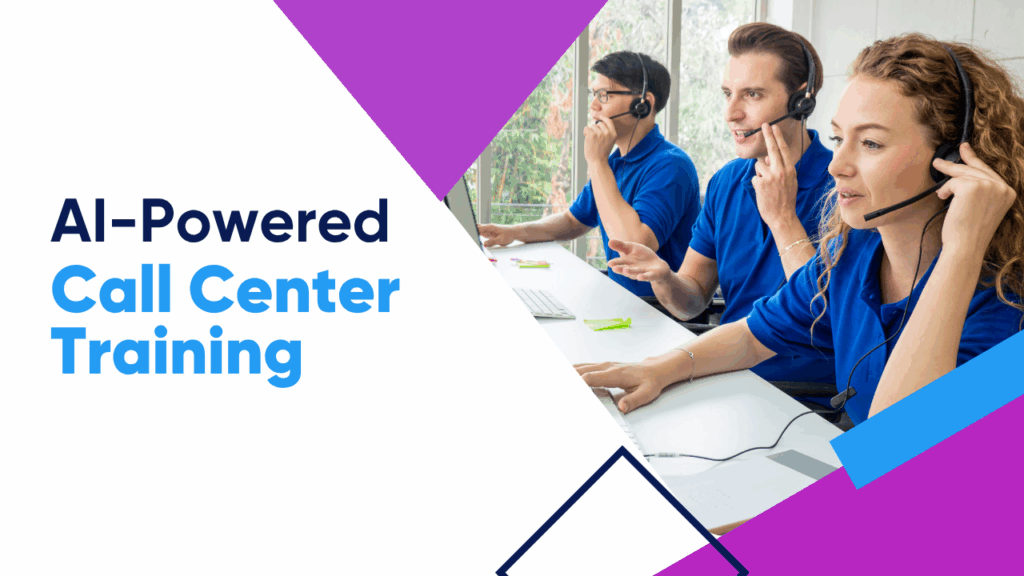
Customers today expect more than just scripts – they want to be able to communicate effectively and empathize with one another. A new generation of AI-powered training tools is reshaping how contact centers develop high-performing teams today. AI enables training to be more adaptive, data-driven, and impactful through real-time coaching and personalized feedback. Learn how AI can enhance customer experience and boost team performance in Call Center Training. Why AI-Powered Call Center Training Matters Traditional training methods — workshops, manuals, and one-time sessions — often fail to keep up with changing customer expectations. AI changes that by offering continuous learning experiences. With AI tools, you can: The result? Faster onboarding, better retention, and more confident agents ready to handle any situation. 1. Personalized Learning Paths for Every Agent No two agents learn the same way. AI analyzes an individual’s strengths, weaknesses, and performance data to create personalized learning paths. This ensures: Example: AI can detect an agent’s recurring struggle with empathy during calls and suggest modules or simulations focused on emotional intelligence. 2. Real-Time Feedback and Coaching Imagine having a digital coach that listens, evaluates, and guides — all in real time. AI systems can now analyze live conversations and provide instant suggestions to agents. For example: This immediate feedback loop helps agents learn by doing, resulting in faster skill mastery and improved performance. 3. Interactive Voice Simulations For Call Center Training AI-driven voice simulation platforms allow agents to practice conversations in realistic, risk-free environments. These simulations mimic customer emotions, accents, and scenarios to help agents build confidence before handling real calls. Benefits: Such immersive experiences are proven to enhance call handling quality and first-call resolution rates. 4. Gamification for Engagement Training doesn’t have to be boring. AI can gamify call center training with challenges, leaderboards, and rewards — turning routine learning into a fun, competitive experience. Gamification encourages: A motivated team is a productive team, and AI ensures learning stays both exciting and rewarding. 5. Predictive Analytics for Performance Improvement AI uses predictive analytics to forecast performance trends. For example, if data shows a pattern of long call durations, AI might identify underlying training gaps in product knowledge or communication style. By acting proactively, managers can implement targeted training interventions before small issues become major problems. 6. Data-Driven Quality Assurance For Call Center Training Gone are the days of manually reviewing call recordings. AI automates Quality Assurance (QA) by analyzing every call for tone, sentiment, and accuracy. This means: QA insights can then be integrated back into the training program — making it smarter and more personalized over time. 7. Continuous Learning Through Microlearning Instead of long, draining sessions, AI can deliver bite-sized microlearning modules directly to agents based on performance data. For instance, after an agent struggles with handling irate customers, the system might assign a short, focused module on de-escalation techniques. Microlearning ensures continuous growth without interrupting daily workflows. 8. Sentiment and Emotion Analysis AI tools analyze tone, pacing, and word choice to understand how customers feel during interactions. This sentiment analysis helps identify empathy gaps and areas for emotional intelligence training. Over time, agents learn to adapt their communication style — improving overall customer satisfaction (CSAT) and brand loyalty. 9. Seamless Integration with LMS and E-Learning Platforms Modern AI-powered call center training solutions integrate effortlessly with existing Learning Management Systems (LMS) and E-Learning platforms. This means organizations can continue using their preferred tools — while AI adds layers of automation, personalization, and analytics for a more robust training ecosystem. 10. Building a Culture of Continuous Improvement AI doesn’t just improve individual agents — it transforms organizational culture. By making feedback and learning a daily habit, teams become more proactive, adaptable, and growth-oriented. This continuous learning approach helps businesses: How Vocaliv’s AI Coach Transforms Call Center Training Vocaliv’s AI Coach is designed to make learning smarter and performance-driven. It empowers call center teams through: Whether you’re an L&D manager or training consultant, Vocaliv helps you streamline and supercharge your Call Center Training program. FAQs 1. How is AI used in call centers? AI is used in call centers to automate customer interactions, analyze conversations for insights, provide real-time agent assistance, and enhance customer experience through chatbots and voice analytics. 2. Can AI replace human trainers in call centers? No. AI enhances trainers’ capabilities by handling repetitive tasks and data analysis, allowing human trainers to focus on strategy and mentorship. 3.How long is call center training? Call center training typically lasts 2 to 6 weeks, depending on the company, role complexity, and products or services being supported. 4. What is the best training for call center agents? The best training for call center agents includes communication skills, product knowledge, customer service techniques, and AI-powered tools like Vocaliv for interactive, performance-based learning. Ready to Transform Your Call Center Training? Empower your call center agents with smarter, AI-driven learning.Explore how Vocaliv’s AI Coach can help you build high-performing, customer-focused teams that thrive in today’s digital-first world.
Gitex Dubai 2025: Experience Vocaliv AI Coach for Learning & Training
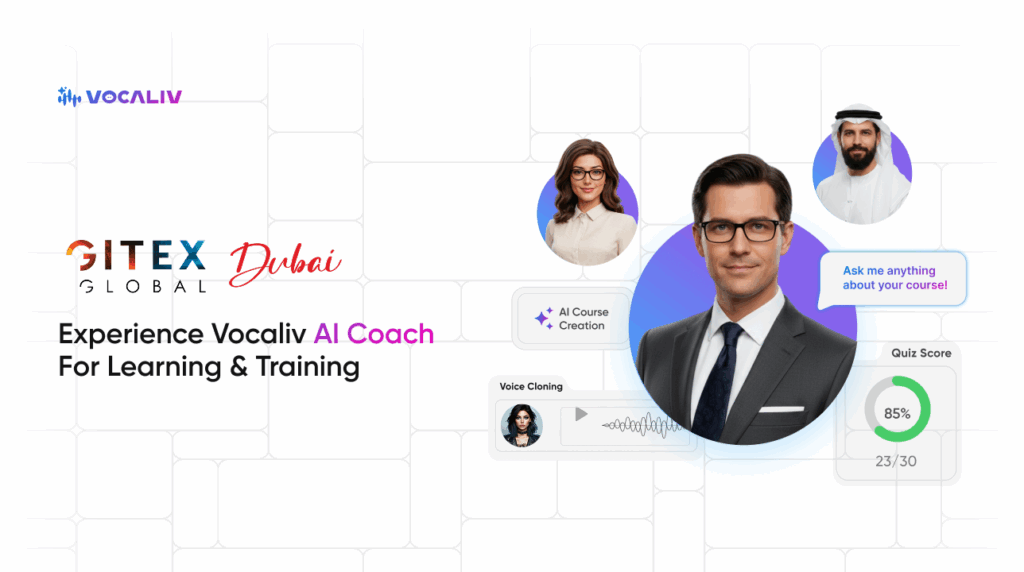
The Gitex Dubai 2025 event is set to be a global showcase of groundbreaking innovations in artificial intelligence, education, and digital transformation. Vocaliv, the artificial intelligence-driven teaching assistant platform that transforms the way educators and students learn, is among the most anticipated attendees. A symbol of the next generation of intelligent learning, Vocaliv’s AI Coach stands out in a world where artificial intelligence is transforming classrooms, training environments, and professional development. At Gitex 2025, Vocaliv will show how artificial intelligence can transform education into an adaptive, personal, and impactful experience.. Why Gitex Dubai 2025 Is the Perfect Stage for Vocaliv Gitex Dubai is more than just a technology exhibition — it’s a hub where ideas meet execution. In 2025, the event focuses on AI-driven transformation across sectors like education, healthcare, and enterprise innovation. For Vocaliv, this global platform offers the perfect opportunity to demonstrate how its AI Coach empowers educators and corporate trainers through: By bridging AI and education, Vocaliv’s presence at Gitex 2025 reinforces a crucial message: AI isn’t replacing teachers — it’s empowering them. Meet the Vocaliv AI Coach: A Smarter Way to Teach and Learn The Vocaliv AI Coach is not just a teaching assistant — it’s a learning companion designed to help educators deliver effective lessons and help students reach their full potential. Here’s what makes the Vocaliv AI Coach stand out: With these capabilities, Vocaliv’s AI Coach transforms the traditional classroom into a dynamic, data-driven environment that benefits both educators and learners. Vocaliv’s Vision for AI in Education At Gitex Dubai 2025, Vocaliv will emphasize its mission: to democratize access to intelligent teaching tools worldwide. Education should not be limited by location, budget, or resources — and that’s where AI comes in. Vocaliv’s key educational goals include: In essence, Vocaliv is not only about technology — it’s about transforming human potential through smarter learning tools. The Role of AI in the Future of Education AI is rapidly becoming the foundation of modern education systems. According to recent reports, the global AI in education market is expected to reach $30 billion by 2030, driven by demand for automation, personalization, and analytics. AI Coaches like Vocaliv are paving the way by enabling: At Gitex 2025, Vocaliv will highlight these trends through live demonstrations, interactive sessions, and discussions with global education leaders — showing how AI can power inclusive, scalable, and effective learning environments. Why Visit Vocaliv at Gitex Dubai 2025 If you’re attending Gitex Dubai this year, Vocaliv’s booth is a must-visit for anyone interested in the future of AI-powered education and training. Here’s what visitors can expect: Vocaliv’s showcase aims to inspire institutions and corporate trainers to embrace the digital shift and make learning more meaningful and efficient. The Future of Learning Starts at Gitex Dubai 2025 As we move toward a more digital and intelligent future, AI-powered learning platforms like Vocaliv are redefining what education can achieve. Gitex Dubai 2025 isn’t just about technology — it’s about vision, collaboration, and empowerment. If you’re passionate about innovation in education, don’t miss the chance to experience the Vocaliv AI Coach live at Gitex 2025. Witness firsthand how AI is shaping smarter, more inclusive learning for the next generation. Visit Vocaliv at Gitex Dubai 2025 to explore how AI can elevate your learning and training programs. Ready to integrate AI-powered teaching tools? Schedule your call today.
AI-Powered Student Learning vs. Traditional Learning: Key Differences
AI-powered student learning is one of the biggest shifts in education yet. From personalized tutoring to automated feedback, artificial intelligence is changing how students and teachers learn. Is this new approach more effective than traditional classroom learning? What about the effectiveness of AI-based education? Let’s examine the key differences, benefits, and future implications of AI in student learning. 1. The Evolution of Learning: From Classrooms to AI Systems For decades, traditional learning relied on a teacher-centered approach — structured lectures, standard textbooks, and uniform grading. While this model provided consistency, it often overlooked individual learning needs. Then came AI-powered education, where algorithms analyze student data to adapt lessons in real-time. Instead of one-size-fits-all, each learner now gets a customized path based on their progress and preferences. In traditional learning: In AI-powered learning: Example: Platforms like Vocaliv use AI teaching assistants to personalize quizzes, generate lesson plans, and provide adaptive assessments—bridging the gap between automation and human teaching. 2. Personalization: The Core of AI-Powered Learning One of the most significant differences between AI-driven learning and traditional education is personalization. Traditional classrooms often struggle with class sizes and diverse learning speeds. On the other hand, AI tools analyze individual behavior, offering content suited to a student’s comprehension level, learning style, and performance history. How AI Enhances Personalization: This ensures no student is left behind—or held back—because the system continuously learns and evolves with them. 3. Engagement and Interactivity In traditional learning, engagement largely depends on the teacher’s delivery style and student interest. Unfortunately, passive learning (just listening or reading) can lead to low retention rates. AI-powered platforms, however, transform this experience. Interactive tools like chatbots, gamified quizzes, and virtual simulations turn learning into an active process. AI encourages engagement through: This level of interaction keeps students motivated, curious, and consistent—especially in remote or self-paced environments. 4. Data-Driven Insights for Teachers AI doesn’t replace teachers—it empowers them. Educators using AI platforms get deep insights into each learner’s performance, helping them identify weak spots and tailor support. AI-generated reports can show: Traditional systems rely on manual grading and subjective evaluation, but AI analytics provide accuracy and speed that help teachers focus on mentorship and creativity instead of administrative tasks. 5. Accessibility and Flexibility Traditional learning is often tied to location, schedule, and classroom resources. But with AI-based learning platforms, education becomes accessible from anywhere, at any time. AI-powered systems also support multilingual learning, speech recognition, and accessibility tools for students with disabilities—something that traditional systems often fail to provide consistently. AI-Powered Learning Enables: 6. Cost Efficiency and Scalability Traditional education can be expensive—textbooks, facilities, and in-person sessions add up. AI-based learning systems reduce these costs significantly. Once developed, an AI platform can serve thousands of students simultaneously, offering scalable education solutions for institutions, corporates, and online learners. Example: With Vocaliv’s AI Teaching Assistant, educators and organizations can automate lesson planning, quizzes, and assessments—saving both time and resources. 7. Human Connection: What Traditional Learning Still Offers While AI excels in efficiency and data-driven precision, traditional education still holds a key advantage—human empathy. Face-to-face interactions, emotional understanding, and social learning are hard to replicate with machines. The best future model likely lies in blended learning, where human teachers and AI systems complement each other. Blended Learning Benefits: 8. The Future of Student Learning: Hybrid and AI-Enhanced The line between traditional and AI learning is blurring fast. As AI tools become more sophisticated, they’re not just supporting learning—they’re transforming it. In the coming years, we can expect: Education is becoming more human through AI, not less. FAQs Q1. Is AI replacing teachers? No. AI supports teachers by handling administrative tasks and providing data insights. Human teachers remain essential for mentorship, creativity, and emotional understanding. Q2. How are students using AI to learn?Students are using AI to learn through personalized study plans, instant feedback, AI tutors, and platforms like Vocaliv that help with lesson planning, assessments, and interactive learning experiences. Q3. Which is the best AI for students?The best AI tools for students include Vocaliv, ChatGPT, and Notion AI, which help with personalized learning, lesson planning, writing assistance, and smarter study organization. Q4. What are the advantages of AI as a student? As a student, AI offers personalized learning, instant feedback, efficient study planning, and make lessons and assessments more engaging and effective. The debate between AI-powered student learning vs. traditional learning isn’t about choosing one over the other—it’s about combining the best of both. With Vocaliv’s AI Teaching Assistant, educators can save time, personalize learning, and improve outcomes—without losing the human touch that defines great teaching. Ready to enhance your teaching with AI?Explore Vocaliv’s AI-powered education tools and discover the smarter, more personalized way to teach and learn.
What Is an AI Coach? How Artificial Intelligence Is Changing Personal Growth
What if you could have a mentor who knew your strengths, tracked your progress, and offered tailored guidance? That’s the reality of the AI Coach. AI-powered coaching is transforming personal and professional growth across classrooms, corporate offices, and online learning environments.. Whether you are a teacher striving to improve student outcomes, a corporate trainer seeking to upskill employees efficiently, or a lifelong learner seeking guidance, understanding AI coaching is essential in today’s tech-driven world. An AI Coach is an intelligent digital assistant that leverages artificial intelligence to provide personalized learning, feedback, and guidance. As opposed to traditional coaching, AI coaches adapt to each user’s unique needs, learning style, and performance metrics using data-driven insights. Key Features of AI Coaches Platforms like Vocaliv harness AI coaching to empower learners and educators globally, creating interactive and highly effective learning experiences. Why AI Coaches Are Changing Personal Growth AI coaches are not just digital tools—they are catalysts for meaningful, measurable personal and professional development. 1. Personalized Learning at Scale with Ai Coach AI coaches analyze user behavior, assessment results, and engagement patterns to deliver tailored recommendations. This means learners get guidance suited to their needs, rather than generic one-size-fits-all advice. Benefits include: 2. Empowering Corporate Training With Ai Coach Corporate L&D departments increasingly adopt AI coaches to enhance employee growth. By integrating AI coaching into training programs, organizations can: AI coaching helps employees stay motivated, while managers gain clear insights into learning outcomes, making corporate training measurable and effective. 3. Supporting Educators and Trainers Educators benefit significantly from AI coaches by: Tools like Vocaliv’s AI teaching assistant streamline administrative tasks, giving teachers more time to focus on instruction and student engagement. 4. Encouraging Self-Directed Growth With Ai Coach AI coaches empower individuals to take ownership of their personal development by providing: Whether learning a new skill, preparing for certifications, or advancing in a career, AI coaches offer a personal mentor experience at scale. Real-World Applications of AI Coaches AI coaching is versatile and increasingly integrated across multiple sectors: The Future of AI Coaching The next generation of AI coaches will integrate advanced natural language processing, emotional intelligence, and predictive analytics. This means: As AI evolves, coaching will become more proactive, intuitive, and effective in driving personal and professional growth. FAQs: 1. How do I create an AI coach? You can create an AI coach by defining its purpose, collecting training data, choosing an AI platform or framework, building a conversational model, integrating personalization features, and continuously testing and improving it. 2. Can AI replace human coaches? AI coaches complement human coaching by providing scalable, data-driven support. They are most effective when combined with human guidance. 3. Is there an AI personal coach? Yes, AI personal coaches exist, and platforms like Vocaliv offer AI-driven guidance for learning and skill development, providing personalized recommendations and adaptive support based on user goals. 4. Are AI coaches suitable for corporate training? Yes. AI coaches enhance employee learning outcomes, track progress, and provide insights for managers to optimize training programs. 5. How do AI coaches help educators? They automate administrative tasks, monitor student progress, and provide actionable insights for lesson planning and personalized teaching. Embrace the AI Coaching Revolution AI coaches are redefining personal growth, corporate training, and education. By leveraging AI for personalized guidance, continuous feedback, and scalable mentorship, learners and organizations alike can unlock their full potential. Ready to experience the future of learning? Explore how Vocaliv’s AI teaching assistant can transform your learning and development programs today.