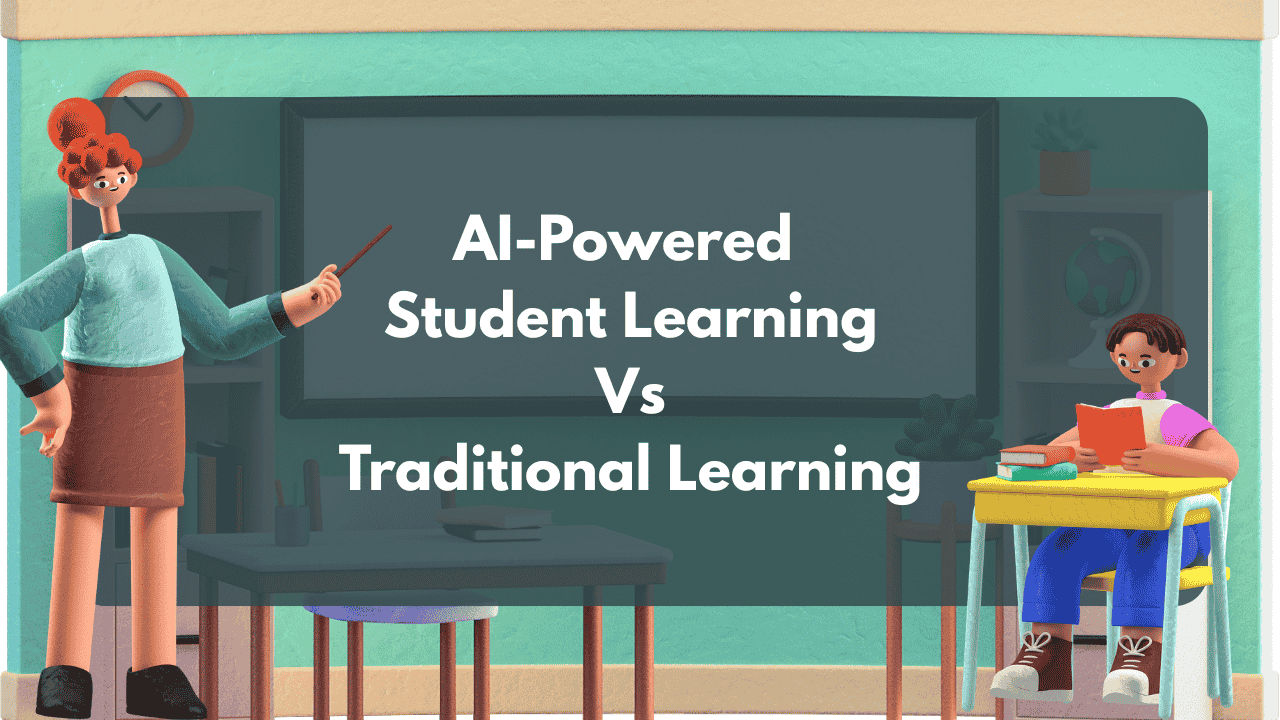
AI-powered student learning is one of the biggest shifts in education yet. From personalized tutoring to automated feedback, artificial intelligence is changing how students and teachers learn.
Is this new approach more effective than traditional classroom learning? What about the effectiveness of AI-based education? Let’s examine the key differences, benefits, and future implications of AI in student learning.
1. The Evolution of Learning: From Classrooms to AI Systems
For decades, traditional learning relied on a teacher-centered approach — structured lectures, standard textbooks, and uniform grading. While this model provided consistency, it often overlooked individual learning needs.
Then came AI-powered education, where algorithms analyze student data to adapt lessons in real-time. Instead of one-size-fits-all, each learner now gets a customized path based on their progress and preferences.
In traditional learning:
- Teachers guide all students at the same pace
- Limited scope for personalized support
- Feedback is often delayed
In AI-powered learning:
- Students learn at their own pace
- Real-time performance tracking and feedback
- AI adjusts lesson difficulty automatically
Example: Platforms like Vocaliv use AI teaching assistants to personalize quizzes, generate lesson plans, and provide adaptive assessments—bridging the gap between automation and human teaching.
2. Personalization: The Core of AI-Powered Learning
One of the most significant differences between AI-driven learning and traditional education is personalization.
Traditional classrooms often struggle with class sizes and diverse learning speeds. On the other hand, AI tools analyze individual behavior, offering content suited to a student’s comprehension level, learning style, and performance history.
How AI Enhances Personalization:
- Adaptive assessments that change based on real-time results
- Smart recommendations for extra reading or practice
- Voice-based assistants that provide instant help or clarification
This ensures no student is left behind—or held back—because the system continuously learns and evolves with them.
3. Engagement and Interactivity
In traditional learning, engagement largely depends on the teacher’s delivery style and student interest. Unfortunately, passive learning (just listening or reading) can lead to low retention rates.
AI-powered platforms, however, transform this experience. Interactive tools like chatbots, gamified quizzes, and virtual simulations turn learning into an active process.
AI encourages engagement through:
- Gamified progress tracking (badges, rewards, levels)
- Interactive voice or chat-based tutors
- Immersive AR/VR-based learning modules
This level of interaction keeps students motivated, curious, and consistent—especially in remote or self-paced environments.
4. Data-Driven Insights for Teachers
AI doesn’t replace teachers—it empowers them. Educators using AI platforms get deep insights into each learner’s performance, helping them identify weak spots and tailor support.
AI-generated reports can show:
- Which topics a student struggles with
- How much time they spend on lessons
- Their preferred learning medium (video, text, or quiz)
Traditional systems rely on manual grading and subjective evaluation, but AI analytics provide accuracy and speed that help teachers focus on mentorship and creativity instead of administrative tasks.
5. Accessibility and Flexibility
Traditional learning is often tied to location, schedule, and classroom resources. But with AI-based learning platforms, education becomes accessible from anywhere, at any time.
AI-powered systems also support multilingual learning, speech recognition, and accessibility tools for students with disabilities—something that traditional systems often fail to provide consistently.
AI-Powered Learning Enables:
- 24/7 access to study materials
- Language translation and voice support
- Cloud-based collaboration tools for group learning
6. Cost Efficiency and Scalability
Traditional education can be expensive—textbooks, facilities, and in-person sessions add up. AI-based learning systems reduce these costs significantly.
Once developed, an AI platform can serve thousands of students simultaneously, offering scalable education solutions for institutions, corporates, and online learners.
Example: With Vocaliv’s AI Teaching Assistant, educators and organizations can automate lesson planning, quizzes, and assessments—saving both time and resources.
7. Human Connection: What Traditional Learning Still Offers
While AI excels in efficiency and data-driven precision, traditional education still holds a key advantage—human empathy.
Face-to-face interactions, emotional understanding, and social learning are hard to replicate with machines. The best future model likely lies in blended learning, where human teachers and AI systems complement each other.
Blended Learning Benefits:
- AI handles repetitive tasks and data analysis
- Teachers focus on critical thinking and creativity
- Students receive both personalized support and human mentorship
8. The Future of Student Learning: Hybrid and AI-Enhanced
The line between traditional and AI learning is blurring fast. As AI tools become more sophisticated, they’re not just supporting learning—they’re transforming it.
In the coming years, we can expect:
- Fully adaptive classrooms powered by AI analytics
- Real-time student feedback loops
- Emotion-aware AI assistants that sense frustration or confusion
Education is becoming more human through AI, not less.
FAQs
Q1. Is AI replacing teachers?
No. AI supports teachers by handling administrative tasks and providing data insights. Human teachers remain essential for mentorship, creativity, and emotional understanding.
Q2. How are students using AI to learn?
Students are using AI to learn through personalized study plans, instant feedback, AI tutors, and platforms like Vocaliv that help with lesson planning, assessments, and interactive learning experiences.
Q3. Which is the best AI for students?
The best AI tools for students include Vocaliv, ChatGPT, and Notion AI, which help with personalized learning, lesson planning, writing assistance, and smarter study organization.
Q4. What are the advantages of AI as a student?
As a student, AI offers personalized learning, instant feedback, efficient study planning, and make lessons and assessments more engaging and effective.
The debate between AI-powered student learning vs. traditional learning isn’t about choosing one over the other—it’s about combining the best of both.
With Vocaliv’s AI Teaching Assistant, educators can save time, personalize learning, and improve outcomes—without losing the human touch that defines great teaching.
Ready to enhance your teaching with AI?
Explore Vocaliv’s AI-powered education tools and discover the smarter, more personalized way to teach and learn.