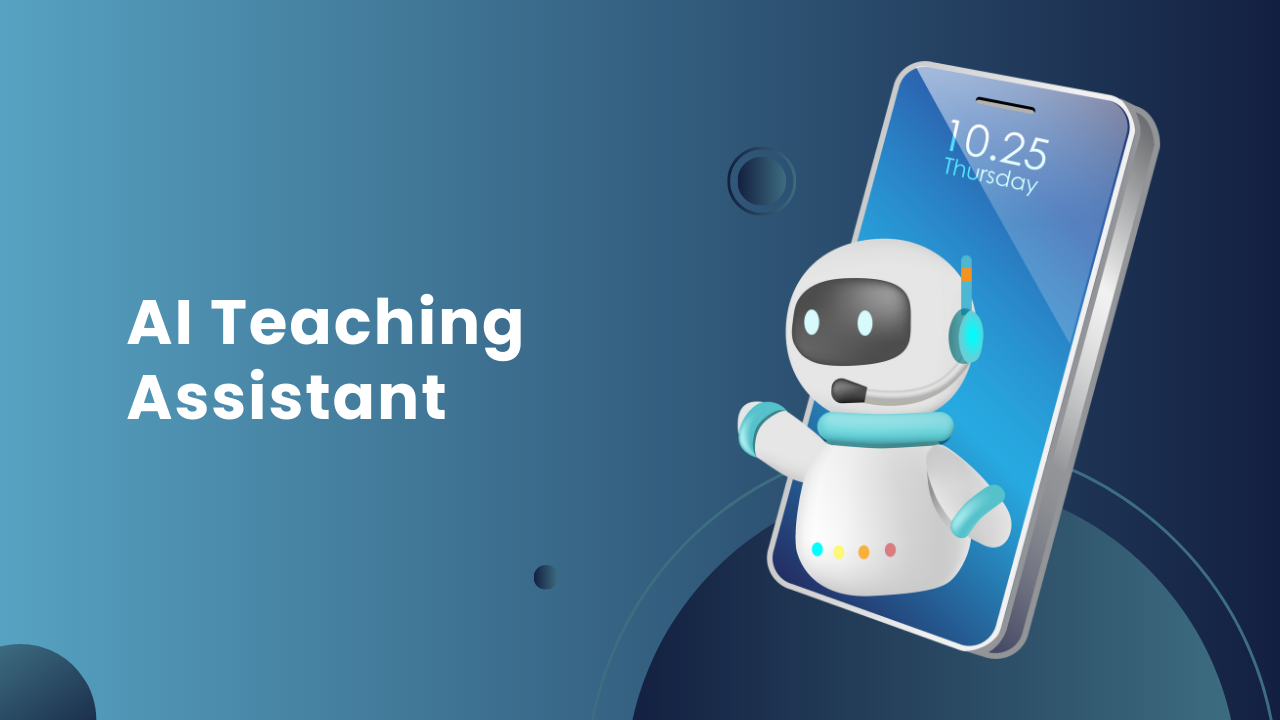
An AI teaching assistant is a software tool or platform that uses artificial intelligence—specifically machine learning and natural language processing—to support teachers in delivering instruction, managing classroom tasks, and providing student feedback.
Some popular examples include:
- Khanmigo by Khan Academy: Provides real-time tutoring powered by GPT models.
- Google Classroom with AI integrations: Automates assignment grading and gives feedback.
- Socratic by Google: Helps students find answers with AI explanations.
These assistants can interact with students, generate personalized content, and even adapt to students’ learning paces.
Benefits of AI Teaching Assistants
1. Reducing Administrative Work
AI tools can automate time-consuming tasks like:
- Grading multiple-choice quizzes
- Tracking attendance
- Creating personalized learning paths
- Answering routine student questions
This allows teachers to focus more on creative teaching and one-on-one student engagement.
2. Personalized Learning at Scale
AI can analyze student performance data in real-time and adjust:
- Difficulty levels
- Types of activities
- Feedback styles
This personalization was once impossible in a large classroom but is now becoming routine.
3. Real-Time Student Support
AI bots can offer 24/7 help—especially beneficial in hybrid or asynchronous learning environments. Students can get immediate feedback on:
- Homework questions
- Math problems
- Essay structure and grammar
It’s like having a tutor on-demand.
4. Inclusive Education
AI teaching assistants can help students with special needs through tools like:
- Text-to-speech and speech-to-text
- Visual learning aids
- Multilingual support for ESL learners
The Human Touch Still Matters
While AI teaching assistants offer remarkable support, they are not replacements for human educators. AI lacks the empathy, intuition, and moral reasoning that define great teachers.
Instead, think of AI as a co-pilot—handling repetitive tasks so teachers can invest more energy into relationship-building, creativity, and mentorship.
Challenges of Using AI Teaching Assistants
Despite the advantages, there are challenges educators should be aware of:
- Data Privacy: AI tools collect large amounts of student data, raising concerns about how it’s stored and used.
- Bias in Algorithms: AI systems may reflect societal biases, leading to unfair treatment or feedback.
- Over-reliance on Technology: Some worry that depending too much on AI could reduce critical thinking and interpersonal communication in students.
- Accessibility: Not all schools have equal access to advanced tools, which may widen the digital divide.
To mitigate these issues, schools need proper policies, teacher training, and transparent AI practices.
Real-World Applications in Modern Classrooms
Many schools around the world are already seeing positive outcomes:
- Georgia State University uses AI chatbots to answer thousands of student queries, reducing summer melt by 21%.
- Duolingo uses AI to personalize language lessons for millions of users, keeping them engaged and improving learning retention.
- Carnegie Learning’s MATHia adapts to student responses, mimicking a human tutor for math problem-solving.
Educators report less stress, while students enjoy a more interactive and customized experience.
Future of AI Teaching Assistants
The future holds promise for even smarter assistants that can:
- Simulate class discussions
- Understand emotional cues
- Assist in lesson planning and content creation
- Offer AR/VR-powered immersive learning
As AI becomes more human-aware, its classroom role will continue to grow—provided ethical and educational standards evolve alongside.
FAQs About AI Teaching Assistants
What can AI teaching assistants do?
They automate grading, personalize learning, provide feedback, and answer student questions in real-time.
Will AI replace teachers?
No. AI supports but doesn’t replace the human role of teaching.
Are AI teaching assistants safe for students?
With proper data privacy measures and oversight, AI tools can be safely integrated into education.
Conclusion: Embrace the Change
AI teaching assistants aren’t here to take over classrooms—they’re here to transform them. By lightening the load on educators and offering students personalized support, these tools are making learning more efficient, engaging, and inclusive. For teachers ready to adapt, the future is not just promising—it’s already here.