
Compliance Training Trends in UAE for 2026
The UAE’s compliance landscape is undergoing a significant shift in 2026. Driven by the federal Personal Data Protection Law (PDPL), updated Anti-Money Laundering (AML) frameworks, and MOHRE workplace regulations, organisations across the country face new pressure to deliver compliance training that is continuous, measurable, and role-specific. This guide covers the five most important compliance training trends in the UAE for 2026, the regulatory areas driving training demand, and a practical framework organisations can use to assess their current programmes. What Is Compliance Training in the UAE Context? Compliance training in the UAE refers to structured learning programmes that ensure employees understand and adhere to the country’s legal, regulatory, and ethical requirements. These include federal laws such as the UAE Labour Law, PDPL, and sector-specific rules governed by bodies like the Central Bank of the UAE (CBUAE), the Securities and Commodities Authority (SCA), and the Abu Dhabi Global Market (ADGM). In 2026, compliance training is no longer treated as a one-time event. Regulatory bodies increasingly expect organisations to demonstrate ongoing, documented learning with measurable outcomes. Why UAE Organisations Are Rethinking Compliance Training in 2026 Several regulatory developments have made the traditional annual-training model insufficient: The combined effect: regulators now want evidence of continuous learning, not a signed attendance sheet from twelve months ago. Top 5 Compliance Training Trends in the UAE for 2026 Trend 1: AI-Powered Personalisation Replaces Generic Modules AI-driven compliance training platforms assess each employee’s role, risk exposure, and knowledge gaps to deliver targeted learning paths rather than uniform content. A financial analyst at a DIFC-regulated firm and a site supervisor on a construction project carry very different compliance risks. A single module cannot address both effectively. How it works in practice: Key benefit: Organisations reduce time spent on irrelevant training and increase knowledge retention in high-risk areas. Trend 2: Microlearning Becomes the Standard Delivery Format Microlearning delivers compliance content in focused sessions of 3 to 8 minutes, designed to fit within an employee’s working day rather than requiring dedicated training time. Why organisations in the UAE are adopting it: Examples of microlearning in compliance contexts: Trend 3: Scenario-Based Learning for High-Risk Compliance Roles Scenario-based compliance training places employees in realistic, decision-point situations, such as receiving a suspicious transaction, witnessing workplace misconduct, or handling a data breach, rather than presenting rules passively. Who needs it most in the UAE: Role / Sector Compliance Risk Area Recommended Format Banking & Financial Services AML, insider trading, sanctions Interactive simulations Healthcare Patient data privacy, clinical ethics Branching scenario e-learning Government & Semi-Government Anti-corruption, public sector ethics Role-play and assessment Construction & Contracting HSE, subcontractor compliance VR-assisted training Why passive e-learning falls short: Employees who only read about compliance rules score higher on knowledge tests but perform no better in real-world situations. Scenario-based training closes this gap by building decision-making ability, not just awareness. Trend 4: Multilingual Compliance Training Is Now a Regulatory Expectation The UAE’s workforce comprises over 200 nationalities. English-only compliance training leaves significant portions of a workforce unable to fully understand their obligations. Languages commonly required for UAE compliance training: The regulatory dimension: If an employee was not provided training in a language they comprehend, this can undermine an organisation’s compliance defence in the event of a regulatory investigation or labour dispute. Best practice: Compliance training content should be translated and culturally localised, meaning scenarios, examples, and cultural references are adapted, not just the language. Trend 5: Continuous Compliance Training Replaces Annual Cycles UAE regulators and international frameworks including FATF and ISO 37301 Compliance Management now expect organisations to demonstrate ongoing compliance education, not a single annual event. What continuous compliance training looks like in practice: Why annual cycles are becoming a liability: Annual training cannot account for regulatory changes mid-year, new hires who join after the training window, or employees who transfer to higher-risk roles. Continuous training addresses all three. The infrastructure implication: Organisations need a Learning Management System (LMS) built for compliance, one that automates scheduling, tracks completions, and generates evidence for regulators, not a general-purpose training platform. Key Compliance Areas Driving Training Demand in UAE (2026) Compliance Area Primary Regulation / Body Who Needs Training Priority Level Data Protection PDPL — Federal Decree-Law No. 45/2021 All employees High Anti-Money Laundering (AML) CBUAE / FATF framework Financial services, compliance teams Critical Workplace Health & Safety MOHRE Ministerial Resolutions Construction, manufacturing, hospitality High ESG & Sustainability Reporting SCA / investor requirements Senior management, finance Medium-High Cybersecurity Awareness UAE National Cybersecurity Strategy IT, finance, operations High Anti-Corruption & Ethics UAE Federal Penal Code, ADGM/DIFC rules All staff, especially client-facing High Financial Crime & Sanctions OFAC, UN Sanctions, UAE Executive Office Banking, trade finance Critical The FRAM Framework: Assessing Your Training Readiness Organisations looking to evaluate or rebuild their compliance training programmes can apply the FRAM Framework — a four-dimension model developed by Vocaliv for assessing compliance training readiness in 2026. Dimension What It Means Key Question to Ask F — Focus Content matched to roles, risk levels, and specific regulations Is our training relevant to each employee’s actual compliance exposure? R — Recurrence Ongoing touchpoints rather than annual events Do we have a schedule that reflects how often regulations change? A — Accessibility Mobile-first, multilingual, available on demand Can every employee access training in their language, on their device? M — Measurability Data that proves learning occurred and behaviours changed Can we produce compliance training evidence for a regulator today? Organisations that perform well across all four dimensions are better positioned for regulatory audits, demonstrate a genuine culture of compliance, and reduce the risk of human-error failures. Frequently Asked Questions: Q1: What is meant by compliance training? Compliance training means educating employees about laws, regulations, company policies, ethics, and standards they must follow in the workplace. Q2: What are examples of compliance training? Examples of compliance training include workplace harassment prevention, data privacy and GDPR, health and safety, AML, cybersecurity awareness, code of conduct, DEI, anti bribery, HIPAA, and environmental compliance. Q3: What are the 4 types of training?
AI-Powered Employee Onboarding Software: The Future of Workforce Training
The following figures represent peer-reviewed and industry-reported outcomes from organisations that have implemented AI-powered employee onboarding software. 82%improvement in 90-day new hire retentioninFeedo, 2025 53%reduction in time-to-productivityDeloitte, 2024 $18Kaverage annual savings per HR teamPaychex, 2024 68%of organisations now use AI in onboardingMultiple sources, 2025 40%faster path to peak performanceinFeedo, 2025 14 daysto pilot launch with pre-built templatesDisco, 2024 What Is AI-Powered Employee Onboarding Software? ❓ What is AI-powered employee onboarding software?AI-powered employee onboarding software is a digital platform that uses machine learning, natural language processing, and behavioural analytics to automate administrative onboarding tasks and personalise the training journey for each new hire. Unlike static onboarding tools or basic LMS platforms, it adapts content in real time based on each employee’s role, experience level, learning pace, and skill gaps , delivering a unique onboarding path without requiring HR to build each journey manually. Traditional onboarding runs every new hire through the same sequence regardless of their background, role, or learning needs. AI onboarding software replaces that fixed approach with a system that responds dynamically , adjusting content, pacing, and support as each employee progresses. Core Technical Capabilities Modern AI onboarding platforms typically include the following capabilities: AI Onboarding vs. Traditional Methods: A Structured Comparison ❓ How does AI onboarding software compare to traditional onboarding?AI-powered onboarding software outperforms traditional approaches across every measurable dimension: it reduces time-to-productivity by up to 53%, automates administrative workflows that previously required significant HR time, provides 24/7 conversational support, and delivers real-time analytics with predictive attrition signals , none of which are available in standard or paper-based onboarding programmes. Capability Traditional Onboarding Basic LMS AI-Powered Software Personalization None , generic for all roles Limited by template Adaptive, role-specific paths Admin Overhead High , paper, email, manual tracking Moderate , template-based Low , fully automated workflows Employee Support HR business hours only Email / help desk tickets 24/7 conversational AI chatbot Progress Visibility Spreadsheets or manager reports Basic completion dashboards Real-time analytics + risk flags Time-to-Productivity Weeks to months 2–4 weeks typically Up to 53% faster (Deloitte 2024) Content Freshness Manual update cycle Scheduled batch updates Continuous, AI-driven refresh Remote/Global Reach Inconsistent Limited language support Multilingual, async-ready Source note: Time-to-productivity figure based on Deloitte 2024 Global Human Capital Trends report. Retention figure based on inFeedo 2025 State of Onboarding report. 5 Measurable Benefits of AI-Powered Employee Onboarding ❓ What are the main benefits of AI-powered employee onboarding software?The five primary benefits are: Personalised learning at scale , content adapts to each new hire’s role and skill level. Administrative automation , routine HR tasks are handled without manual input. Real-time progress tracking with predictive risk flags. Faster time-to-productivity , up to 53% faster than traditional methods.Consistent experience for remote and global teams through multilingual, asynchronous delivery. 1. Personalised Learning at Scale The platform analyses each individual’s role, department, seniority, and prior experience to curate content that is immediately applicable. A software engineer and a customer success manager joining on the same day receive entirely different onboarding journeys , automatically. Organisations using intelligent personalisation in L&D report higher learner engagement and faster competency development. 2. Administrative Automation That Frees HR for Strategic Work AI onboarding software handles the repetitive operational layer: pre-filled forms, e-signature workflows, IT provisioning, benefits enrolment reminders, and compliance acknowledgements. Hitachi reduced its onboarding process by four full days after implementing an AI-driven system, allowing HR to refocus on cultural integration and relationship-building. 3. Real-Time Progress Tracking and Predictive Intervention Managers and L&D teams gain live visibility into each new hire’s completion rate, comprehension score, and engagement level. Predictive models surface risk flags before disengagement becomes attrition , enabling proactive support rather than reactive problem-solving. 4. Faster Time-to-Productivity AI-powered onboarding reduces time-to-productivity by up to 53%. Microlearning nudges delivered through Slack, Microsoft Teams, or mobile ensure that new hires receive targeted knowledge at the exact moment they need it , compressing the traditional ramp-up timeline significantly. This has measurable revenue impact in SaaS, EdTech, and technology businesses where each week of delayed contribution carries a direct cost. 5. Consistent Experience Across Remote and Global Teams Multilingual support, asynchronous content delivery, and virtual onboarding sequences ensure that the quality of the onboarding experience does not depend on geography or time zone. A new hire joining remotely in Singapore receives the same structured, high-quality introduction as a team member onboarding in person in London. Platform Evaluation Scorecard: 7 Criteria for Choosing AI Onboarding Software ❓ What should organisations look for in an AI onboarding platform?Organisations should evaluate AI onboarding software against seven criteria: role-based learning path automation, native HRIS/LMS integrations, 24/7 conversational AI support, data privacy compliance (SOC 2, GDPR, CCPA), predictive attrition analytics, scalability from small to enterprise volumes, and a realistic implementation timeline (14 days for pilot, 4–8 weeks for full rollout). Evaluation Criterion Key Question to Ask the Vendor Score /10 Role-Based Learning Path Automation Does the system auto-generate structured onboarding journeys by job title, department, and seniority without manual HR input? ___ HRIS / LMS Native Integrations Does it connect out-of-the-box with Workday, BambooHR, SAP SuccessFactors, Salesforce, or your current LMS? ___ Conversational AI Support Does a 24/7 chatbot handle first-week FAQs, IT queries, and policy questions without escalating to HR? ___ Data Privacy & Compliance Does the platform hold SOC 2 Type II certification and comply with GDPR, CCPA, and relevant regional regulations? ___ Predictive Attrition Analytics Does it flag disengagement risk and surface early intervention alerts for managers and HR? ___ Scalability & Performance Does it maintain consistent performance from 20 to 20,000+ concurrent onboarding users? ___ Implementation Timeline Can a pilot be launched within 14 days and a full rollout completed within 4–8 weeks? ___ Tip: Use this scorecard during vendor demos. Ask each vendor to provide documented evidence , not sales assertions , for each criterion. Request a copy of their SOC 2 Type II report and their average implementation timeline by company size. The 6-Phase Implementation Framework ❓ How do you implement AI-powered employee onboarding software?Implementation follows six phases: Audit , map the current
Why Cyber Security Staff Training Is Essential for UAE Companies
Cyber security staff training is essential for UAE companies because 80% of security breaches involve human error. With the UAE’s rapid digitalization and position as a regional business hub, untrained employees create vulnerabilities that cost millions in data breaches, regulatory penalties, and reputational damage. Training transforms staff from security risks into active defenders. The UAE’s digital transformation is accelerating at breakneck speed. From smart cities to cashless transactions, businesses across Dubai, Abu Dhabi, and beyond are embracing technology like never before. But here’s the uncomfortable truth: your most expensive firewall won’t save you if an employee clicks the wrong email link. Recent data shows that over 80% of security breaches involve human error. For companies operating in the UAE’s competitive landscape, especially those in AI, EdTech, SaaS, and e-learning sectors, this statistic should be a wake-up call. Cyber security staff training isn’t just an IT department concern anymore. It’s a business survival strategy. What Are the Real Costs of Untrained Staff for UAE Businesses? Untrained staff cost UAE businesses through three primary channels: immediate financial losses from breaches, regulatory penalties under UAE data protection laws, and long-term reputational damage that affects customer retention and acquisition. Financial Impact Breakdown Immediate costs include: Long-term costs include: Industry-specific risks: What Cyber Threats Specifically Target UAE Companies? UAE companies face five primary cyber threat categories: phishing attacks customized for regional business culture, social engineering exploiting multilingual workforces, ransomware targeting high-value intellectual property, insider threats from untrained employees, and supply chain attacks through third-party vendors. UAE-Specific Threat Landscape Threat Type How It Targets UAE Companies Risk Level Phishing Arabic/English bilingual scams mimicking UAE government, banks Critical Social Engineering Exploits diverse workforce, cultural communication norms High Ransomware Targets companies with valuable IP, low security maturity Critical Insider Threats Unintentional data sharing, weak password practices High Supply Chain Attacks Third-party vendor compromises, integration vulnerabilities Medium-High Why UAE is a prime target: What Should Cyber Security Staff Training Include? Effective cyber security staff training must cover seven core components: phishing recognition, password management, data classification, device security, incident reporting, social engineering awareness, and compliance requirements. Training should be role-specific, regularly updated, and include practical simulations. Essential Training Framework 1. Phishing Recognition and Response 2. Password Management and Authentication 3. Data Handling and Classification 4. Device Security and Remote Work 5. Incident Recognition and Reporting 6. Social Engineering Awareness 7. Compliance and Legal Requirements Industry-Specific Training Modules EdTech and E-Learning: SaaS Companies: AI Services: How Do You Build a Security-Conscious Culture? Building a security-conscious culture requires five elements: leadership commitment, no-blame reporting systems, regular communication, security champions program, and integration of security into existing workflows. Culture change takes 6-12 months with consistent reinforcement. Culture-Building Framework Step 1: Leadership Commitment (Weeks 1-4) Step 2: No-Blame Reporting System (Weeks 2-6) Step 3: Continuous Communication (Ongoing) Step 4: Security Champions Program (Months 2-3) Step 5: Workflow Integration (Months 3-6) How Do You Measure Training Effectiveness? Measure training effectiveness through six key metrics: phishing simulation click rates (target: below 5%), security incident reports (higher is better), mean time to detect threats (target: under 24 hours), policy compliance rates (target: 95%+), training completion rates, and employee confidence surveys. Measurement Framework Metric Target Measurement Frequency Tool/Method Phishing simulation click rate <5% Monthly Automated phishing tools Security incidents reported Trending up initially Weekly Incident tracking system Time to detect simulated threats <24 hours Quarterly Penetration testing Policy compliance rate >95% Monthly Automated compliance scans Training completion rate 100% Quarterly LMS tracking Employee confidence score >7/10 Bi-annually Anonymous surveys How to interpret results: What Are UAE’s Cyber Security Compliance Requirements? UAE companies must comply with the UAE Data Protection Law (Federal Decree-Law No. 45 of 2021), which requires documented security training, breach notification within 72 hours, and demonstrable security measures. Additional requirements vary by sector and international client base. Compliance Checklist for UAE Companies UAE Data Protection Law Requirements: Sector-Specific Requirements: International Compliance (if applicable): What Is the ROI of Cyber Security Training? Cyber security training delivers 3:1 to 5:1 ROI through reduced breach costs, lower insurance premiums (10-20% reduction), decreased incident response expenses, and improved customer trust. The average training investment of $500-$1,500 per employee prevents average breach costs of $200,000+. ROI Calculation Framework Investment Costs: Measurable Returns: Typical ROI Timeline: FAQs About Cyber Security Staff Training Q1: What is cyber security awareness training for staff? Cybersecurity awareness training for staff teaches employees how to recognize threats, follow security best practices, and protect company data from cyber attacks. Q2: How to train employees on cyber security? Train employees on cybersecurity through awareness sessions, phishing simulations, clear security policies, regular assessments, and ongoing AI powered training programs. Q3: What type of training is required for cyber security? Cybersecurity training includes awareness training, phishing simulation, secure password practices, data protection, threat detection, and incident response training. Conclusion: Cyber security staff training is non-negotiable for UAE companies in 2024. With 80% of breaches stemming from human error, comprehensive training programs that cover phishing recognition, password management, data handling, and compliance requirements transform employees from vulnerabilities into assets. Effective programs include industry-specific modules, regular simulations, measurable KPIs, and culture-building initiatives that deliver 3:1 to 5:1 ROI. Every day your team operates without proper cyber security training is another day of unnecessary risk. The threats facing UAE businesses aren’t going away. They’re getting more sophisticated, more targeted, and more costly. Your employees are either your strongest defense or your weakest link. The choice is yours. At Vocaliv, we understand the unique challenges facing AI, EdTech, SaaS, and e-learning companies in the UAE market. Our specialized cyber security staff training programs combine technical expertise with industry-specific scenarios, delivering practical skills your team can apply immediately. Key benefits of Vocaliv’s training: Don’t wait for a breach to take security seriously. Contact Vocaliv today to schedule a demo and discover how we can build a security-conscious culture that protects your business, your customers, and your reputation. Let’s turn your team into your best defense against cyber threats.
Cyber Security Training in Dubai for SMEs and Enterprises (2026)
Cyber security training is a structured educational program that teaches employees to identify, prevent, and respond to digital threats. In Dubai, these programs focus on compliance with UAE data protection laws, threat recognition, and building security-conscious organizational cultures. Training Duration: 4-8 hours (basic) to 40+ hours (advanced certifications) Cost Range: AED 1,500-5,000 per employee annually ROI: 70% reduction in security incidents for trained organizations Dubai’s digital landscape is booming, but so are the threats lurking in cyberspace. Last year alone, Middle Eastern businesses faced over 30 billion cyberattack attempts, with Dubai-based companies among the prime targets. If you’re running an SME or managing an enterprise in the UAE, the question isn’t whether you’ll face a cyber threat, but when. Here’s the reality: your weakest link isn’t your firewall or antivirus software. It’s your people. That’s exactly why investing in cyber security training in Dubai has become non-negotiable for businesses serious about protecting their digital assets. Why Dubai Businesses Need Cyber Security Training: 5 Critical Reasons Reason 1: High Attack Volume Dubai businesses face an average of 50,000+ cyberattack attempts weekly due to the city’s status as a regional business hub and financial center. Reason 2: Regulatory Compliance UAE Federal Decree-Law No. 45 of 2021 mandates that organizations implement “appropriate technical and organizational measures,” explicitly including employee security training. Reason 3: Financial Impact The average cost of a data breach in the UAE is $6.5 million. For SMEs with revenues under $50 million, a single breach can result in business closure. Reason 4: Human Error Statistics 82% of data breaches in the Middle East involve a human element, including phishing, misuse of credentials, or social engineering attacks. Reason 5: Digital Transformation Acceleration Dubai’s smart city initiatives and mandatory digital transformation across government and private sectors have increased attack surfaces by 340% since 2020. The Cyber Threat Landscape in Dubai: Key Statistics Threat Type Frequency in Dubai Average Cost Impact Phishing Attacks 64% of incidents AED 180,000-450,000 Ransomware 23% of incidents AED 890,000-2.3M Insider Threats 8% of incidents AED 1.2M-3.8M Supply Chain Attacks 5% of incidents AED 2.1M-5.7M Most Targeted Industries in Dubai: What Should Cyber Security Training Cover? The Complete Framework Module 1: Threat Recognition (Foundation Level) Learning Objectives: Time Required: 2-3 hours Assessment Method: Simulated phishing tests Module 2: Access Management and Authentication Core Competencies: Practical Application: Employees must demonstrate ability to enable MFA on company systems and create compliant passwords. Module 3: Data Protection and Privacy Compliance UAE-Specific Requirements: Industry Applications: For EdTech Companies: For SaaS Providers: For L&D Services: Module 4: Remote Work Security Critical Skills: Dubai Context: With 68% of Dubai businesses operating hybrid models, remote work security is no longer optional. Module 5: Incident Response and Reporting Response Framework (5-Step Process): Reporting Channels: How to Choose Cyber Security Training Providers in Dubai Evaluation Criteria Checklist Certification and Accreditation: Customization Capabilities: Delivery Methods: Measurable Outcomes: Questions to Ask Training Providers Question 1: “What is your pass rate for simulated phishing tests 90 days post-training?” Why It Matters: Industry benchmark is 85%+ pass rate. Lower rates indicate ineffective training. Question 2: “How do you customize content for UAE regulatory requirements?” Why It Matters: Generic international training may miss Dubai-specific compliance needs. Question 3: “What ongoing reinforcement do you provide after initial training?” Why It Matters: Security awareness decays 40-60% within 6 months without reinforcement. Question 4: “Can you provide client references from our industry sector?” Why It Matters: EdTech challenges differ from SaaS; industry experience ensures relevance. Question 5: “What is your incident response support model?” Why It Matters: Some providers offer 24/7 consultation during actual security events. Building a Security-Conscious Culture: Implementation Framework Phase 1: Foundation (Months 1-2) Actions: Success Metrics: Phase 2: Reinforcement (Months 3-6) Actions: Success Metrics: Phase 3: Optimization (Months 7-12) Actions: Success Metrics: ROI Calculator: Cyber Security Training in Dubai Cost-Benefit Analysis Training Investment (Per Employee/Year): Average Savings (Prevented Incidents): ROI Formula: ROI = (Prevented Losses – Training Costs) / Training Costs × 100 Example for 50-employee company: Training Cost = 50 × AED 3,000 = AED 150,000 Prevented Incidents = 3 phishing attacks = AED 540,000 ROI = (540,000 – 150,000) / 150,000 × 100 = 260% Payback Period: 2-4 months for organizations with effective training implementation. Dubai Regulatory Compliance Requirements Mandatory Training Components by Sector Financial Services (DIFC/ADGM): Healthcare and EdTech: General Business (Dubai Mainland): Penalty Structure for Non-Compliance Violation Type Penalty Range Additional Consequences Inadequate security measures AED 500,000 – 3,000,000 Business license suspension Data breach non-reporting AED 1,000,000 – 3,000,000 Criminal liability for executives Repeat violations AED 2,000,000 – 5,000,000 Permanent business closure Cross-border data violations AED 1,000,000 – 3,000,000 International legal action Future Trends: Emerging Threats and Training Adaptations 2026-2027 Threat Predictions for Dubai AI-Powered Attacks: Training Response: Implement AI literacy modules teaching employees to verify unusual requests through multiple channels. IoT and Smart City Vulnerabilities: Training Response: Expand training to include IoT device security, vendor risk assessment, and smart device best practices. Quantum Computing Threats: Training Response: Introduce quantum awareness training for technical staff and prepare for cryptographic migrations. Advanced Training Modules for 2026 Module: AI Security Awareness Module: Supply Chain Security Module: Zero Trust Architecture Frequently Asked Questions (FAQ) Q1: What is the best training for cyber security? The best training for cybersecurity combines hands-on labs, real world simulations, certification prep, and practical threat detection skills. Vocaliv can also help by offering AI guided training and adaptive exercises for teams. Q2: How much is a cyber security course in the UAE? In the UAE, short professional cybersecurity courses can cost from around AED 100 up to AED 18,000 depending on duration and provider, while more advanced certifications or university degrees like a bachelor’s or master’s in cybersecurity range much higher (e.g., tens of thousands of AED to over AED 80,000+). Q3: What are the big 5 cybersecurity companies? The big five cybersecurity companies are Palo Alto Networks, CrowdStrike, Fortinet, Cisco, and Check Point Software Technologies. Protect Your Business with Expert Cyber Security Training from Vocaliv
Best Compliance Training Software for HR, Healthcare, and Finance Teams
Compliance training software is a digital platform that automates regulatory training, tracks certifications, and maintains audit trails for organizations. The best solutions for 2026 include industry-specific content libraries, automated tracking, real-time reporting, and multi-format learning options tailored to HR, healthcare, and finance regulatory requirements. Let’s be honest. Compliance training often gets a bad rap. Employees see it as boring checkboxes, and administrators view it as a never-ending paperwork nightmare. But here’s the thing: the right compliance training software can completely transform this experience, turning regulatory headaches into streamlined, engaging processes that actually protect your organization. What Is Compliance Training Software? Compliance training software is a specialized learning management system designed to deliver, track, and document mandatory regulatory training. It ensures organizations meet legal requirements while maintaining verifiable proof of employee certification. Core Functions: Why Organizations Need Compliance Training Software Key Statistics: Three Critical Business Risks Without Proper Software: 7 Essential Features of Best Compliance Training Software 1. Automated Compliance Tracking Monitors completion rates, sends automatic reminders, and flags upcoming certification renewals without manual intervention. Must-have capabilities: 2. Industry-Specific Content Libraries Pre-built course requirements by industry: HR Compliance Training: Healthcare Compliance Training: Finance Compliance Training: 3. Multi-Format Learning Delivery Optimal format distribution: 4. Audit-Ready Reporting Required report types: 5. Integration Capabilities Standard integrations needed: 6. Mobile Accessibility Mobile training requirements: 7. Customization Options Customization levels: Compliance Training Software Comparison Framework Evaluation Criteria What to Look For Why It Matters Content Currency Automatic regulatory updates within 30 days of law changes Prevents training on outdated requirements User Experience Course completion rates above 85% Indicates engaging, accessible content Reporting Depth Customizable dashboards with 20+ metrics Provides insights beyond basic completion Scalability Per-user pricing that decreases with volume Controls costs as organization grows Support Response SLA guaranteeing <2 hour response for critical issues Minimizes downtime during audits Security Standards SOC 2 Type II certification minimum Protects sensitive employee data HR Team-Specific Requirements What compliance training does HR need to provide? HR departments must provide training on: Recommended training frequency: HR Compliance Software Must-Haves: Healthcare Compliance Training Specifications What are the mandatory compliance training requirements for healthcare? Healthcare organizations must provide: HIPAA Training: OSHA Training: Additional Requirements: Healthcare Platform Requirements: Technical specifications: Content tracking: Finance Industry Compliance Standards What compliance training is required in the financial services industry? Financial institutions must provide: Federal Requirements: Industry-Specific: Finance Software Critical Features: Regulatory tracking: Advanced analytics: Implementation Framework: 5-Phase Approach Phase 1: Audit and Assessment (Week 1-2) Phase 2: Platform Selection (Week 3-4) Phase 3: Configuration (Week 5-6) Phase 4: Rollout (Week 7-8) Phase 5: Optimization (Ongoing) Measuring Training Effectiveness: 4-Level Framework Level 1 – Participation Metrics: Level 2 – Knowledge Acquisition: Level 3 – Behavioral Application: Level 4 – Business Impact: Compliance Training Software Cost Analysis Pricing models explained: Per-User/Per-Month: Annual Licensing: Pay-Per-Course: Total Cost of Ownership (TCO) calculation: Common Compliance Training Software Mistakes to Avoid 1. Choosing Based on Price Alone Problem: Cheapest solutions often lack critical features, leading to costly manual workarounds. Solution: Calculate ROI including time savings and risk reduction. 2. Ignoring User Experience Problem: Low completion rates from difficult-to-use platforms. Solution: Conduct employee usability testing during demos. 3. Insufficient Integration Planning Problem: Data silos requiring duplicate data entry. Solution: Map integration requirements before purchase. 4. Overlooking Scalability Problem: Outgrowing platform within 12-24 months. Solution: Choose platforms supporting 2-3x current employee count. 5. Neglecting Mobile Requirements Problem: Remote workers cannot access training. Solution: Verify mobile completion rates in vendor case studies. Frequently Asked Questions Q1: What is meant by compliance training? Compliance training means educating employees on laws, regulations, company policies, ethics, and standards they must follow at work. Q2: What are the 3 C’s of compliance? The 3 C’s of compliance are commitment, communication, and controls. Q3: What are the 5 key areas of compliance? The five key areas of compliance are legal and regulatory requirements, company policies, ethical standards, risk management, and monitoring and reporting. Q4: What’s the difference between an LMS and compliance training software? Compliance training software is specialized for regulatory requirements with built-in audit trails, automatic certification tracking, and industry-specific content. General LMS platforms focus on broader learning and development without compliance-specific features. Conclusion: Compliance doesn’t have to be complicated. The right training software transforms regulatory requirements from burdensome obligations into strategic advantages that protect your organization and empower your team. At Vocaliv, we specialize in creating custom compliance training solutions that fit your industry’s unique needs. Our AI-powered platform combines engaging content with robust tracking capabilities, helping HR, healthcare, and finance teams stay ahead of regulatory changes. Contact Vocaliv today for a free demo and discover how our compliance training solutions can reduce risk, boost engagement, and streamline your entire training process. Let’s build a compliance program that actually works for your organization.
Best AI Course Creator for Automated Corporate Training
The best AI course creators for automated corporate training are platforms that reduce course development time from weeks to 2-4 hours, integrate seamlessly with existing LMS systems, and provide adaptive learning paths. Key features include intelligent content generation, real-time updates, and actionable analytics that connect training to business outcomes. Creating corporate training programs used to mean weeks of manual work, endless revisions, and content that was outdated by the time employees actually accessed it. Sound familiar? If you’re nodding your head, you’re not alone. Training managers across industries are drowning in the same problem: how to deliver quality learning experiences at scale without burning out their teams. Enter AI course creators. These intelligent platforms are transforming how organizations build, deploy, and manage training programs. But with dozens of options flooding the market, which one actually delivers on the promise of automated corporate training? Let’s cut through the noise and find the best AI course creator for your needs. What Is an AI Course Creator? An AI course creator is a software platform that uses artificial intelligence to automate the development of educational content and training programs. These tools analyze source materials (PDFs, videos, presentations, documents) and generate structured courses complete with lessons, assessments, and interactive elements. Transform existing knowledge assets into ready-to-deploy training courses in hours instead of weeks. Essential Features of the Best AI Course Creators 1. Intelligent Content Generation The best AI course creators analyze your source materials, identify key learning objectives, and structure content for maximum retention. Core Capabilities: 2. Speed and Efficiency Metrics Industry Benchmarks: 3. System Integration Requirements Must-Have Integrations: Without proper integration, organizations create data silos that reduce training effectiveness and complicate reporting. 4. Customization and Branding Customization Categories: How AI Course Creators Solve Corporate Training Challenges Challenge 1: Scalability Limitations Problem: Traditional course creation doesn’t scale. One subject matter expert can only produce limited content. AI Solution: AI course creators multiply team output by 10x or more, enabling a single L&D professional to manage training for thousands of employees across multiple departments. Measurable Impact: Organizations report creating 10-15 courses in the time previously required for one. Challenge 2: Content Consistency Problem: When different people create different courses, quality and structure vary significantly. AI Solution: Automated platforms enforce consistent structure, pacing, assessment standards, and instructional design principles across all training materials. Result: Uniform learning experiences across global teams and departments. Challenge 3: Rapid Content Obsolescence Problem: Corporate policies, products, and compliance requirements change frequently, making training outdated quickly. AI Solution: Real-time update capabilities that automatically identify changed information and update affected modules while preserving learner progress. Time Savings: Updates completed in minutes instead of days or weeks. Challenge 4: Low Engagement Rates Problem: Traditional corporate training suffers from low completion and engagement rates. AI Solution: AI Course Creator Comparison Framework Evaluation Criteria Traditional Tools Basic AI Tools Advanced AI Platforms Course Creation Time 4-6 weeks 1-2 weeks 2-4 hours Content Update Process Manual, requires full revision Semi-automated with human review Fully automated with version control Personalization Level Limited to basic branching Rule-based customization AI-driven adaptive learning Integration Complexity Requires dedicated IT support Some pre-built API options Seamless, pre-configured connectors Cost Efficiency High per-course cost Medium per-course cost Low at scale (decreases with volume) Analytics Depth Basic completion tracking Standard engagement metrics Predictive analytics and ROI measurement Key Selection Criteria for AI Course Creators 1. Content Input Flexibility What to Look For: 2. Assessment Generation Quality Quality Indicators: 3. Analytics and Reporting Essential Metrics: 4. Compliance and Security Requirements for Enterprise Use: Implementation Best Practices Phase 1: Strategic Planning (Week 1) Action Steps: Start with compliance training or onboarding programs that are delivered frequently and have clear success criteria. Phase 2: Pilot Program (Weeks 2-4) Action Steps: Success Indicators: Phase 3: Scale and Optimize (Ongoing) Action Steps: Optimization Cycle: Review and refine courses quarterly based on engagement data and business needs. ROI Calculation Framework Cost Savings Formula: Traditional Cost per Course = (Hours × Hourly Rate) + Tools AI Cost per Course = Platform Fee ÷ Number of Courses ROI = (Traditional Cost – AI Cost) ÷ AI Cost × 100 Typical ROI Examples: Future Capabilities of AI Course Creators Emerging Technologies 1. Real-Time Content Adaptation 2. Hyper-Personalization 3. Predictive Analytics Common Mistakes to Avoid Mistake 1: Choosing Features Over Fit Mistake 2: Neglecting Change Management Mistake 3: Insufficient Quality Control Mistake 4: Ignoring Learner Feedback Decision-Making Checklist Before selecting an AI course creator, verify: Frequently Asked Questions Q1: How can I create a course with AI? You can create a course with AI by defining learning goals, generating content and quizzes, personalizing lessons, and delivering it through an AI powered platform. Q2: What is the best AI tool for course creation? One of the best AI tools for course creation is vocaliv because it helps generate lessons, assessments, and personalized learning paths quickly and effectively. Q3: Can AI create a training course? Yes, AI can create a training course by generating content, structuring lessons, building quizzes, and personalizing learning paths automatically. Summary The best AI course creator for automated corporate training delivers: Success Factors: The best AI course creator isn’t the one with the most features. It’s the one that solves your specific training challenges while fitting your budget and technical environment. Vocaliv specializes in helping organizations implement AI-powered learning solutions that deliver measurable results. Our team has deployed automated course creation systems for companies ranging from fast-growing startups to Fortune 500 enterprises across EdTech, SaaS, and corporate L&D sectors. What We Offer: Contact Vocaliv today for a personalized consultation on implementing the best AI course creator for your corporate training needs. Let’s build learning experiences that scale with your ambitions.
Custom eLearning for Compliance Training: Faster, Smarter, Automated
Compliance training doesn’t have to be the dreaded annual checkbox exercise your employees roll their eyes at. You know the drill: outdated modules, generic scenarios that don’t match your industry, and completion rates that barely scrape 70%. But here’s the reality: regulatory bodies don’t care about your engagement struggles. They care about proof that your team knows the rules. What if compliance training could actually engage your workforce while cutting development time in half? Custom eLearning solutions are transforming how organizations approach mandatory training, making it faster to deploy, smarter in delivery, and increasingly automated. Let’s explore how this shift is helping L&D teams stay ahead of compliance requirements without burning out their resources. What Is Custom eLearning for Compliance Training? Custom eLearning for compliance training is tailored digital learning content designed specifically for an organization’s regulatory requirements, industry standards, and workplace contexts. Unlike off-the-shelf courses, custom solutions align with company policies, brand identity, and specific risk areas. Key characteristics include: Custom eLearning platforms typically deliver content through Learning Management Systems (LMS) with built-in tracking, analytics, and automated compliance reporting capabilities. Why Generic Compliance Training Fails: 5 Critical Limitations 1. Irrelevant Content Reduces Engagement Generic courses force employees through scenarios that don’t apply to their roles. A healthcare worker shouldn’t study retail-specific examples, and remote sales teams don’t need warehouse safety protocols. This misalignment creates disengagement and knowledge gaps. 2. Slow Update Cycles Create Compliance Risks When regulations change, organizations wait weeks or months for vendor updates. This delay can leave companies temporarily non-compliant, exposing them to fines and legal liability. 3. Poor Knowledge Retention Studies show engagement directly impacts retention. Generic content that doesn’t resonate with employees’ daily experiences results in lower completion rates (often below 70%) and minimal knowledge transfer. 4. Limited Customization Options Off-the-shelf solutions rarely accommodate unique company policies, specific workplace hazards, or proprietary procedures that must be included in compliance training. 5. Hidden Long-Term Costs While generic training appears budget-friendly initially, costs accumulate through: Benefits of Custom eLearning for Compliance: A Complete Overview Benefit Category Specific Advantages Impact Relevance Industry-specific scenarios, role-based content 40-60% higher engagement rates Speed Rapid updates, modular design 50% faster deployment Cost Efficiency Reusable components, reduced revision cycles 30-40% lower long-term costs Compliance Real-time tracking, automated reporting 95%+ completion rates Scalability Easy updates, multi-location deployment Supports unlimited users Industry-Specific Scenarios Custom eLearning creates training that mirrors actual workplace situations: Brand Integration and Culture Alignment Compliance training reinforces organizational culture when it incorporates: Flexible Update Mechanisms Custom solutions enable targeted updates without complete course reconstruction. When regulations change, organizations can: How Automation Transforms Compliance Training: 3 Key Applications 1. Automated Content Generation Process: Time Savings: Development time reduces from 4-6 weeks to 5-10 days for standard modules. Best Practices: 2. Personalized Learning Paths How It Works: Automated systems analyze employee data to assign relevant training: Results: 25-35% reduction in training time per employee while improving relevance. 3. Compliance Tracking and Reporting Automation Automated Functions: Compliance Impact: Organizations using automated tracking report 99% audit success rates compared to 75-80% with manual systems. Custom eLearning Development Framework: 6-Step Process Step 1: Compliance Audit and Needs Analysis Step 2: Content Strategy Development Step 3: Rapid Prototyping Step 4: Custom Content Creation Step 5: Automation Integration Step 6: Deployment and Continuous Improvement Timeline: Complete process typically takes 8-12 weeks for comprehensive programs, compared to 16-24 weeks for traditional development. Measuring Custom eLearning Effectiveness: Key Metrics Completion Metrics Knowledge Metrics Business Impact Metrics Engagement Metrics Benchmark: High-performing custom eLearning programs achieve 90%+ completion rates, 85%+ assessment pass rates, and 4.0+ satisfaction scores (out of 5.0). Cost Comparison: Custom vs. Generic Compliance Training Factor Generic Training Custom eLearning Initial Investment $50-150 per user $15,000-50,000 development Annual Licensing $30-100 per user $5,000-15,000 maintenance Update Costs Included (vendor timeline) $2,000-5,000 per update Completion Rates 60-75% 90-95% 3-Year Cost (100 users) $24,000-45,000 $35,000-80,000 3-Year Cost (500 users) $120,000-225,000 $45,000-95,000 Break-Even Point N/A 200-300 users Analysis: Custom eLearning becomes more cost-effective for organizations with 200+ employees or highly specialized compliance requirements. Implementation Strategy: Phased Approach for Success Phase 1: High-Risk Priority (Months 1-2) Phase 2: Core Compliance (Months 3-4) Phase 3: Role-Specific Training (Months 5-6) Phase 4: Optimization (Ongoing) Success Factors: Choosing a Custom eLearning Provider: 8 Essential Criteria 1. Industry Expertise Provider should demonstrate experience in your specific sector and understand relevant regulations. 2. Instructional Design Capabilities Look for teams with certified instructional designers (CPLP, ATD certifications) who apply learning science principles. 3. Technology Platform Evaluate their LMS capabilities, mobile compatibility, and integration options with existing systems. 4. Compliance Tracking Features Ensure robust reporting, audit trail maintenance, and automated notification systems. 5. Content Update Process Clarify how quickly they can implement regulatory changes and associated costs. 6. Customization Flexibility Assess ability to incorporate your branding, policies, and specific scenarios. 7. Analytics and Reporting Review dashboard capabilities, export options, and insights provided beyond basic completion tracking. 8. Client References Request case studies from similar organizations and speak with current clients about their experience. FAQs Q1: What is custom eLearning? Custom eLearning is tailored digital learning content designed specifically to match an organization’s goals, learners, and training needs. Q2: What are the three main types of eLearning? The three main types of eLearning are synchronous learning, asynchronous learning, and blended learning. Q3: What is the difference between custom eLearning and off-the-shelf eLearning? Custom eLearning is tailored to specific business or learner needs, while off the shelf eLearning is pre built, generic content designed for broad use. Summary Your compliance program should protect your organization, not bore your employees into clicking through mindlessly. Custom eLearning offers the precision, engagement, and automation needed to meet regulatory requirements while respecting everyone’s time. The teams seeing the best results start with a clear audit of their current compliance gaps and pain points. From there, building custom solutions that address your specific needs becomes straightforward. Let’s discuss how Vocaliv can design custom eLearning solutions tailored to your compliance requirements. Our team specializes in creating engaging, automated training
AI Cybersecurity Training Tools: Features to Look for in 2026
AI cybersecurity training tools use machine learning to deliver personalized, adaptive security education that responds to individual employee vulnerabilities. The top features to look for in 2026 include adaptive learning paths, realistic threat simulations, behavioral analytics, automated content generation, real-time feedback, and seamless integration capabilities. Cybercriminals are no longer working alone. They’re using artificial intelligence to craft perfect phishing emails, create deepfake videos of your CEO, and launch attacks that adapt in real time. If your training program still relies on annual compliance videos and static modules, you’re bringing a knife to a gunfight. The cybersecurity training landscape has transformed dramatically. With 74% of data breaches caused by human error and AI-powered threats becoming indistinguishable from legitimate communications, organizations need training solutions that are just as intelligent as the attacks they’re defending against. What Makes AI Cybersecurity Training Different? AI cybersecurity training is an intelligent, adaptive learning system that uses machine learning algorithms to analyze employee behavior, identify vulnerabilities, and deliver personalized security education based on individual risk profiles. Key Differences from Traditional Training Traditional Training AI Cybersecurity Training One-size-fits-all approach Personalized learning paths Static annual modules Continuous adaptive content Generic test scenarios Realistic, evolving simulations Completion-based metrics Behavior-based risk scoring Manual content updates Automated threat intelligence integration AI training platforms continuously adapt based on: Essential AI Cybersecurity Training Features for 2026 1. Adaptive Learning Paths Dynamic training experiences that evolve based on individual user performance and learning speed. Key capabilities: Why it matters: A finance employee struggling with invoice fraud receives targeted training different from an executive vulnerable to business email compromise. 2. Realistic Threat Simulations What to expect: Hyperrealistic attack scenarios that mirror actual cybercriminal techniques used today. Must-have simulation types (2026 standard): Advanced features: 3. Behavioral Analytics and Risk Scoring What it measures: Individual employee risk levels based on actual behavior, not just test scores. Critical metrics tracked: Individual risk scores that enable targeted intervention before breaches occur. Business value: Identifies high-risk employees for priority training rather than treating all staff equally. 4. Automated Content Generation Automatically creates new training scenarios based on emerging threats detected across networks. How it works: Your team trains against current threats, not outdated examples from previous years. 5. Real-Time Feedback and Microlearning Digestible 3-5 minute learning modules delivered at point of need. Key components: Creates lasting behavioral change superior to annual compliance courses. 6. Integration Capabilities Essential integrations for 2026: Security stack: Communication platforms: HR and learning systems: API capabilities: Automatically trigger training based on real security events (e.g., clicking suspicious links initiates immediate targeted training). Leading AI Cybersecurity Training Solutions in 2026 Vocaliv AI Training Platform Comprehensive AI-powered cybersecurity education platform designed for AI, EdTech, SaaS, and Learning & Development organizations. Key differentiators: Best for: Organizations seeking comprehensive, automated training that evolves with emerging threats. Comparison Framework for Other Tools Platform Primary Strength Best Use Case Adaptive Security Personalized risk remediation Behavioral analytics focus Immersive Labs Hands-on virtual environments Incident response practice KnowBe4 Extensive content libraries Large enterprise deployments CybeReady Automated training programs Deepfake awareness training Evaluation criteria: Assess based on organization size, industry requirements, specific security challenges, and budget constraints. Measuring Training Effectiveness Key Performance Indicators (KPIs) Behavioral metrics: Organizational metrics: ROI calculation framework: Selection Criteria Checklist Critical Questions for 2026 Technical requirements: Reporting and compliance: Operational efficiency: Red flag: If your security team spends hours manually creating content or managing campaigns, you’re not getting full value from AI-powered training. Building a Security-First Culture Transform employees from your biggest vulnerability into your strongest defense through lasting behavioral change. Required elements: Security becomes part of daily decision-making, not an afterthought. Implementation Best Practices for 2026 Phase 1: Assessment (Weeks 1-2) Phase 2: Platform Selection (Weeks 3-4) Phase 3: Deployment (Weeks 5-8) Phase 4: Optimization (Ongoing) Frequently Asked Questions Q1: Can cyber security be done by AI? Yes, cybersecurity can be done with AI. AI helps by detecting threats, monitoring unusual behavior, preventing attacks in real time, and responding faster than manual systems, while human experts still handle strategy and critical decisions. Q2: What are the 7 types of cyber security? The seven types of cybersecurity are network security, application security, cloud security, endpoint security, data security, identity and access management, and operational security. Q3: Which AI is best for cyber security? For cybersecurity, AI tools like Darktrace and CrowdStrike lead threat detection, while vocaliv is best for AI driven cybersecurity training and awareness. Conclusion The cyber threat landscape isn’t slowing down. Every day your team goes without effective AI-powered training is another day of vulnerability. Don’t wait for a breach to realize your current program isn’t working. Vocaliv specializes in delivering cutting-edge AI cybersecurity training solutions tailored for modern organizations. Our platform combines adaptive learning technology, realistic threat simulations, and comprehensive analytics to build genuine security readiness across your entire team. Contact Vocaliv today to book a demo and discover how our AI-powered training platform can transform your organization’s security posture. Let’s build a cyber-resilient workforce together.
Top 5 AI for Employee Onboarding Tools
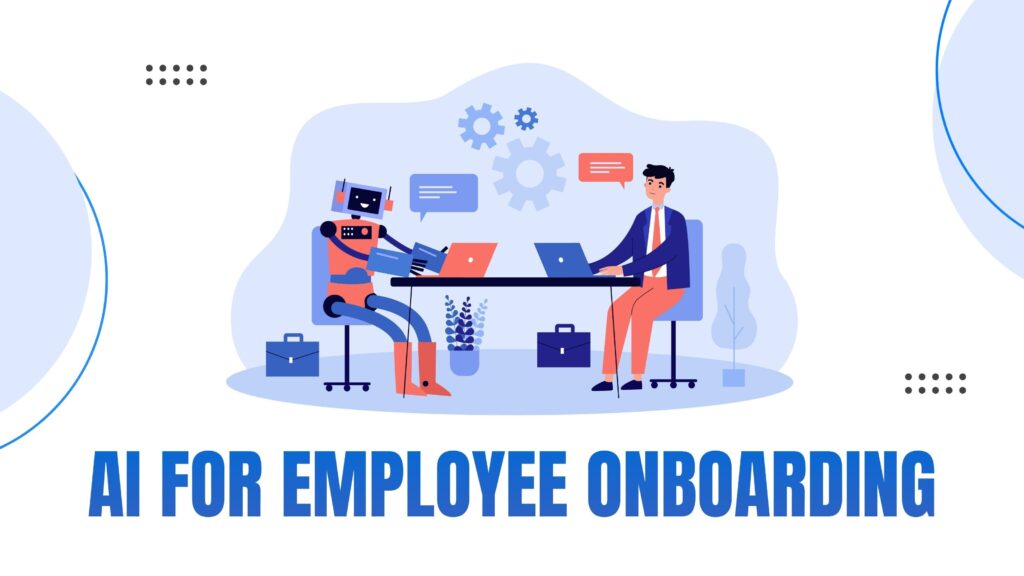
Starting a new job shouldn’t feel like navigating a maze blindfolded. Yet, for many employees, the onboarding process remains a confusing jumble of paperwork, information overload, and waiting around for answers. Traditional onboarding methods are not only time-consuming but often leave new hires feeling disconnected before they’ve even settled into their roles. Enter AI for employee onboarding. These intelligent tools are revolutionizing how organizations welcome and integrate new team members, turning what used to be a weeks-long administrative burden into a seamless, personalized experience. Companies using AI-powered onboarding report up to 50% faster time-to-productivity and significantly higher retention rates. If you’re in AI, EdTech, SaaS, e-learning, or L&D, you already know that the future of workplace learning is here. The question isn’t whether to adopt AI for employee onboarding but which tools will deliver the best results for your organization. What Is AI for Employee Onboarding? AI for employee onboarding refers to the use of artificial intelligence technologies to automate, personalize, and optimize the process of integrating new employees into an organization. These systems use machine learning, natural language processing, and predictive analytics to create adaptive learning experiences, automate administrative tasks, and provide data-driven insights into employee progress. Core AI Onboarding Capabilities: Why Organizations Need AI for Employee Onboarding Traditional onboarding costs organizations an average of $1,500 to $4,000 per new hire, with processes taking anywhere from several weeks to six months. Poor onboarding contributes to 20% of employee turnover within the first 45 days. Key Benefits of AI-Powered Onboarding: Top 5 AI Tools for Employee Onboarding (2025) 1. Vocaliv Company Type: AI-powered EdTech and e-learning platformBest For: Mid to large enterprises in AI, SaaS, EdTech, and L&D sectorsStarting Price: Custom pricing based on organization size Vocaliv specializes in comprehensive AI-driven onboarding solutions that extend beyond initial employee integration. The platform uses machine learning algorithms to continuously adapt learning paths based on employee performance and engagement data. Core Features: Unique Advantage: Vocaliv focuses on the complete employee development journey, using AI to identify knowledge gaps proactively and suggest relevant resources throughout the employee lifecycle, not just during initial onboarding. Integration Options: Compatible with major HR systems, Slack, Microsoft Teams, and leading LMS platforms. 2. Enboarder Company Type: Workflow-based onboarding automation platformBest For: Companies prioritizing human connection alongside automationStarting Price: Available upon request Enboarder uses AI to orchestrate complex, cross-functional onboarding workflows while maintaining personal touchpoints throughout the process. Core Features: Unique Advantage: Combines emotional engagement through strategic human touchpoints with AI-driven process automation, creating a balanced onboarding experience. 3. Talmundo Company Type: Preboarding and onboarding experience platformBest For: Organizations wanting to engage employees before day oneStarting Price: Custom pricing Talmundo uses AI to create personalized onboarding portals that begin engaging new hires weeks before their official start date. Core Features: Unique Advantage: Strong focus on preboarding engagement, using AI to build excitement and preparation before the employee’s first day. 4. Whatfix Company Type: Digital adoption platform with onboarding capabilitiesBest For: Tech companies with complex software ecosystemsStarting Price: Contact for pricing Whatfix provides contextual, in-app guidance using AI to embed learning directly into the tools employees use daily. Core Features: Unique Advantage: Contextual learning approach that eliminates the need to pull employees away from their work, reducing time-to-proficiency with company software. 5. WorkRamp Company Type: Learning management system with AI personalizationBest For: Growing SaaS companies focused on skills developmentStarting Price: Custom enterprise pricing WorkRamp combines traditional LMS functionality with AI-driven personalization for scalable onboarding programs. Core Features: Unique Advantage: Continuous improvement through machine learning that identifies which onboarding elements drive the best business outcomes. AI for Employee Onboarding Tool Comparison Tool Primary Focus Best For Key AI Feature Vocaliv Complete employee journey Enterprise L&D teams Adaptive learning paths Enboarder Workflow automation Human-centered onboarding Cross-functional orchestration Talmundo Preboarding engagement Early employee engagement Personalized portals Whatfix Digital adoption Software-heavy environments In-app contextual guidance WorkRamp Skills development Growing SaaS companies Content optimization ML How to Choose the Right AI Onboarding Tool Selection Criteria Framework: 1. Integration Requirements 2. Customization Needs 3. Scalability Factors 4. Feature Priorities 5. Budget Considerations Decision Matrix: Evaluate each platform against your top three priorities, assigning scores of 1-5 for must-have features, nice-to-have features, and deal-breakers. Measuring AI Onboarding Success Key Performance Indicators: Benchmark Data: Top-performing organizations achieve 90%+ onboarding completion rates, 85+ NPS scores, and 95%+ first-year retention for AI-supported onboarding programs. Implementation Best Practices for AI Onboarding Phase 1: Planning (Weeks 1-2) Phase 2: Configuration (Weeks 3-6) Phase 3: Testing (Weeks 7-8) Phase 4: Launch (Week 9+) ROI of AI-Powered Employee Onboarding Organizations implementing AI for employee onboarding typically see measurable returns within 6-12 months: Quantifiable Benefits: Qualitative Benefits: FAQ’s Q1: How can AI help with employee onboarding? AI helps with employee onboarding by automating paperwork, personalizing training, answering questions, tracking progress, and improving new hire engagement. Q2: What are the 5 C’s of employee onboarding? The five C’s of employee onboarding are compliance, clarification, culture, connection, and check ins. Q3: Which AI tool is best for HR? The best AI tool for HR depends on your needs, but vocaliv is often recommended for HR because it streamlines training, onboarding, performance tracking, and learning management. Conclusion: AI for employee onboarding represents a fundamental shift in how organizations integrate new talent. The tools listed above offer proven capabilities for reducing costs, accelerating productivity, and improving retention through intelligent automation and personalization. Vocaliv delivers end-to-end AI onboarding solutions designed specifically for EdTech, SaaS, and L&D organizations. Our platform combines adaptive learning technology with comprehensive analytics to create onboarding experiences that drive measurable business results. Ready to see how AI can transform your employee onboarding program? Contact Vocaliv today for a personalized consultation and discover how our intelligent solutions can turn new hires into productive team members 50% faster while improving first-year retention by up to 30%.
Workplace Compliance Training in the AI Era
Workplace compliance training in the AI era uses artificial intelligence to deliver personalized, adaptive learning experiences that replace traditional one-size-fits-all annual training sessions. AI-powered platforms provide continuous microlearning, real-time regulatory updates, intelligent assessments, and predictive risk identification, resulting in 40-60% higher completion rates and significantly better knowledge retention compared to conventional methods. Compliance training used to mean boring PowerPoint presentations and checkbox exercises that employees rushed through without retaining much. But here’s the reality: regulatory requirements haven’t gotten simpler, and the risks of non-compliance have only increased. The good news? AI is transforming how organizations approach workplace compliance training, making it more effective, personalized, and actually engaging. If you’re in AI, EdTech, SaaS, e-learning, or L&D, you already know that traditional compliance methods aren’t cutting it anymore. Let’s explore how AI is reshaping this critical business function and what it means for your organization. What Makes Traditional Compliance Training Ineffective? Research shows learners forget approximately 70% of traditional training content within 24 hours due to passive delivery methods and lack of personalization. Five Critical Failures of Conventional Workplace Compliance Training: Business Impact: These gaps create legal exposure, regulatory penalties averaging $14.82 million per violation for major infractions, and reputational damage that affects customer trust and employee morale. How Does AI Transform Workplace Compliance Training? (Core Mechanisms) 1. Personalized Learning Paths AI algorithms analyze employee roles, training history, performance data, and knowledge gaps to generate customized learning sequences. How It Works: Measurable Outcome: Personalized AI training improves knowledge retention by up to 200% compared to standardized content delivery. 2. Continuous Microlearning Model Framework: Traditional Approach AI-Powered Approach Annual 2-4 hour sessions 5-10 minute modules delivered weekly Information overload Spaced repetition for retention Static content year-round Real-time updates when regulations change Generic for all employees Role-specific scenarios One-time assessment Continuous knowledge verification Spaced repetition integrated into daily workflows increases long-term retention by distributing learning over time rather than concentrating it in single sessions. 3. Intelligent Assessment Systems What AI Measures Beyond Completion: Technology Used: Natural language processing, predictive analytics, pattern recognition algorithms, and adaptive testing protocols. AI-Powered Compliance Training by Industry (Specific Applications) SaaS and Technology Companies Primary Compliance Areas: GDPR, CCPA, SOC 2, ISO 27001, data breach protocols AI Solutions: E-Learning and EdTech Providers Primary Compliance Areas: FERPA, COPPA, accessibility standards (WCAG), child protection laws AI Solutions: Learning and Development Professionals Primary Compliance Areas: Instructional design standards, learner data protection, content accessibility, workplace safety training requirements AI Solutions: Measurable Benefits: What Organizations Achieve with AI Compliance Training Quantified Results: Implementation Framework: 6 Steps to Deploy AI-Powered Compliance Training Step 1: Audit Current State Step 2: Define Success Metrics Step 3: Select Technology Platform Step 4: Create Role-Specific Content Step 5: Pilot and Refine Step 6: Monitor and Optimize Future Trends in AI-Powered Compliance Training (2025-2027) Emerging Technologies: Key Takeaways: Essential Facts About AI Compliance Training Summary Points: Frequently Asked Questions Q1: What does compliance training include? Compliance training includes education on laws, regulations, company policies, workplace safety, ethics, and standards employees must follow. Q2: What are the 5 keys of compliance? The five keys of compliance are leadership commitment, risk assessment, clear policies, effective training, and continuous monitoring. Q3: What are the 3 C’s of compliance? The three C’s of compliance are commitment, communication, and controls. Q4: What are the 7 elements of compliance? The seven elements of compliance are written policies, compliance leadership, training and education, effective communication, monitoring and auditing, enforcement and discipline, and corrective action. Summary Vocaliv specializes in developing AI-powered learning platforms that transform workplace compliance training from mandatory checkbox exercises into engaging, effective educational experiences. Our solutions combine advanced artificial intelligence with evidence-based instructional design to deliver measurable compliance outcomes. Contact Vocaliv today for a personalized consultation. Our compliance training experts will assess your specific requirements, demonstrate our AI platform capabilities, and design a solution that protects your organization while empowering your employees.