Starting a new job shouldn’t feel like navigating a maze blindfolded. Yet, for many employees, the onboarding process remains a confusing jumble of paperwork, information overload, and waiting around for answers. Traditional onboarding methods are not only time-consuming but often leave new hires feeling disconnected before they’ve even settled into their roles.
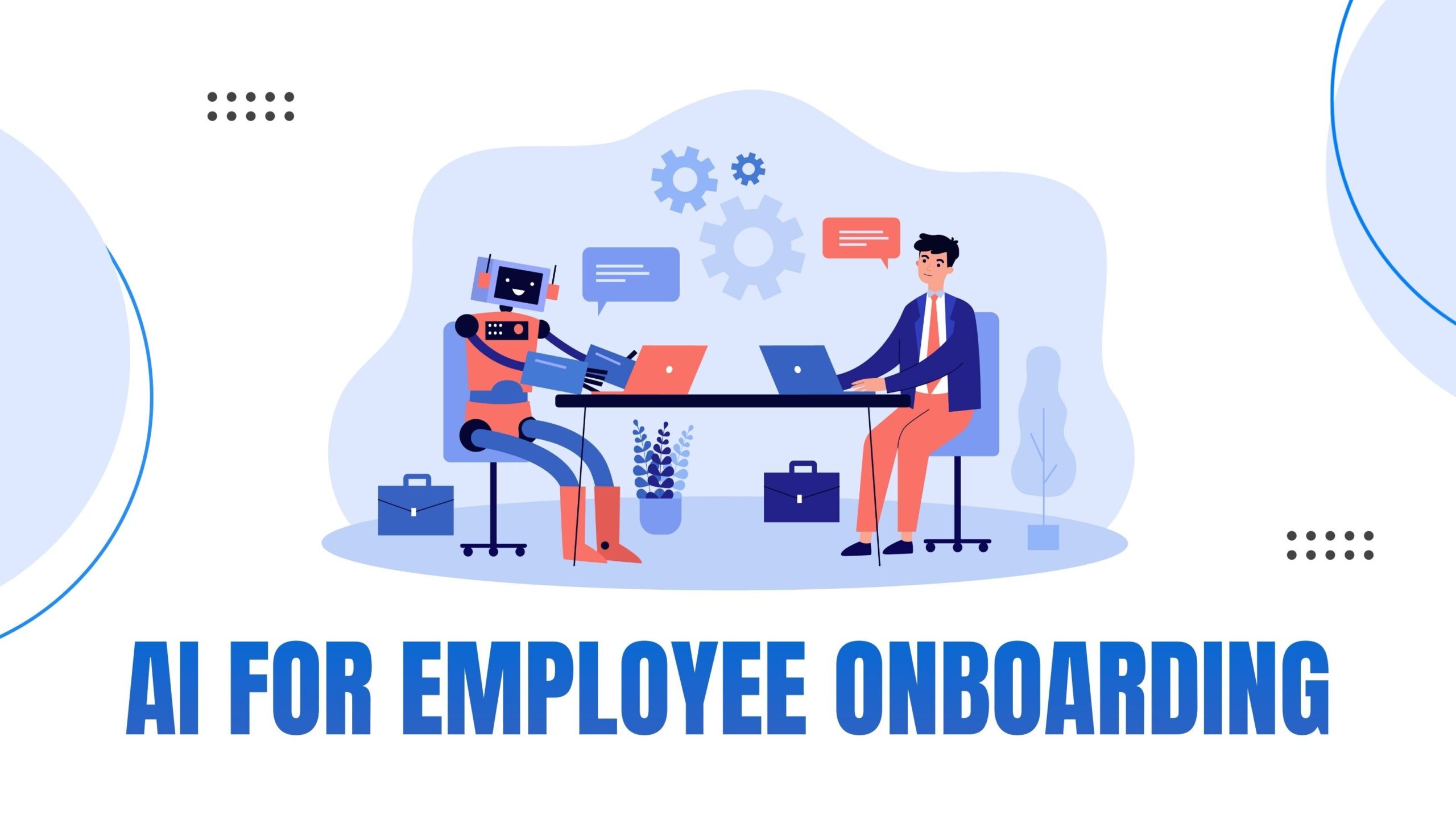
Enter AI for employee onboarding. These intelligent tools are revolutionizing how organizations welcome and integrate new team members, turning what used to be a weeks-long administrative burden into a seamless, personalized experience. Companies using AI-powered onboarding report up to 50% faster time-to-productivity and significantly higher retention rates.
If you’re in AI, EdTech, SaaS, e-learning, or L&D, you already know that the future of workplace learning is here. The question isn’t whether to adopt AI for employee onboarding but which tools will deliver the best results for your organization.
What Is AI for Employee Onboarding?
AI for employee onboarding refers to the use of artificial intelligence technologies to automate, personalize, and optimize the process of integrating new employees into an organization. These systems use machine learning, natural language processing, and predictive analytics to create adaptive learning experiences, automate administrative tasks, and provide data-driven insights into employee progress.
Core AI Onboarding Capabilities:
- Automated document processing and compliance tracking
- Personalized learning path creation based on role and skills
- Intelligent chatbots for instant question answering
- Predictive analytics for identifying at-risk employees
- Adaptive content delivery based on engagement patterns
Why Organizations Need AI for Employee Onboarding
Traditional onboarding costs organizations an average of $1,500 to $4,000 per new hire, with processes taking anywhere from several weeks to six months. Poor onboarding contributes to 20% of employee turnover within the first 45 days.
Key Benefits of AI-Powered Onboarding:
- Reduced Time-to-Productivity: AI accelerates onboarding by 50-60%, helping employees reach full productivity faster
- Cost Efficiency: Automation reduces administrative burden by 40%, freeing HR and L&D teams for strategic work
- Improved Retention: Personalized experiences increase first-year retention by up to 82%
- Consistent Experience: AI ensures every employee receives standardized, compliant training regardless of location or department
- Data-Driven Optimization: Real-time analytics identify bottlenecks and improvement opportunities
Top 5 AI Tools for Employee Onboarding (2025)
1. Vocaliv
Company Type: AI-powered EdTech and e-learning platform
Best For: Mid to large enterprises in AI, SaaS, EdTech, and L&D sectors
Starting Price: Custom pricing based on organization size
Vocaliv specializes in comprehensive AI-driven onboarding solutions that extend beyond initial employee integration. The platform uses machine learning algorithms to continuously adapt learning paths based on employee performance and engagement data.
Core Features:
- Adaptive learning paths with AI-driven content recommendations
- Multi-language support for global workforce onboarding
- Real-time analytics dashboard with predictive insights
- Seamless LMS and HRIS integration capabilities
- Continuous learning framework that extends past day one
Unique Advantage: Vocaliv focuses on the complete employee development journey, using AI to identify knowledge gaps proactively and suggest relevant resources throughout the employee lifecycle, not just during initial onboarding.
Integration Options: Compatible with major HR systems, Slack, Microsoft Teams, and leading LMS platforms.
2. Enboarder
Company Type: Workflow-based onboarding automation platform
Best For: Companies prioritizing human connection alongside automation
Starting Price: Available upon request
Enboarder uses AI to orchestrate complex, cross-functional onboarding workflows while maintaining personal touchpoints throughout the process.
Core Features:
- AI-powered workflow automation across departments
- Intelligent buddy matching based on skills and interests
- Automated milestone tracking and celebration triggers
- Native integrations with Slack, Teams, and major HRIS systems
Unique Advantage: Combines emotional engagement through strategic human touchpoints with AI-driven process automation, creating a balanced onboarding experience.
3. Talmundo
Company Type: Preboarding and onboarding experience platform
Best For: Organizations wanting to engage employees before day one
Starting Price: Custom pricing
Talmundo uses AI to create personalized onboarding portals that begin engaging new hires weeks before their official start date.
Core Features:
- AI-generated personalized journeys starting in preboarding phase
- Role-based, location-aware content delivery
- Automated task management and reminders
- Mobile-optimized interface for accessibility
Unique Advantage: Strong focus on preboarding engagement, using AI to build excitement and preparation before the employee’s first day.
4. Whatfix
Company Type: Digital adoption platform with onboarding capabilities
Best For: Tech companies with complex software ecosystems
Starting Price: Contact for pricing
Whatfix provides contextual, in-app guidance using AI to embed learning directly into the tools employees use daily.
Core Features:
- AI-powered in-application walkthroughs and tooltips
- Self-service support widget with intelligent search
- Usage analytics showing adoption bottlenecks
- No-code content creation for rapid deployment
Unique Advantage: Contextual learning approach that eliminates the need to pull employees away from their work, reducing time-to-proficiency with company software.
5. WorkRamp
Company Type: Learning management system with AI personalization
Best For: Growing SaaS companies focused on skills development
Starting Price: Custom enterprise pricing
WorkRamp combines traditional LMS functionality with AI-driven personalization for scalable onboarding programs.
Core Features:
- Machine learning-powered content recommendations
- Skills assessments with intelligent gap analysis
- Certification and compliance tracking
- Advanced analytics on onboarding effectiveness
Unique Advantage: Continuous improvement through machine learning that identifies which onboarding elements drive the best business outcomes.
AI for Employee Onboarding Tool Comparison
| Tool | Primary Focus | Best For | Key AI Feature |
| Vocaliv | Complete employee journey | Enterprise L&D teams | Adaptive learning paths |
| Enboarder | Workflow automation | Human-centered onboarding | Cross-functional orchestration |
| Talmundo | Preboarding engagement | Early employee engagement | Personalized portals |
| Whatfix | Digital adoption | Software-heavy environments | In-app contextual guidance |
| WorkRamp | Skills development | Growing SaaS companies | Content optimization ML |
How to Choose the Right AI Onboarding Tool
Selection Criteria Framework:
1. Integration Requirements
- Compatibility with existing HRIS (Workday, SAP, BambooHR)
- LMS connectivity needs
- Communication platform integration (Slack, Teams)
2. Customization Needs
- Role-specific pathway creation
- Department-level customization
- Brand and culture alignment options
3. Scalability Factors
- Current employee headcount
- Growth projections
- Geographic distribution requirements
4. Feature Priorities
- Automation level needed
- Analytics and reporting depth
- Mobile accessibility requirements
5. Budget Considerations
- Per-user pricing vs. enterprise licensing
- Implementation costs
- Ongoing support and maintenance fees
Decision Matrix: Evaluate each platform against your top three priorities, assigning scores of 1-5 for must-have features, nice-to-have features, and deal-breakers.
Measuring AI Onboarding Success
Key Performance Indicators:
- Time-to-Productivity: Days until new hire reaches 100% role effectiveness
- Completion Rate: Percentage of employees finishing onboarding modules
- Knowledge Retention: Assessment scores at 30, 60, and 90 days
- Employee Satisfaction: Net Promoter Score (NPS) for onboarding experience
- First-Year Retention: Percentage of employees staying past 12 months
- Manager Satisfaction: Feedback on new hire readiness
Benchmark Data: Top-performing organizations achieve 90%+ onboarding completion rates, 85+ NPS scores, and 95%+ first-year retention for AI-supported onboarding programs.
Implementation Best Practices for AI Onboarding
Phase 1: Planning (Weeks 1-2)
- Define clear onboarding objectives and success metrics
- Audit existing onboarding content and processes
- Identify integration points with current systems
Phase 2: Configuration (Weeks 3-6)
- Set up platform and configure user roles
- Create or migrate content into the system
- Establish automated workflows and triggers
Phase 3: Testing (Weeks 7-8)
- Run pilot program with small employee group
- Gather feedback and identify issues
- Refine content and processes based on results
Phase 4: Launch (Week 9+)
- Deploy to all new hires
- Monitor analytics and engagement metrics
- Continuously optimize based on data insights
ROI of AI-Powered Employee Onboarding
Organizations implementing AI for employee onboarding typically see measurable returns within 6-12 months:
Quantifiable Benefits:
- 60% improvement in time-to-productivity
- 40% reduction in HR administrative time
- 30% decrease in first-year turnover
- 50% faster onboarding completion
- $3,000-$5,000 cost savings per employee
Qualitative Benefits:
- Higher employee engagement scores
- Improved company culture alignment
- Better manager confidence in new hire readiness
- Enhanced employer brand reputation
FAQ’s
Q1: How can AI help with employee onboarding?
AI helps with employee onboarding by automating paperwork, personalizing training, answering questions, tracking progress, and improving new hire engagement.
Q2: What are the 5 C’s of employee onboarding?
The five C’s of employee onboarding are compliance, clarification, culture, connection, and check ins.
Q3: Which AI tool is best for HR?
The best AI tool for HR depends on your needs, but vocaliv is often recommended for HR because it streamlines training, onboarding, performance tracking, and learning management.
Conclusion:
AI for employee onboarding represents a fundamental shift in how organizations integrate new talent. The tools listed above offer proven capabilities for reducing costs, accelerating productivity, and improving retention through intelligent automation and personalization.
Vocaliv delivers end-to-end AI onboarding solutions designed specifically for EdTech, SaaS, and L&D organizations. Our platform combines adaptive learning technology with comprehensive analytics to create onboarding experiences that drive measurable business results.
Ready to see how AI can transform your employee onboarding program? Contact Vocaliv today for a personalized consultation and discover how our intelligent solutions can turn new hires into productive team members 50% faster while improving first-year retention by up to 30%.