
AI in education adaptive learning platforms 2026 describes systems, built on the same generation technology behind Vocaliv’s AI course builder, that continuously adjust content difficulty, pacing, and modality to each learner’s performance, with 71% of higher education institutions and a rapidly growing share of corporate L&D teams now deploying them.
Key Takeaways:
- Adaptive learning shows a documented 42% improvement in learning outcomes when systems personalize difficulty, pacing, and even feedback tone, not just content.
- 71% of higher education institutions will deploy adaptive learning platforms by 2026, up from 34% in 2023; 83% of institutions plan AI teaching assistant deployment this year.
- Generative AI now creates calibrated assessments with 84.7% correlation to expert-designed evaluations, cutting assessment creation time by over 99%.
- The strongest 2026 trend is prescriptive adaptivity: platforms that auto-enroll learners into remediation when performance gaps appear, not just static content recommendations.
- Buyer beware: many “AI LMS” platforms offer content suggestions dressed up as adaptivity; true adaptive systems dynamically reroute learners based on real-time performance signals.
Adaptive learning has quietly moved from an EdTech buzzword to infrastructure. The global AI-in-education market is projected at $12.3 billion in 2026, growing at a 36% compound annual rate, and the reason isn’t hype: platforms that genuinely personalize pace and difficulty are showing measurable outcome gains that static, one-size-fits-all training simply can’t match.
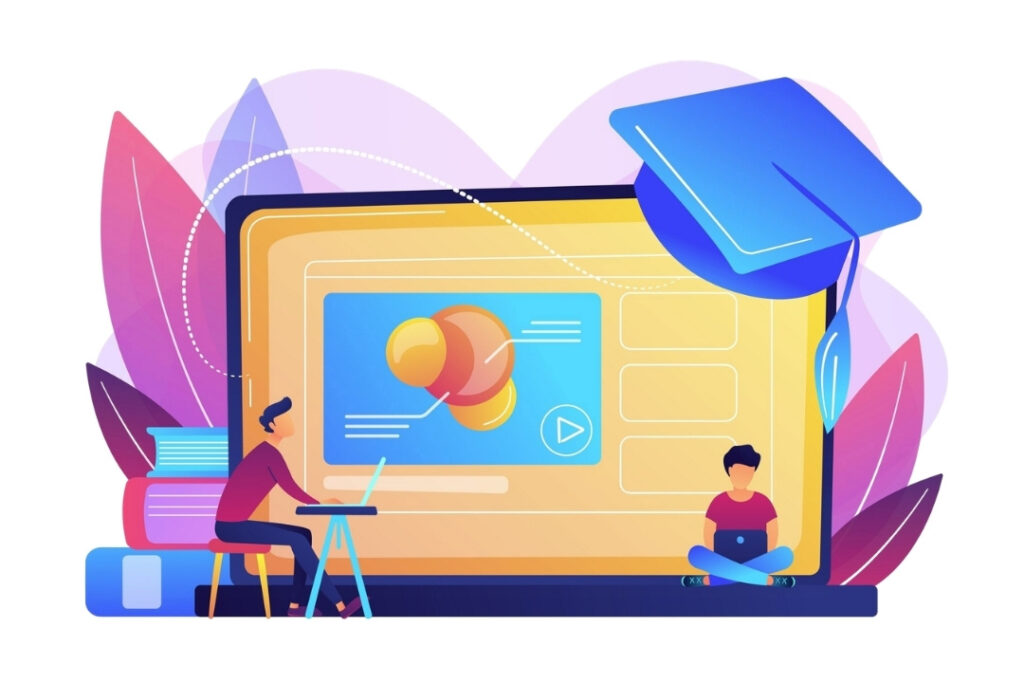
Here’s what’s actually driving that growth in 2026, the innovations separating real adaptivity from marketing language, and what it means if you’re evaluating a platform for your own learners.
Trend 1: Prescriptive Adaptivity Replaces Static Recommendations
The most important shift in 2026 isn’t personalization itself, it’s what triggers it. Older adaptive systems suggested a next module based on completed content. Current platforms detect a performance gap in real time and auto-enroll the learner into targeted remediation before the misconception solidifies.
This distinction matters more than most buyers realize. A common mistake is equating any “AI feature” with genuine adaptivity; many tools still offer static content suggestions rather than prescriptive rerouting tied to actual performance signals. When evaluating a platform, ask specifically whether it auto-enrolls learners into corrective content or merely recommends it.
Trend 2: Generative Assessment at Near-Expert Accuracy
Building calibrated quizzes used to be one of the slowest parts of course development. Generative AI frameworks now create assessments with 84.7% correlation to expert consensus, while cutting generation time by more than 99% compared to manual creation. Systems generate questions matched to individual learner levels and explain correct reasoning immediately, rather than just marking answers right or wrong.
Trend 3: Emotional and Cognitive State Awareness
Beyond tracking what learners know, 2026 platforms increasingly track how learners are experiencing the content. Affective computing detects frustration or boredom and adjusts difficulty or offers a break accordingly, and some systems now personalize the emotional tone of feedback itself alongside content difficulty and pacing. Early research on hyper-personalized systems has documented outcome improvements as large as 42% when pacing, modality, and feedback tone are all adapted together, not content alone.
Trend 4: Neurodiversity-Aware Personalization
Adaptive systems are also branching by learning profile, not just performance level. Emerging systems built for ADHD, dyslexia, and autism-spectrum learners have shown meaningfully better outcomes in early research, moving personalization beyond pace and difficulty into how information is structured and presented.
Trend 5: The Content Bottleneck Adaptive Systems Still Can’t Solve Alone
Here’s the trend that gets the least attention despite being the most operationally important. Adaptive learning improves over time because accuracy compounds with every learner interaction, but that compounding only helps if the underlying course content is strong to begin with. Buying an adaptive LMS before auditing content quality is a documented failure mode: poor inputs degrade even the best recommendation engine, no matter how sophisticated its personalization logic is.
This is why adaptive learning and AI course generation are converging rather than staying separate categories. A platform that adapts brilliantly to a thin, generic course still underperforms simpler delivery paired with rich, well-structured content built from real source material.
Adaptive Learning Platform Landscape at a Glance
| Platform Type | Adaptivity Depth | Best Fit | Watch For |
| K-12 subject-specific (e.g., math-focused engines) | High, narrow domain | Primary/secondary education | Limited to one subject area |
| Higher-ed courseware | Moderate to high | Universities, student success programs | Requires institutional LMS integration |
| Enterprise AI-LMS | Varies widely | Corporate compliance, sales, partner training | Many offer recommendations, not true rerouting |
| AI course + content generation platforms | Content-adaptive at the build stage | Training providers building from source material | Adaptivity depends on assessment quality generated |
What This Means for Corporate L&D Specifically
In workforce training, the outcomes are concrete rather than theoretical. Research links adaptive learning to 30–50% improvements in knowledge retention and up to 25% faster time-to-productivity compared to static programs, gaps that compound quickly across large teams. A compliance program is the clearest example: when a learner struggles with a specific topic, a genuinely adaptive system doesn’t just flag it, it auto-enrolls a targeted refresher and adjusts the following content’s difficulty, closing the gap before the next assessment cycle rather than after.
The practical challenge for most training providers isn’t accessing adaptive technology, it’s feeding it content worth adapting. Converting existing SOPs, decks, and expert recordings into structured, assessment-rich courses is the prerequisite step that makes any adaptive layer worth deploying. For the deeper technical breakdown of how these platforms actually personalize learning paths and what to check before adopting one, read our full guide on AI in education and adaptive learning platforms before your next platform evaluation.
The Concerns Buyers Shouldn’t Skip
Adoption enthusiasm hasn’t erased legitimate risk. 71% of educators cite data privacy and algorithmic bias as top concerns, and equitable access remains unresolved where reliable internet and devices aren’t guaranteed. Before adopting any adaptive platform, confirm what learner data it collects, how algorithmic decisions are explained to learners and administrators, and whether the vendor supports transparent, auditable personalization logic rather than a black box.

Frequently Asked Questions
AI is used in education to personalize learning, automate grading, provide intelligent tutoring, generate course content, deliver instant feedback, and improve learner engagement through adaptive learning experiences.
Five advantages of AI in education are personalized learning, automated grading, instant feedback, 24/7 learning support, and improved student engagement.
The four main types of AI learning are Supervised Learning, Unsupervised Learning, Semi-Supervised Learning, and Reinforcement Learning.
Popular AI tools used in education include Vocaliv for AI-powered course creation and voice-based learning, ChatGPT, Khanmigo, MagicSchool AI, Quizlet, and Grammarly.
Adaptive learning uses AI to continuously adjust content difficulty, pacing, and format based on a learner’s real-time performance and engagement signals. It moves beyond static content delivery toward personalized, one-to-one style instruction at scale.
Documented improvements range from 30–50% in knowledge retention for workforce training to a reported 42% gain in learning outcomes when systems personalize pacing, modality, and feedback tone together, not content alone.
Adaptive learning in 2026 has moved past the personalization pitch and into measurable outcomes, but the platforms winning aren’t just the ones with the smartest algorithm. They’re the ones pairing that intelligence with genuinely strong course content to adapt in the first place.