
Arabic Corporate Training Platforms: What “Multilingual Support” Actually Means for RTL and Voice
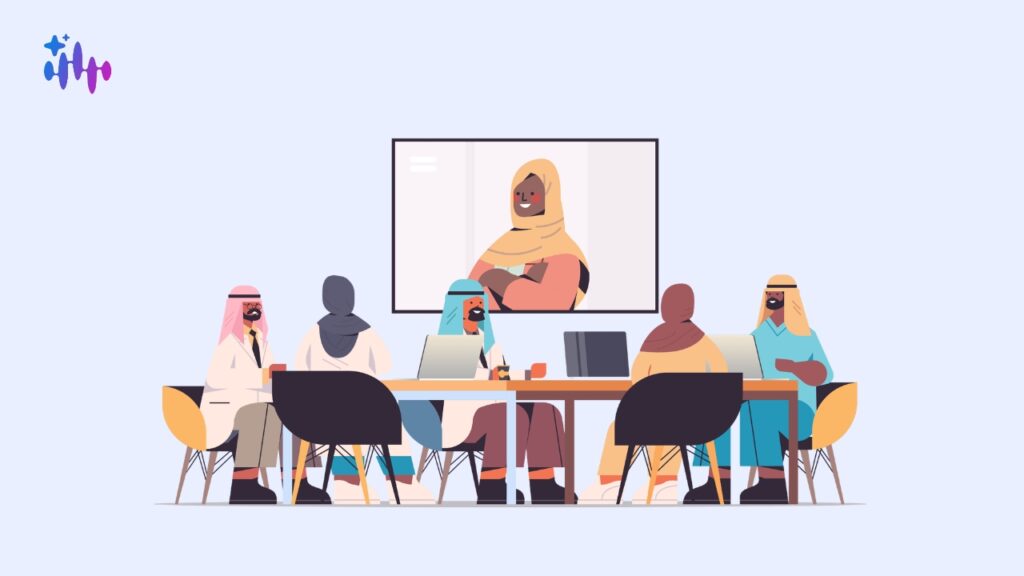
An Arabic corporate training platform is not the same thing as a platform with an Arabic interface, and the gap between those two claims is where most GCC training deployments disappoint. A translated menu does not help a learner who asks a question in Gulf dialect about your own material and needs an accurate answer back, and neither does a text-to-speech voice that reads Modern Standard Arabic with the wrong rhythm, which is why AI voice cloning and genuine Arabic comprehension are separate capabilities that need separate testing. Key Takeaways 🖥️ Sign In to Access Your Dashboard The Three Claims That Get Conflated When a vendor says they support Arabic, they could mean any of these, and the difference is substantial. Interface translation: Menus, buttons, and navigation appear in Arabic. This is the cheapest to implement and the most commonly claimed. It does nothing for a learner who cannot understand the course content. Content translation: Your course material is available in Arabic, either translated by you or machine-translated. Better, and it introduces a quality question: machine-translated technical or regulatory content needs review by someone who knows the subject, not just the language. Learner support in Arabic: A learner asks a question in Arabic, in the Arabic they actually speak, about your specific material, and receives an accurate answer. This is the capability that affects completion, and it is the one least often delivered. Ask about the third. Most vendors will answer about the first, and the answer will sound complete. What Right-to-Left Actually Breaks RTL is treated as a display setting and it is closer to a layout architecture. The predictable failure points: None of this appears in a sales demo, because demos use clean single-language content. It appears in week two of delivery. How to test it: take one real module containing mixed Arabic and English, with numbers and at least one acronym, and put it through the platform. Then look at it on a phone, which is where most of your learners will be. The Dialect Problem Nobody Mentions This is the most consequential gap and the least discussed. AI language systems are trained predominantly on Modern Standard Arabic, which is the Arabic of formal writing and news broadcast. It is not the Arabic anyone speaks conversationally. A learner in Riyadh or Dubai typing a question quickly will type in dialect, and performance on dialect is genuinely weaker than on MSA across the board, ours included. Variety Where it appears Typical system performance Modern Standard Arabic Formal content, documentation Strongest Gulf dialect Learner questions in UAE, Saudi, Qatar Weaker, improving Egyptian dialect Widely understood across the region Moderate Levantine dialect Learners from Jordan, Lebanon, Syria Moderate Code-switched Arabic and English Extremely common in GCC corporate settings Variable, and the real test That last row is the one to test. GCC professionals routinely mix Arabic and English within a single sentence, and a system that handles pure MSA and pure English can still fail on the way your learners actually communicate. 📄 Generate a Free PDF Sample Course in Your Cloned Voice Why Voice Is Harder in Arabic For narrated training content, Arabic voice quality carries more weight than it does in English. Arabic has phonemes that generic text-to-speech handles poorly, and short vowels are typically unwritten, which means a system reading undiacritised text is inferring pronunciation. Get that wrong and technical terms come out wrong. Prosody matters more too: Arabic sentence rhythm carries meaning in ways that flat synthetic delivery flattens, and flat delivery makes dense content measurably harder to follow. For a training provider this has a practical consequence. A cloned instructor voice that sounds like the actual trainer, in the language the learner thinks in, is a different learning experience from a generic synthetic voice reading translated text. Voice cloning for course narration is worth evaluating on Arabic material specifically rather than on the English sample the vendor provides. Six Tests Before You Buy Run these in a trial, not a demo: Test 5 catches something important. A system that escalates correctly in English and then breaks into English when escalating in Arabic has told you that Arabic is a layer rather than a first-class path. Our Own Position Vocaliv supports Arabic and English natively with a right-to-left learner interface, and voice cloning works in both. What we will not claim is uniform dialect performance, because no system has that: MSA is stronger than Gulf dialect, and heavily code-switched input is the hardest case. That is why we would rather you test on your own material in a trial than accept the claim. For a provider running mixed-language cohorts, the operational picture: Metric Before After Arabic learner questions handled without instructor 0% Measurable and tracked Programmes needing separate Arabic build Each one Single bilingual programme Arabic narration Generic TTS or re-recording Cloned instructor voice Learner confusion rate, by language Unmeasured Tracked per language That last row is worth asking any vendor for. Confusion rate broken out by language tells you whether your Arabic learners are actually being served, and it is the number that reveals a translated-interface deployment for what it is. Frequently Asked Questions If a vendor demonstrates Arabic support using their own sample content in Modern Standard Arabic, you have seen a demo rather than a test. Ask for the same thing with your material and a real learner question, and the answer usually arrives quickly. 👉 Book a Live Platform Demo with an EdTech Expert