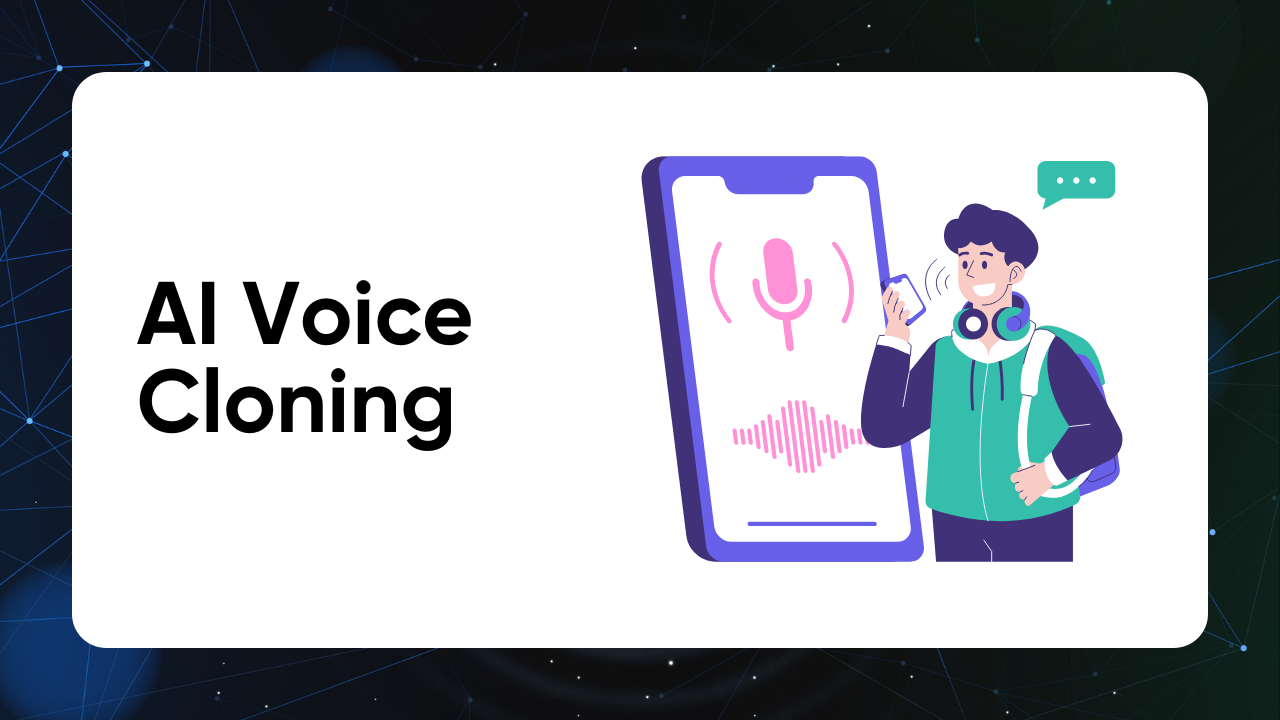
AI voice cloning is a deep learning-based technology that allows software to replicate a person’s voice from a short audio sample. Unlike generic text-to-speech (TTS) systems, cloned voices mimic unique accents, tone, and intonation.
This technology uses neural networks, especially models like Tacotron 2 and WaveNet, to synthesize speech that sounds remarkably like the original speaker.
How Does It Work?
AI voice cloning works in three basic steps:
- Voice Training: A model is trained using recorded voice data.
- Voice Modeling: The model learns vocal patterns and tone.
- Voice Generation: Text is fed into the model to produce audio in the cloned voice.
The Impact of AI Voice Cloning on E-Learning Enhancing Engagement in Online Courses
AI voice cloning creates a personalized audio experience, which increases student attention and retention. Courses voiced in familiar or natural-sounding tones help reduce the cognitive load associated with reading or listening to robotic narration.
Example:
Platforms like Duolingo and Coursera are integrating cloned voices to provide more immersive language instruction and localized content.
Multilingual Accessibility
With voice cloning, it’s easy to translate and localize e-learning content into multiple languages while retaining the voice identity of the original instructor. This maintains consistency and builds learner trust.
For instance, a teacher in the UAE can deliver lessons in both Arabic and English using the same voice, enhancing accessibility across diverse student populations.
Related keywords: multilingual learning, content localization, inclusive education, auditory learning styles
Real-World Applications in the Middle East (KSA & UAE)
Adoption in EdTech Platforms
The demand for AI voice cloning is growing rapidly in KSA and UAE, where EdTech investment is booming. Platforms like Vocaliv and Alef Education are exploring AI to make e-learning content more engaging and culturally relevant.
Voice cloning allows:
- Consistent teacher branding
- Custom voiceovers for video-based learning
- Faster turnaround for curriculum updates
Benefits for Teachers
Teachers can save hours of recording time, create feedback for assessments in their own voice, or even build AI avatars that support students 24/7.
Regional relevance keywords: Arabic voice AI, e-learning KSA, digital classrooms UAE, EdTech innovation GCC
Benefits and Challenges
Key Benefits
- Scalability: Generate hundreds of voiceovers in minutes
- Personalization: Retain teacher voices for emotional connection
- Cost-efficiency: No need for repeated studio recordings
- Consistency: Uniform tone across all lessons
Challenges and Ethical Concerns
- Privacy & Consent: Cloning someone’s voice without permission raises legal issues
- Deepfake Risks: Misuse of voice models can cause misinformation
- Quality Control: Over-reliance on automation may result in generic or repetitive content
Educators must use platforms that prioritize ethics and transparency, ensuring voice data is stored securely and used responsibly.
Future Outlook of Voice Cloning in EdTech Integration with Other AI Tools
Voice cloning is increasingly being integrated with AI tutors, chatbots, and virtual assistants to provide more natural interaction in LMS platforms.
Imagine a chatbot that not only answers queries but does so in your teacher’s voice—instantly building familiarity and comfort.
What’s Next?
As natural language processing (NLP) continues to advance, we can expect:
- Better emotional tone recognition
- Real-time voice translation
- Voice-guided adaptive learning paths
The future of e-learning is interactive, vocal, and AI-powered—and voice cloning will be at the center of it.
FAQs Section
Q1: Is AI voice cloning legal for educational use?
Yes, as long as the person whose voice is cloned gives explicit consent and data privacy is maintained.
Q2: Does voice cloning sound robotic?
High-quality models today can produce near-human speech that’s hard to distinguish from real voices.
Q3: Are there risks of misuse?
Yes, especially around voice fraud. Always choose platforms with security and ethical AI frameworks.
AI voice cloning is no longer a futuristic concept—it’s here, and it’s revolutionizing how we teach and learn online. From personalized student experiences to multilingual course content, this technology bridges the gap between traditional classrooms and digital platforms. For educators in KSA, UAE, and beyond, adopting AI voice cloning means faster content creation, better engagement, and a step into the future of AI-powered education. As with any tech, responsible use is key. When paired with ethical practices, voice cloning becomes not just a tool—but a teaching companion. Try Vocaliv Voice Cloning today!