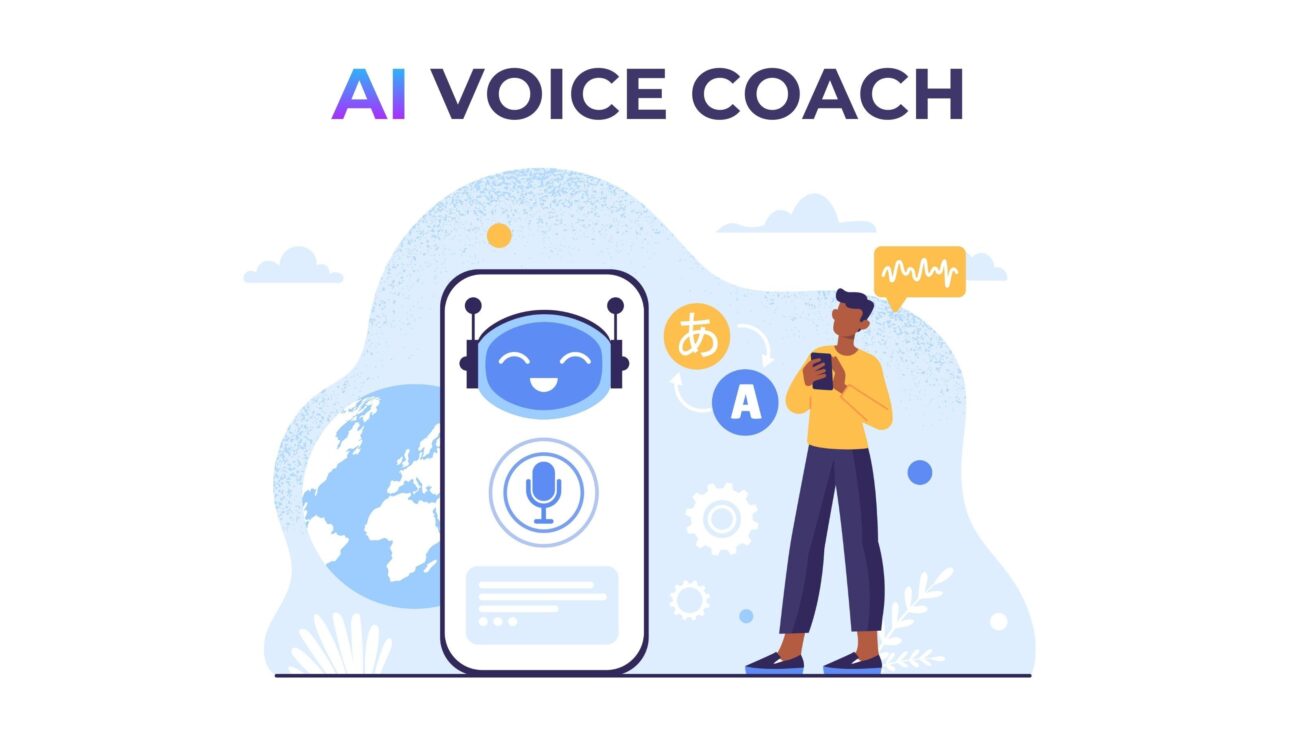
You’re about to present to 200 people. Your hands are sweating, your voice is shaking, and you’ve forgotten half of what you planned to say. Now imagine having a coach in your ear, analyzing your tone in real-time, suggesting pace adjustments, and tracking your emotional inflection to help you sound confident and persuasive.
This isn’t science fiction. AI voice coach technology is transforming how professionals develop communication skills, with 56% of coaches now using AI tools to track client progress and provide tailored feedback. By 2026, voice assistant users in the United States alone will reach 157.1 million, creating unprecedented opportunities for voice-based learning and development solutions.
Whether you’re training corporate speakers, developing language learners, or coaching sales teams, understanding AI voice coach capabilities and best practices isn’t optional anymore. It’s the difference between offering generic feedback and delivering personalized, data-driven improvement that actually sticks.
What Is an AI Voice Coach?
An AI voice coach is an intelligent system that analyzes spoken communication in real-time or post-session, providing feedback on vocal elements like tone, pace, clarity, emotional inflection, and delivery effectiveness. Unlike traditional coaching that relies solely on human perception, AI voice coaches use natural language processing (NLP), machine learning, and sentiment analysis to deliver objective, quantifiable insights.
These tools serve multiple functions:
- Real-time feedback during practice sessions or live presentations
- Post-analysis of recorded speeches, meetings, or training sessions
- Progress tracking showing improvement over weeks and months
- Personalized recommendations based on individual speaking patterns
- Emotional intelligence detection identifying stress, confidence, or uncertainty
The convergence of voice AI with coaching creates what analysts call “precision development,” where improvement is measured, not just felt.
Why AI Voice Coaching Matters in 2026
The voice AI market is experiencing explosive growth. By 2026, 80% of businesses plan to integrate AI-driven voice technology into customer service functions, and the trend extends powerfully into learning and development.
Market Growth and Adoption
| Metric | 2026 Projection | Impact on L&D |
| Voice assistant users (U.S.) | 157.1 million | Massive audience comfortable with voice interfaces |
| Businesses using voice AI | 80% | Corporate training demand accelerates |
| AI coaching market value | $20.15 billion globally | Investment in intelligent coaching tools grows |
| Coaches using AI tools | 56%+ | Standard practice, not competitive advantage |
These numbers reveal that voice-based learning isn’t emerging; it’s already here. Organizations investing in AI voice coach capabilities gain measurable advantages in employee development, customer-facing skills, and leadership communication.
The Shift to Multimodal Learning
Voice AI isn’t isolated anymore. By 2026, 30% of AI models will utilize multiple data modalities, combining voice with text, visual cues, and behavioral patterns. This multimodal approach creates richer coaching experiences where voice analysis integrates with body language assessment, facial expression recognition, and contextual understanding.
For learning and development professionals, this means AI voice coaches can provide holistic feedback that mirrors the complexity of real-world communication.
Essential Features of AI Voice Coach Tools
Not all AI voice coach platforms deliver equal value. The most effective solutions share specific capabilities that separate transformative tools from basic speech recognition.
1. Real-Time Vocal Analysis
Top-tier AI voice coaches analyze speech as it happens, tracking multiple vocal elements simultaneously:
Pace and rhythm: Identifying if speakers talk too fast, too slow, or use monotone delivery Vocal variety: Measuring pitch changes and tonal dynamics Clarity and articulation: Detecting mumbling, unclear pronunciation, or filler words (“um,” “like,” “you know”) Volume and projection: Ensuring speakers can be heard and command attention Pauses and breathing: Identifying rushed delivery or lack of strategic pauses for emphasis
This real-time feedback creates immediate learning opportunities. Instead of waiting for post-session review, speakers can adjust their delivery mid-practice, reinforcing correct techniques through repetition.
2. Emotional Intelligence Detection
AI-driven feedback tools can detect client emotions and engagement in real-time, giving coaches actionable data they once only inferred. The emotional AI market is projected to grow from $19.5 billion in 2020 to $37.1 billion by 2026, with an annual growth rate of 11.3%.
What emotional intelligence means for voice coaching:
- Detecting stress, anxiety, or uncertainty in vocal patterns
- Identifying confidence and authority in tone
- Recognizing frustration or impatience that might alienate audiences
- Measuring enthusiasm and engagement that creates connection
- Tracking emotional consistency across different speaking contexts
Startups like Hume AI are helping voice systems detect frustration, sarcasm, and satisfaction in real-time, reducing the need for human coach escalation by 25%. This capability transforms coaching from subjective interpretation to measurable emotional metrics.
3. Personalized Learning Paths
Generic feedback doesn’t create lasting change. The best AI voice coach tools analyze individual patterns and create customized improvement plans.
Personalization components include:
- Baseline assessment identifying specific weaknesses
- Targeted exercises addressing individual challenges
- Progressive difficulty as skills improve
- Comparison against industry benchmarks or role-specific standards
- Adaptive recommendations based on learning speed and retention
Vocaliv’s approach to AI-powered learning exemplifies this personalization principle. Their EdTech and SaaS solutions recognize that effective coaching adapts to the learner, not vice versa. The same philosophy applies to voice coaching: tools should meet speakers where they are and guide them to where they need to be.
4. Integration with Learning Management Systems
Standalone tools create data silos. Professional-grade AI voice coaches integrate seamlessly with existing LMS platforms, corporate training systems, and performance management tools.
Integration capabilities to prioritize:
- Single sign-on (SSO) for user convenience
- Progress data sync with corporate learning platforms
- Automated reporting to managers and L&D teams
- API access for custom integrations
- Mobile app synchronization for practice anywhere
Virtual coaching platforms are projected to grow by 13.8% annually, expanding opportunities for coaches to reach clients worldwide. Integration ensures AI voice coaching becomes part of comprehensive development programs rather than isolated exercises.
5. Privacy and Security Standards
Voice data is sensitive. Organizations need AI voice coach solutions with enterprise-grade security:
- End-to-end encryption for all voice recordings
- GDPR, CCPA, and industry-specific compliance
- Data residency options for regulated industries
- User consent management and data deletion capabilities
- Audit trails showing who accessed recordings and when
Security isn’t a feature; it’s a foundation. Without it, adoption stalls regardless of technical capabilities.
Top AI Voice Coach Tools for 2026
Several platforms lead the AI voice coach market, each offering distinct strengths for different use cases.
Comprehensive Training Platforms
Vocaliv’s AI Voice Coaching Solutions
Vocaliv combines artificial intelligence with deep expertise in EdTech and Learning & Development to deliver comprehensive voice coaching for global organizations. Their platform uses advanced NLP to analyze communication effectiveness across multiple languages, making it ideal for international teams.
Key features:
- Multimodal analysis combining voice, video, and text feedback
- Cultural context awareness for global communication
- Integration with existing L&D platforms
- Custom coaching programs aligned with organizational goals
- Real-time and asynchronous coaching modes
Organizations using Vocaliv’s solutions report measurable improvements in presentation confidence, sales communication effectiveness, and leadership presence.
Specialized Voice Improvement Tools
Orai: Public Speaking Coach
Focuses specifically on presentation skills, offering:
- Filler word detection and reduction
- Pace and clarity analysis
- Practice exercises with instant feedback
- Progress tracking over time
Best for individuals and small teams developing public speaking confidence.
Yoodli: Professional Communication Analyzer
Designed for workplace communication:
- Meeting preparation and rehearsal
- Interview coaching with industry-specific scenarios
- Sales pitch refinement
- Personalized improvement recommendations
Popular among professionals preparing for high-stakes conversations.
Visuara: Voice Training for Performers
Targets singers, voice actors, and performers:
- Pitch accuracy and vocal range analysis
- Breath control and stamina tracking
- Vocal health monitoring
- Genre-specific coaching
Serves creative professionals needing specialized vocal technique development.
Meeting and Presentation Assistants
Otter.ai with Coaching Features
Originally a transcription tool, now includes:
- Speaker time tracking showing who dominates conversations
- Talk-to-listen ratio analysis
- Keyword and topic identification
- Follow-up action item extraction
Useful for teams wanting to improve meeting effectiveness and ensure balanced participation.
Best Practices for Implementing AI Voice Coaching
Technology alone doesn’t create results. Successful AI voice coach implementation requires strategic planning and thoughtful execution.
1. Start with Clear Objectives
Define what success looks like before selecting tools:
For corporate training:
- Reduce filler words by X% in client presentations
- Increase speaking confidence ratings from peer reviews
- Improve sales pitch effectiveness measured by conversion rates
- Develop consistent leadership communication across management teams
For educational settings:
- Enhance language pronunciation for non-native speakers
- Build presentation skills for student career readiness
- Develop interview preparation competencies
- Improve classroom participation through confident speaking
Clear objectives guide tool selection, implementation strategy, and success measurement.
2. Blend AI with Human Coaching
AI excels at objective measurement but lacks human context, empathy, and nuanced understanding. The most effective programs combine both:
AI handles:
- Initial assessment and baseline establishment
- Consistent feedback on measurable vocal elements
- Progress tracking and pattern identification
- Practice session monitoring and data collection
- Scalable feedback for large populations
Human coaches provide:
- Context-specific guidance for challenging situations
- Emotional support during skill development
- Strategic advice on communication approach
- Interpretation of AI data within broader performance context
- Motivation and accountability for continued practice
Organizations using this hybrid model see 30% faster skill development compared to AI-only or human-only approaches.
3. Create Regular Practice Routines
Voice improvement requires consistent practice, not occasional workshops. Build AI voice coaching into daily or weekly routines:
Daily micro-practices (5-10 minutes):
- Morning vocal warm-ups with AI feedback
- Reading exercises focusing on pace and clarity
- Filler word elimination drills
- Emotional tone practice for different scenarios
Weekly focused sessions (30-45 minutes):
- Full presentation rehearsals with comprehensive analysis
- Recorded pitch reviews with detailed feedback
- Peer practice sessions using AI for objective assessment
- Progress reviews comparing current performance to baseline
Consistent practice with immediate feedback creates muscle memory that transfers to real-world situations.
4. Leverage Emotional Intelligence Insights
The ability to detect and respond to emotions is what separates good communication from great communication. Use AI emotional intelligence data to:
- Identify stress patterns triggering poor delivery
- Recognize confidence-building techniques that work
- Understand how different topics affect vocal tone
- Develop strategies for maintaining composure under pressure
- Practice emotional consistency across varied scenarios
Coaches who embrace AI tools that integrate sentiment analytics report 25% improvement in client engagement and satisfaction scores.
5. Measure ROI and Business Impact
Justify continued investment by tracking measurable outcomes:
Individual development metrics:
- Pre/post assessment scores showing improvement
- Confidence self-ratings before and after training
- Peer and manager feedback on communication effectiveness
- Reduction in anxiety-related vocal patterns
Organizational impact metrics:
- Sales conversion rates for teams receiving voice coaching
- Customer satisfaction scores for service representatives
- Employee engagement improvements from leader communication
- Recruitment success rates for candidates using interview coaching
Organizations demonstrating clear ROI secure budget for expanded programs and advanced tools.
Challenges and Considerations
Despite impressive capabilities, AI voice coach implementation faces legitimate challenges.
Accuracy Across Accents and Languages
Early voice AI struggled with non-native speakers and regional accents. While 2026 tools are significantly improved, accuracy varies:
- North American and Western European accents: 95%+ accuracy
- Asian language speakers: 85-92% accuracy
- African and Middle Eastern accents: 82-88% accuracy
- Multilingual code-switching: Still developing, 70-80% accuracy
Choose tools that support your organization’s linguistic diversity. Test extensively with representative user groups before full deployment.
Privacy and Data Concerns
Recording and analyzing voices raises valid privacy questions. Address these proactively:
- Provide transparent explanations of data usage
- Offer opt-in rather than mandatory participation where possible
- Allow users to delete recordings after analysis
- Restrict access to voice data to authorized personnel only
- Conduct regular privacy impact assessments
Organizations that handle privacy carelessly face employee resistance and potential regulatory issues.
Over-Reliance on AI Feedback
AI provides data, not wisdom. Over-dependence on automated feedback can:
- Reduce authentic communication in favor of “optimized” patterns
- Create anxiety about constant monitoring and measurement
- Miss important contextual factors affecting delivery
- Discourage risk-taking and experimentation with style
Balance AI insights with encouragement to develop personal voice and authentic style.
The Future of AI Voice Coaching
Voice AI continues evolving rapidly. What’s coming beyond 2026?
Predictive coaching: AI that anticipates challenges before they occur, suggesting preventive practice based on upcoming presentations or situations.
Adaptive difficulty: Systems that automatically adjust challenge levels as skills improve, preventing plateaus and maintaining engagement.
Holistic communication analysis: Integration of voice, body language, facial expressions, and content quality into unified coaching frameworks.
Virtual reality integration: Immersive practice environments where AI coaches guide speakers through realistic scenarios with immediate feedback.
Collaborative voice improvement: AI facilitating peer coaching groups, identifying complementary skill sets, and creating learning communities.
Conversational AI is among the top three areas where businesses are increasing investment, according to McKinsey’s 2025 tech trends report. This investment ensures rapid innovation and expanded capabilities.
FAQ’s
Q1:What does an AI coach do?
An AI coach analyzes user behavior, provides personalized guidance, tracks progress, and offers feedback to support learning, performance, and goal achievement.
Q2: Can I train my voice myself?
Yes, you can train your voice yourself using Vocaliv by practicing regularly, following feedback, and adjusting tone, clarity, and delivery based on AI guidance.
Q3: Which app is best for voice training?
The best app for voice training depends on your goals, but vocaliv is often recommended for its advanced feedback and tailored coaching features.
Summary
The future of professional development is here, and it speaks with your voice. AI voice coach technology has moved from experimental novelty to essential infrastructure for organizations committed to communication excellence. With 80% of businesses planning AI-driven voice integration by 2026, the question isn’t whether to adopt these tools, but how quickly and effectively you can implement them.
The most successful organizations recognize that AI voice coaching doesn’t replace human expertise; it amplifies it. By handling objective measurement, consistent feedback, and scalable practice opportunities, AI frees human coaches to focus on strategy, context, and the irreplaceable human elements of development.
Vocaliv’s expertise in AI, EdTech, SaaS, and Learning & Development positions us uniquely to implement voice coaching solutions that drive measurable results. Whether you’re developing sales teams, training customer service representatives, preparing leaders for high-stakes communication, or building language skills across global teams, our AI-powered voice coaching delivers the personalization, scalability, and effectiveness your organization needs.
Schedule a demo to see AI voice coaching in action with real examples. Don’t let outdated feedback methods hold your teams back. Contact Vocaliv today and discover how AI voice coaching can transform communication from weakness to competitive advantage.