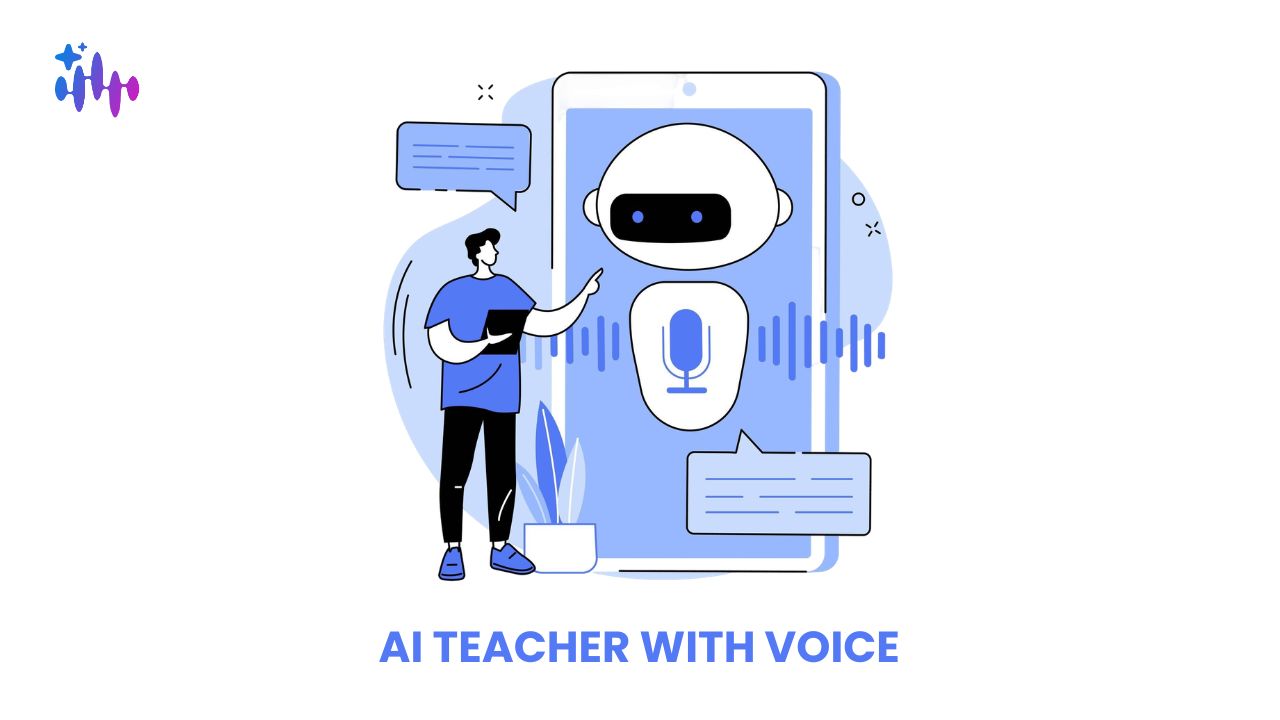
An AI teacher with voice changes something more fundamental than presentation format. Reading is deliberate: learners skim, skip, and re-read at their own pace. Listening is sequential and time-bound, which imposes a different cognitive load and produces different completion behaviour. Understanding where that helps and where it hurts matters more than whether the Voice Cloning output sounds convincing, because a natural voice reading badly structured content is still badly structured content.
Key Takeaways
- Audio raises completion on long modules and lowers comprehension on dense reference material.
- Text is better for anything a learner needs to scan, compare, or return to.
- Voice suits explanation, narrative, and procedural walkthroughs. It is poor for tables, code, and specifications.
- A familiar instructor’s voice measurably improves engagement in cohort programmes.
- Always provide a transcript, for accessibility and because some learners will simply prefer reading.
🖥️ Sign In to Access Your Dashboard
Where Audio Outperforms Text
Long-form explanation: A twenty-minute conceptual explanation is tiring to read and comfortable to listen to. Completion rates on longer modules improve noticeably when the primary channel is audio.
Commuting and field contexts: Learners in transit, on site, or between client visits cannot read but can listen. In the GCC, where commutes are long and much of the workforce is mobile, this is a larger share of learning time than most providers assume.
Procedural walkthroughs: Where a learner is doing something with their hands, audio leaves their eyes free. This is why software training with narrated steps outperforms written instructions for hands-on tasks.
Emotional and tonal content: Anything involving customer interaction, difficult conversations, or tone benefits from being heard, because tone is the subject matter.
Where Audio Underperforms
Reference material: Anything a learner will return to and search. Audio is linear and unsearchable, which makes it a poor container for information people need to look up.
Dense technical specification: Numbers, thresholds, code, and configuration values are harder to retain by ear and much harder to verify. Text with audio explanation around it works better than audio alone.
Comparison content: Tables and side-by-side comparisons rely on spatial layout. Reading a comparison aloud loses the structure that makes it comprehensible.
Learners working in a second language: This one cuts both ways. Some second-language learners find audio easier because it carries prosody. Others find it much harder because they cannot control pace or re-read. Provide both and let them choose.
| Content type | Audio | Text | Best approach |
| Conceptual explanation | Strong | Adequate | Audio primary |
| Procedural walkthrough | Strong | Adequate | Audio with visual steps |
| Reference tables | Poor | Strong | Text only |
| Technical specifications | Poor | Strong | Text with audio summary |
| Customer interaction skills | Strong | Weak | Audio primary |
| Compliance policy detail | Adequate | Strong | Text with audio overview |
The Familiar Voice Effect
In cohort programmes, hearing the instructor who runs the sessions creates continuity that a generic narration voice does not. Learners report the material feeling connected to the programme rather than bolted on.
This is the practical argument for cloning your own instructors rather than selecting a stock voice. The operational argument is stronger still: an instructor records once, and every subsequent module carries their voice without further studio time.
That said, the consent and licensing questions this raises are substantive rather than administrative, and should be settled before recording. We cover them in voice consent for instructor cloning, and the comparative provider landscape in AI voice cloning tools for training content.
📄 Generate a Free PDF Sample Course in Your Cloned Voice
Writing for the Ear
Content written to be read does not work when spoken. Four adjustments matter.
Shorter sentences: A sentence a reader can parse across two lines becomes hard to follow when heard once.
Signposting: Listeners cannot see headings, so the structure has to be stated. “There are three things to check here. The first is…” does work that a heading does on a page.
Repetition of key terms: Readers scan back. Listeners cannot, so important terms need restating rather than being replaced with pronouns.
No visual references: “As shown above” is meaningless in audio. Describe rather than point.
Most providers generate audio from content written for reading and then wonder why comprehension is weaker. The script is the variable, not the voice.
Accessibility and Transcripts
Always publish a transcript alongside audio. Three reasons, and only the first is the one people think of.
Accessibility requirements under standards such as WCAG generally expect a text alternative for audio content. Beyond compliance, transcripts make content searchable, which restores the one thing audio removes. And a meaningful proportion of learners simply prefer reading, and forcing audio on them lowers completion rather than raising it.
What Changes in Production Economics
To be clear about scope: voice delivery does not improve weak content. A clear instructor voice narrating a poorly structured module produces a well-narrated poor module.
What it affects is production economics. Narration for a new module no longer requires studio time or the instructor’s availability, so audio stops being reserved for flagship courses and becomes available across the catalogue. Language variants come from the same source rather than requiring separate recording.
For a provider with a 25-course catalogue
| Metric | Before | After |
| Courses with audio narration | 4 | 25 |
| Instructor studio hours per new module | 6 | 0 |
| Cost to re-record after a content change | Full session | Regenerate |
| Completion rate, modules over 20 minutes | 52% | 71% |
| Arabic audio available | No | Same source |
Adding Audio to Your Catalogue
- Sort your catalogue by content type and mark which modules suit audio, text, or both.
- Rewrite scripts for the ear before generating, since the script matters more than the voice.
- Keep reference material, tables, and specifications as text.
- Settle voice consent and licensing before recording any instructor.
- Publish a transcript with every audio module.
- Measure completion on long modules before and after, since that is where the effect shows.
Frequently Asked Questions
On longer modules, yes, and noticeably. Twenty-minute conceptual explanations that are tiring to read are comfortable to listen to. On short modules and reference material the effect is neutral or negative, since audio removes the ability to scan and search.
Whenever learners need to scan, compare, search, or return to it. Reference tables, technical specifications, configuration values, and side-by-side comparisons all lose comprehensibility when read aloud, because they depend on spatial layout rather than sequence.
For cohort programmes, the instructor’s voice creates continuity that measurably improves engagement, since learners connect the material to the sessions they attend. Settle consent, licensing, and revocation terms before recording, as these are substantive rather than administrative questions.
Yes. Content written for reading performs poorly when spoken. Use shorter sentences, state structure explicitly since listeners cannot see headings, repeat key terms rather than using pronouns, and remove visual references such as “as shown above”.
Yes, for three reasons. Accessibility standards generally expect a text alternative, transcripts restore searchability that audio removes, and a meaningful share of learners simply prefer reading. Forcing audio on those learners lowers completion rather than raising it.
If you are about to add narration across your catalogue, rewrite the scripts first. The voice is not the variable that decides whether it works.