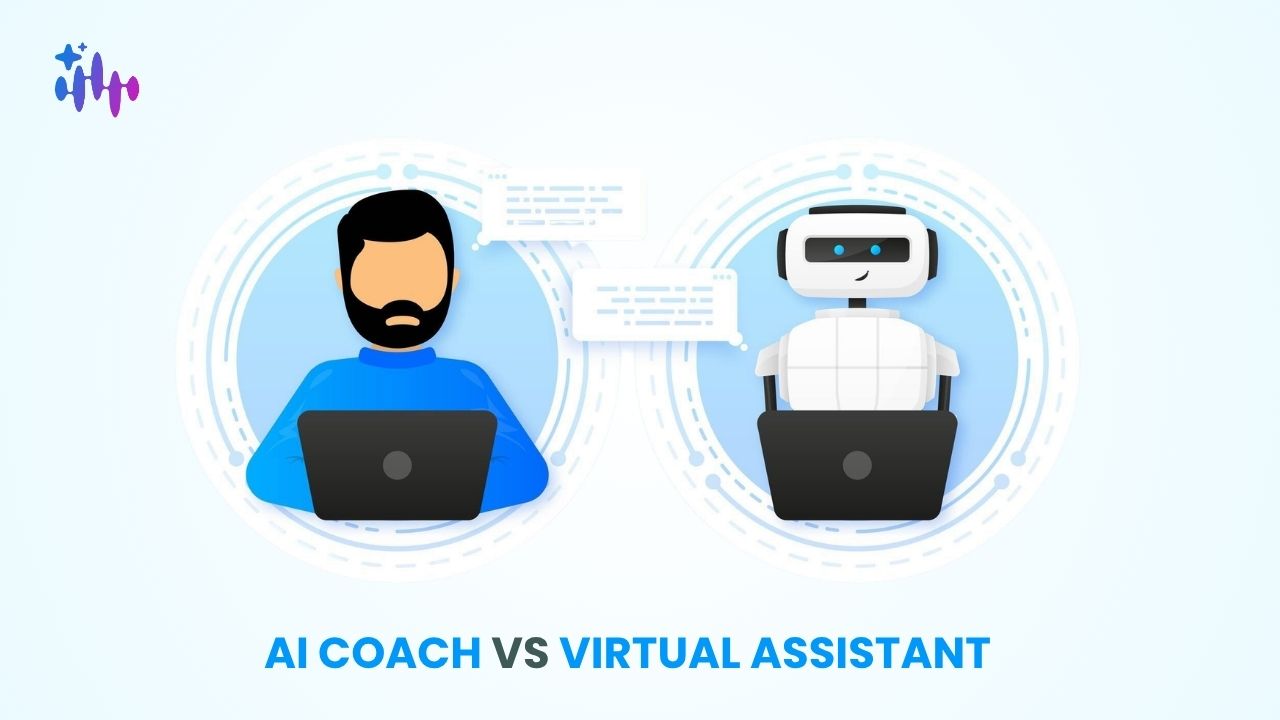
The AI coach vs virtual assistant comparison gets muddled because vendors apply all three labels to the same product. They are not the same thing, and the difference decides whether learner questions actually get resolved or simply get acknowledged. A chatbot matches patterns. A virtual assistant executes tasks. An AI Coach reasons about a specific learner inside specific course content. Buying one when you needed another is the most common reason training providers conclude that AI support does not work.
What Matters Most
- A chatbot matches questions to pre-written answers. It fails on anything unanticipated.
- A virtual assistant executes tasks such as scheduling, reminders, and enrolment. It does not teach.
- An AI coach reasons over your actual course content and the learner’s progress, so it answers questions nobody scripted.
- Cost rises across the three, and so does what they can deflect from your instructors.
- The wrong choice looks identical in a demo and diverges in week three of a live cohort.
🖥️ Sign In to Access Your Dashboard
The Three Categories Defined
Chatbot: A decision tree with a text interface. Someone authored the questions and the answers, and the system matches an incoming message to the nearest one. Where a learner asks something anticipated, it works well and costs very little. Where they ask something novel, it either guesses wrong or hands off.
Virtual assistant: Task-oriented. It enrols learners, sends reminders, books sessions, resets passwords, and reports progress. It is genuinely useful and reduces administrative load. It does not answer “why did my calculation come out differently in the second scenario”, because that is not a task, it is a question about content.
AI coach: Reasons over your course material and the individual learner’s history. It answers questions that were never scripted, because it is working from the source content rather than from a list of anticipated queries. It can tell that a learner has now asked three questions circling the same misunderstanding.
| Capability | Chatbot | Virtual assistant | AI coach |
| Answers scripted questions | Yes | Some | Yes |
| Answers unanticipated questions | No | No | Yes |
| Executes admin tasks | No | Yes | Sometimes |
| Understands course content | No | No | Yes |
| Tracks individual learner progress | No | Yes | Yes |
| Detects repeated confusion | No | No | Yes |
| Escalates with context | Rarely | Basic | Yes |
| Relative cost | Low | Low to mid | Mid to high |
Why the Distinction Matters in Week Three
In a demo all three look capable, because the demo question is always one the system handles. The divergence appears in a live cohort.
A learner on day nine of a compliance programme asks why the escalation threshold in the client’s own policy differs from the example in module four. A chatbot has no entry for this. A virtual assistant offers to book time with an instructor. An AI coach reads both the policy and the module, explains the difference, and flags to the instructor that the module wording is causing confusion.
That third outcome is the one that reduces instructor hours. The other two move the question rather than resolving it, which is why some providers conclude AI support does not work when what they actually deployed was a chatbot. Whether coaching produces measurable results is a separate question, covered in our look at what the evidence shows about AI coaching.
What Each One Actually Costs You
The licence fee is the smaller number. The real cost is authoring and maintenance.
A chatbot needs someone to write and maintain the answer set. Every course update means revisiting it, and coverage decays quietly as content changes. Providers frequently abandon chatbots not because they failed but because nobody kept them current.
A virtual assistant needs integration work against your LMS and calendar, then very little maintenance. It is the cheapest ongoing option and the narrowest in scope.
An AI coach needs your course content to be structured and accurate, since it reasons from that source. There is no answer set to maintain, but there is a real dependency on content quality, which is the same constraint discussed in AI-generated training content accuracy.
📄 Generate a Free PDF Sample Course in Your Cloned Voice
Choosing Between an AI Coach and a Virtual Assistant
| Your problem | What you need |
| Learners ask the same ten admin questions | Chatbot or virtual assistant |
| Enrolment and reminders eat administrator time | Virtual assistant |
| Instructors spend hours on content questions | AI coach |
| Completion rates drop mid-programme | AI coach |
| You need escalation with context | AI coach |
| Budget is the binding constraint | Chatbot, accepting the ceiling |
The diagnostic question is simple. Look at last month’s learner questions and sort them into administrative and content. If the split is mostly administrative, a virtual assistant solves it cheaply. If it is mostly content, nothing below an AI coach will move the number.
Which Questions Reach an Instructor
To be clear about scope: an AI coach does not replace instructors, and it should not try. Judgement, assessment decisions, and the relationship with the learner stay human. Instructor concerns about this are legitimate and worth addressing directly, which we cover in why instructors resist AI training tools.
What changes is which questions reach an instructor. Routine content questions resolve without them. Questions that genuinely need a human arrive with context attached, including what the learner already tried and where they got stuck.
For a provider running three cohorts of 40 learners
| Metric | Before | After |
| Learner questions per week | 180 | 180 |
| Questions reaching an instructor | 180 | 47 |
| Average instructor response time | 9 hours | 2 hours |
| Instructor hours on support weekly | 20 | 6 |
Diagnosing Which One You Need
- Export last month’s learner questions and sort them into administrative and content categories.
- If the split is mostly administrative, scope a virtual assistant and stop there.
- If it is mostly content, confirm your course material is structured well enough for an AI coach to reason over.
- Define the escalation rule before launch, not after.
- Measure deflection rate weekly for the first cohort, since that is the number that justifies the cost.
Frequently Asked Questions
A chatbot matches incoming questions to pre-written answers and fails on anything unanticipated. An AI coach reasons over your actual course content and the learner’s progress, so it answers questions nobody scripted. The practical difference shows in week three of a cohort, not in a demo.
No. A virtual assistant executes tasks such as enrolment, reminders, scheduling, and password resets. An AI coach answers questions about course content and learner understanding. They solve different problems, and many providers need the assistant function far less than they assume.
An AI coach, provided your instructor time is going on content questions rather than administration. Sort last month’s learner queries into those two buckets first. If most are administrative, a cheaper virtual assistant will do it. If most are content, only a coach moves the number.
Licence cost is higher, but the comparison misleads. A chatbot requires ongoing authoring and maintenance of its answer set, and coverage decays as courses change. An AI coach has no answer set to maintain, though it depends on your course content being structured and accurate.
No, and it should not attempt to. Judgement, assessment decisions, and the learner relationship stay human. What changes is which questions reach an instructor, and whether those questions arrive with context about what the learner already tried.
If your last AI support deployment underdelivered, check which of the three categories you actually bought before concluding the approach does not work.