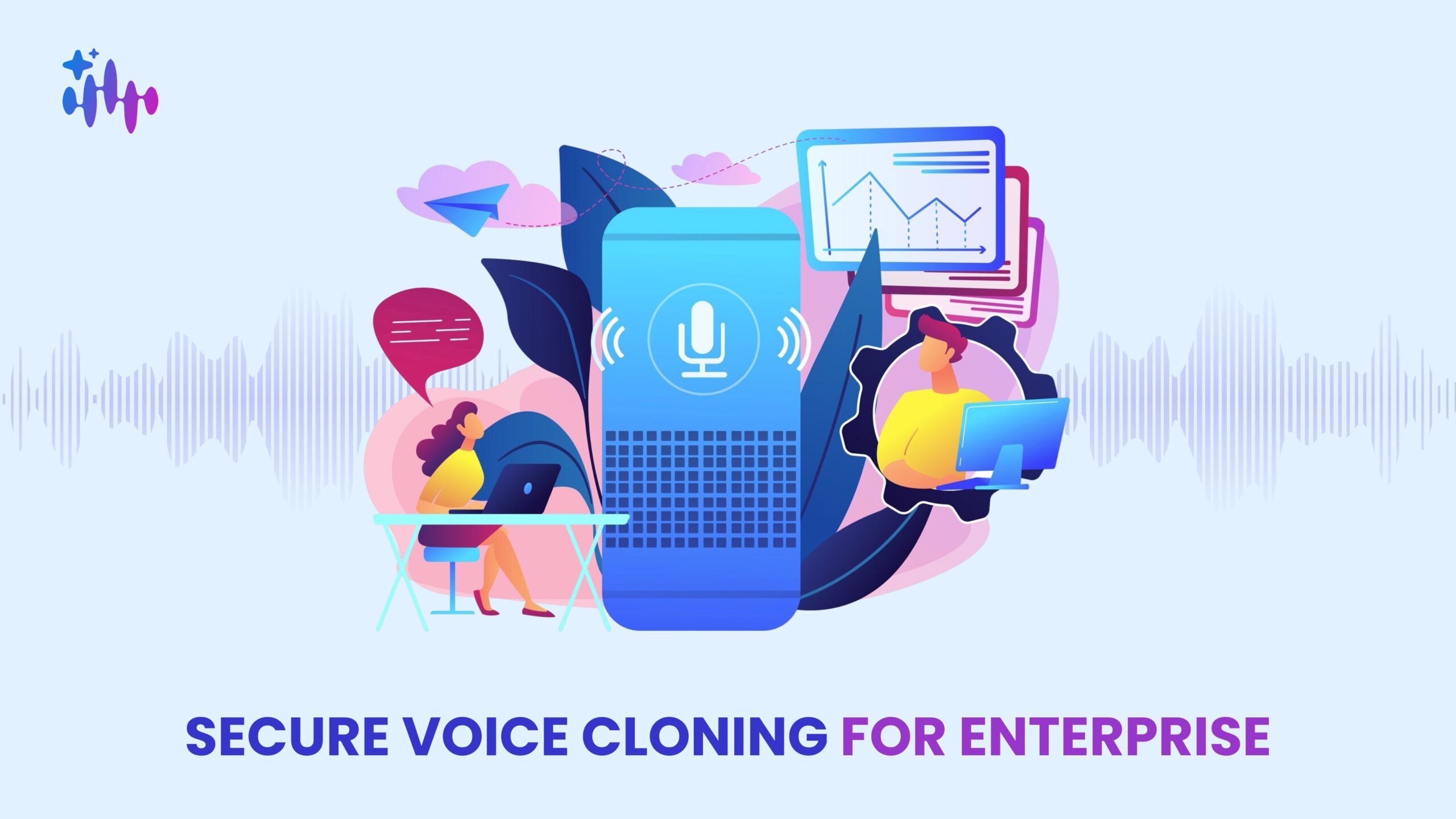
Secure voice cloning for enterprise use gets treated as a settings question when it is really a contract question. Technical controls matter, but the failure mode that actually costs training providers money is not a breach. It is a senior instructor leaving on bad terms and asking you to stop using their voice across forty courses you have already delivered to clients. If your only record of permission is a chat message and a checkbox in a vendor onboarding flow, you have no answer. Whether you use Voice Cloning in Vocaliv or another provider, here is what a defensible arrangement looks like.
Key Takeaways
- Consent must be specific, recorded, and scoped. A general employment clause about likeness is unlikely to cover synthetic voice generation.
- The licence must state scope, duration, territory, permitted uses, and revocation terms. The last of these is the clause most often missing.
- Revocation is rarely retroactive in practice. Decide in advance whether withdrawal stops new generation only, or requires pulling delivered content.
- Voice models and generated audio are stored separately and may sit in different jurisdictions.
- For UAE and Saudi clients, biometric-adjacent data attracts closer scrutiny during procurement.
Why Consent Is a Contract, Not a Checkbox
Most vendor onboarding flows ask the person being cloned to confirm consent. That protects the vendor. It does very little for you.
The reason is scope. A platform consent screen typically covers use of the voice within that platform. Your commercial exposure is different, because you are delivering that voice to paying clients inside courses that may be resold, retained for years, and audited. The permission you need is broader than the permission the vendor asked for, and it needs to survive the instructor’s departure.
Treat it the way you would treat a photographer’s release or a talent contract, because functionally that is what it is.
Position as at September 2026. This is general guidance, not legal advice. Voice and biometric rules differ materially between the UAE, Saudi Arabia, and the EU, and any template should be reviewed locally before use.
What a Voice Licence Must Specify
Six elements. Missing any one is where disputes start.
Scope of use: Which programmes, which clients, and whether the voice may be used for content created after the instructor leaves. That last point is the one people forget. An instructor who agreed to narrate a safety course may not have agreed to narrate everything you build for five years.
Duration: A fixed term with explicit renewal, or perpetual. Perpetual licences are cleaner operationally and harder to obtain. A five-year term with automatic renewal absent written objection sits reasonably in the middle.
Territory: Usually worldwide. If your client base is GCC only, saying so narrows the instructor’s exposure and makes the licence easier to sign.
Permitted modifications: Can the voice be used at different speeds, pitches, or in languages the instructor does not speak? Multilingual generation from a single sample is common, and frequently outside what the person thought they agreed to.
Compensation: Flat fee, per course, or included in employment. State it, because an uncompensated licence is easier to challenge.
Revocation terms: Covered below, because it deserves its own section.
The Revocation Problem in Enterprise Voice Cloning
This clause decides whether the arrangement is workable. An instructor withdraws consent. What actually happens?
| Revocation scope | Operational cost | Practical? |
| Stop new generation only | Low. Disable the voice, use another. | Yes |
| Stop new generation, keep delivered content | Low to moderate. Existing courses continue. | Yes, most common |
| Withdraw from undelivered content | Moderate. Re-narrate unreleased material. | Usually |
| Withdraw from all content including delivered | High. Re-narrate the library and reissue. | Rarely, without a fee |
The honest position is that full retroactive withdrawal is expensive and, past a certain library size, close to impossible inside a normal notice period. So say so in the contract. Specify a wind-down period, and ninety days is common, during which delivered content continues while replacement narration is produced. An instructor who understands that upfront is far more likely to agree than one who discovers it during a dispute.
Also decide who pays. If revocation is at the instructor’s discretion and re-narration costs thirty thousand dirhams, the contract should say whether that lands on you or on them.
Where the Voice Model Actually Lives
Three distinct artefacts, often in three places.
- The training samples: The original recordings. Frequently the most sensitive item and the one most often forgotten in deletion requests.
- The voice model: The derived representation used to generate speech. This is the artefact that matters legally, and it is usually the vendor’s to hold rather than yours to take.
- The generated audio: Output files embedded in your courses. Usually yours, usually portable.
Ask your vendor in writing, for each of the three: where is it stored, who can access it, how long is it retained after a deletion request, and does deleting the model also delete the source samples. The answers often differ for each. A promise to “delete on request” without a stated retention window is not an answer.
Also ask whether the model contributes to any shared or general model. If your instructor’s voice improved a capability that persists after deletion, your licence needs to disclose that. Comparative detail on how different providers handle this sits in our review of AI voice cloning tools for training content.
Data Residency in the UAE and Saudi Arabia
Voice data sits close to biometric identifiers. Both the UAE federal data protection framework and Saudi Arabia’s PDPL, administered by SDAIA, treat that category with more caution than ordinary personal data. Government and semi-government clients in both markets increasingly ask residency questions during procurement, and a vague answer stalls deals.
There are three separate questions, and vendors sometimes answer only the easy one.
- Where is the model trained?
- Where is it stored at rest?
- Where does inference run when a course is generated?
Storage is the question vendors are most prepared for. Inference location catches people out, because generation can route to a different region than storage. For regulated clients, get all three in writing. Related requirements for learner records are covered in our guide to training data residency under PDPL.
Evidencing Your Position When Asked
To be clear about scope: Vocaliv is not a legal or contracts system and does not draft, store, or enforce voice licences. That stays with you and your counsel.
What it affects is whether you can evidence your position when asked. Voice profiles are recorded against the instructor who authorised them rather than held informally. Generated audio is traceable to the profile that produced it. Where a voice must be withdrawn, the affected content is identifiable rather than something you reconstruct by listening. That is the difference between a ninety-day wind-down that works and one that becomes a manual audit of your entire library.
For a provider with six cloned instructor voices across 40 courses
Illustrative of the pattern described above, not measured results. Replace with your own platform data before publication.
| Metric | Before | After |
| Time to identify all content using one voice | 2 to 3 days, manual | Immediate |
| Consent records held centrally | No | Yes, per voice profile |
| Re-narration turnaround on withdrawal | 4 to 6 weeks | 5 days |
| Residency answer available for procurement | Ad hoc | Documented |
Setting Up Voice Consent Correctly
- Write a voice licence covering scope, duration, territory, permitted modifications, compensation, and revocation. Have it reviewed locally.
- Sign it before the first sample is recorded, not after the voice is in production.
- Define your revocation position explicitly, including a wind-down period and who bears re-narration cost.
- Get written vendor answers on storage, retention, and deletion for samples, model, and audio separately.
- Confirm training, storage, and inference locations for any client with residency requirements.
- Keep a register mapping each voice profile to the courses using it.
That final register turns a withdrawal request into a query rather than an investigation.
Frequently Asked Questions
Yes, where the person consents in a documented and informed way. This holds broadly across the UAE and Saudi Arabia. Exposure comes from consent that is absent, vague, or narrower than the actual use. Rules differ by jurisdiction and change quickly, so seek local legal review.
Scope of use, duration, territory, permitted modifications including other languages, compensation, and revocation terms with a defined wind-down period. The revocation clause is the one most often omitted and the one that matters most when a working relationship ends badly.
They can withdraw consent, but what that obliges you to do depends on the contract. Most workable arrangements stop new generation immediately and let delivered content continue through a stated wind-down while replacement narration is produced. Full retroactive removal should be priced in advance.
That depends on the vendor, and three artefacts are involved: source recordings, the derived voice model, and generated audio. They often sit in different places under different retention rules. Ask about each separately, and ask specifically where inference runs, since generation can route elsewhere.
Regulated clients in Saudi Arabia and the UAE commonly treat it that way during procurement, whether or not the classification is settled in a given instance. The practical implication is that you should be able to answer residency, retention, and deletion questions precisely, because you will be asked.
If you cannot currently produce a list of every course using a given instructor’s voice within an hour, close that gap before you clone the next one.