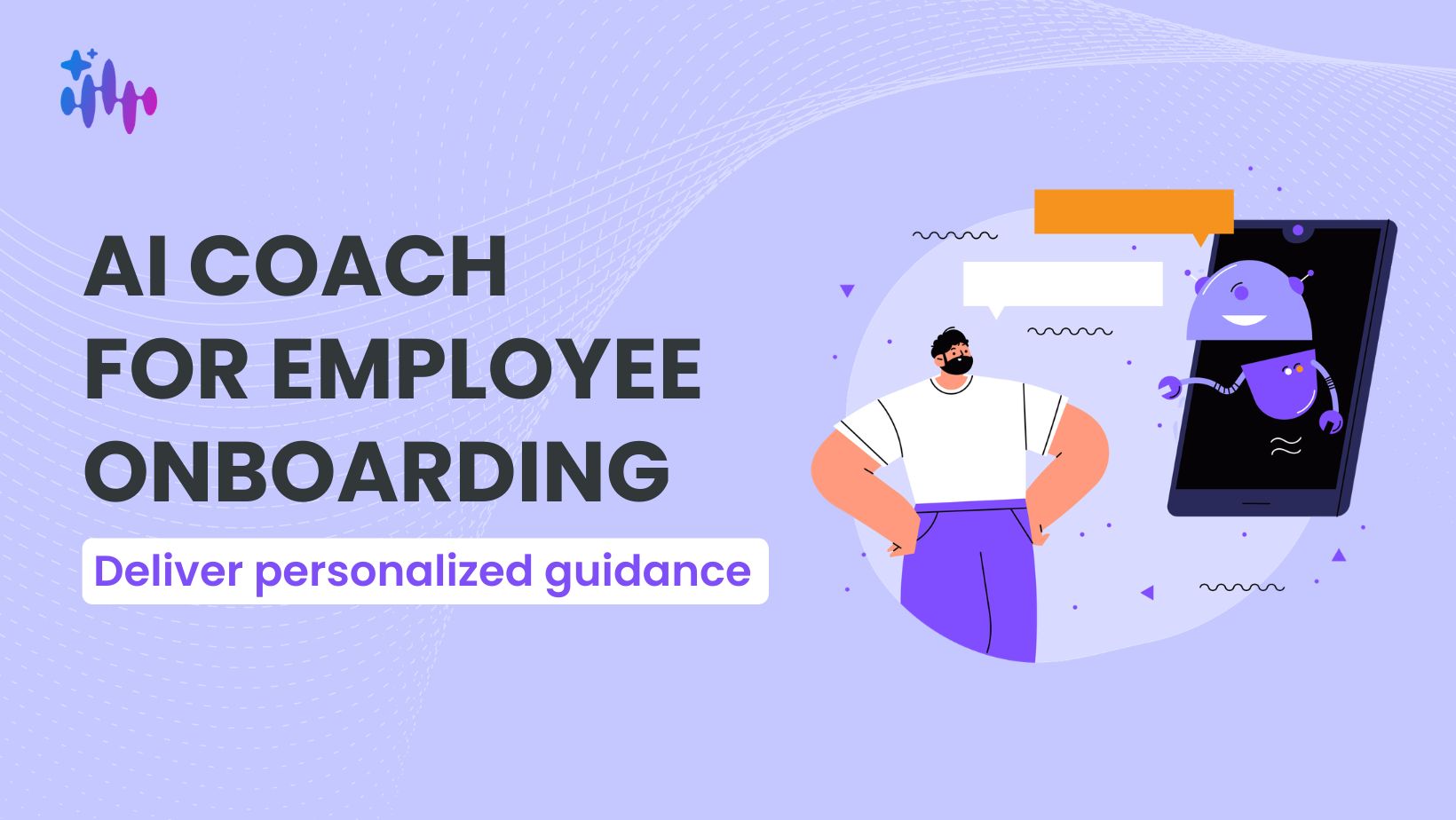
An AI coach for employee onboarding adjusts practice and content in real time to what a new hire already knows, and Vocaliv’s AI coach applies this directly to new-hire ramp, skipping material someone has already mastered and pushing harder practice toward the specific gaps slowing them down, which is how organizations realistically cut ramp time by up to 25% and, for strong hires skipping redundant content, closer to half.
Key Takeaways:
- Static onboarding runs every new hire through an identical curriculum regardless of prior experience, wasting time for skilled hires and rushing others past material they haven’t actually absorbed.
- Adaptive onboarding is linked to up to 25% faster time-to-productivity and 30–50% better retention compared to fixed, one-size-fits-all programs.
- The mechanism behind cutting ramp time in half isn’t shorter content, it’s skipping mastered material and stopping practice the moment proficiency is confirmed, which compounds fastest for experienced hires.
- An AI coach also absorbs the repetitive onboarding questions that otherwise consume a manager’s or buddy’s first weeks with a new hire.
- Fixed-length compliance modules within onboarding won’t compress the same way skill-practice modules do; the ramp-time gains concentrate specifically in skill-based onboarding content.
Every new hire sits through the same onboarding program regardless of what they already know, which means a candidate with three years of adjacent experience gets rushed past nothing while wasting hours on content they’ve already mastered, and a hire coming from a completely different background gets the same pacing regardless of whether they’re actually keeping up. An AI coach fixes this by treating onboarding as a diagnostic process instead of a fixed schedule, and the ramp-time savings that follow are large enough to change how fast a new hire actually becomes productive.
Why Static Onboarding Wastes Time in Both Directions
A fixed onboarding curriculum assumes every new hire starts from zero. That assumption is wrong often enough to matter: skilled hires disengage sitting through material they don’t need, while hires genuinely starting from scratch get rushed through content at a pace built for someone with more background. Neither group gets onboarding calibrated to where they actually stand, and the result is slower time-to-productivity across the board.
How an AI Coach Actually Cuts Ramp Time
Skipping Mastered Content Automatically
When a new hire demonstrates competency on a topic, whether that’s product knowledge, a specific tool, or a process step, the coach moves them past it instead of running the full module regardless. This alone accounts for a meaningful share of the time saved for experienced hires.
Adaptive Practice That Ends at Proficiency
Fixed-length practice sessions run the same duration for everyone. Adaptive coaching sessions end once the system confirms a skill has actually landed, rather than continuing for a set time regardless of whether the new hire is ready to move on.
Real-Time Coaching Instead of Waiting for a Manager
New hires generate a large volume of questions in their first weeks, and those questions currently land on managers or onboarding buddies whose own productivity takes a hit absorbing that load. An AI coach fields the bulk of routine questions instantly, escalating only what genuinely needs a person, which shortens the wait time that otherwise stalls a new hire’s progress.
Targeted Remediation Instead of Full Re-Teaching
When a specific gap surfaces, whether it’s a misunderstood process step or a skill that didn’t stick in practice, the coach delivers a short, focused fix rather than looping the new hire back through an entire module.
The Data Behind the Ramp-Time Claim
Research on adaptive learning systems links personalized pacing and remediation to up to 25% faster time-to-productivity and 30–50% improvements in retention compared to static programs. For a sales onboarding program that traditionally takes 8 to 12 weeks to reach full ramp, a 25% reduction alone puts a new rep at proficiency two to three weeks earlier. Stack that against a strong hire who also skips a meaningful share of redundant content entirely, and cutting total ramp time roughly in half becomes a realistic outcome, not a marketing exaggeration, specifically for the skill-practice portions of onboarding.
Static vs. AI Coach-Led Onboarding
| Factor | Static Onboarding | AI Coach-Led Onboarding |
| Content pacing | Fixed for every hire | Skips mastered material automatically |
| Practice duration | Set length regardless of readiness | Ends once proficiency is confirmed |
| New-hire questions | Land on manager or buddy | Handled instantly by the AI coach |
| Remediation | Full module re-take | Targeted fix for the specific gap |
| Time-to-productivity | Baseline | Up to 25% faster, more for skilled hires |
Where This Fits Into a Broader Onboarding Strategy
An AI coach handles the skill-practice and repetitive-question layer of onboarding exceptionally well, but it’s one part of a complete onboarding system that also needs structured content, clear milestones, and manager check-ins at the right moments. Understanding how the pieces fit together, what stays human-led and what gets automated, determines whether the ramp-time gains actually materialize or get lost in a program that’s only half-optimized.
For the complete picture of how AI-powered onboarding software fits together end to end, from content delivery through coaching to progress tracking, read our full breakdown of AI-powered employee onboarding software before redesigning your program. It’s also worth reviewing what a modern employee training strategy looks like more broadly, since onboarding is the first stage of a much longer skill-development lifecycle.

Frequently Asked Questions
An AI coach reduces ramp time by skipping content a new hire has already mastered, ending practice sessions once proficiency is confirmed rather than running a fixed duration, and answering routine onboarding questions instantly instead of routing them through a manager.
For skill-practice portions of onboarding specifically, yes, particularly for experienced hires who skip a meaningful share of redundant content. Research links adaptive onboarding to up to 25% faster time-to-productivity on average, with stronger hires seeing larger gains. Fixed-length compliance content within onboarding won’t compress the same way.
No. It absorbs the repetitive, routine question volume that otherwise consumes a manager’s or buddy’s time, freeing them for the coaching and relationship-building parts of onboarding that genuinely require a person.
Skill-based practice, like role-specific tasks, process execution, or customer-facing scenarios, sees the biggest ramp-time gains, since that content benefits most from adaptive pacing and real-time remediation. Fixed compliance or policy modules see smaller time savings.
Cutting onboarding ramp time in half isn’t about rushing new hires through less material, it’s about not making everyone sit through the same fixed schedule regardless of what they already know. That’s the specific mechanism an AI coach is built to apply, and it’s why the time savings show up fastest for the hires a static program was wasting the most time on.