
Voice cloning technology in 2026 uses AI voice models to recreate a specific person’s voice tone, pacing, and delivery from a short audio sample. Training providers use it to scale delivery without losing the human voice, the way Vocaliv keeps a trainer’s voice inside every course.
Key takeaways:
- Voice cloning technology recreates a real voice from minutes of sample audio, not hours of recording.
- 2026 trends: real-time cloning, multilingual output, emotion and style control, and consent-first governance.
- The biggest practical benefit is presence at scale one voice, unlimited delivery.
- Top use cases: training delivery, localization, accessibility, customer support, and media production.
- Vocaliv applies voice cloning so a trainer’s own voice narrates every course without re-recording each lesson.
What Is Voice Cloning Technology in 2026?
Voice cloning technology is a branch of generative AI that builds a digital model of a specific human voice and uses it to speak new text in that voice. In 2026, a usable voice clone needs only a few minutes of clean sample audio.
Earlier text-to-speech produced generic, robotic narration. Voice cloning technology in 2026 captures the qualities that make a voice recognizable accent, rhythm, warmth, and emphasis so the output sounds like a real person rather than a synthetic reader.
For training providers, that distinction matters. A generic AI voice gets the words right but strips away the trainer your learners actually signed up to hear.
How Does Voice Cloning Technology Work?
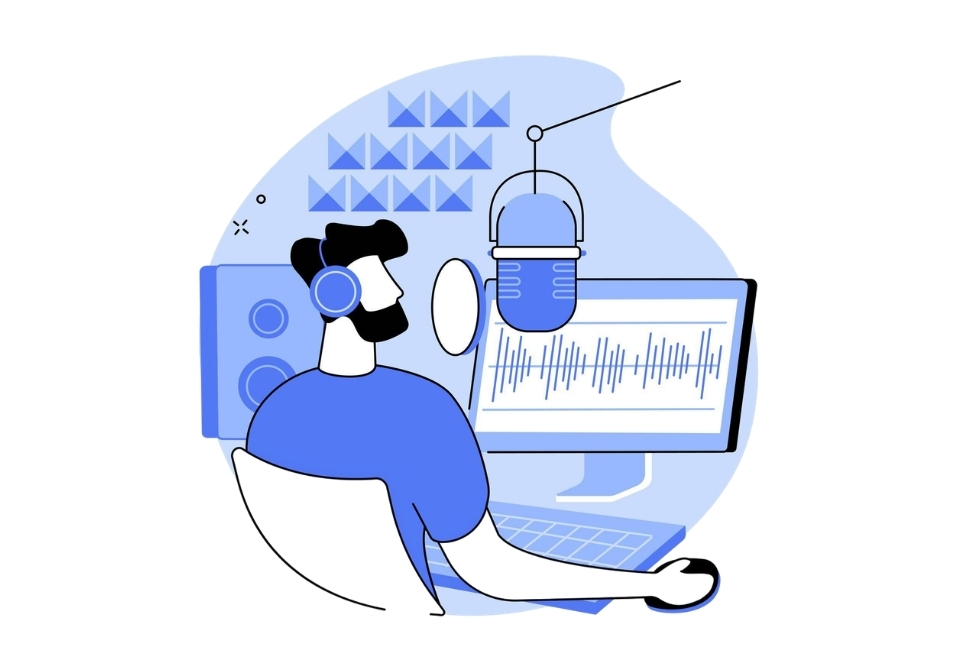
Voice cloning technology works by analyzing a voice sample, extracting its acoustic fingerprint, and generating a model that can read any new text in that same voice. The process is now fast enough to run inside a single platform with no engineering setup.
How Voice Cloning Works in Four Steps
- Capture the sample: Record a few minutes of natural speech in a quiet setting so the model learns tone, pacing, and delivery style accurately.
- Generate the voice model: The system processes the sample and builds a digital voice that reproduces the speaker with no external tools and no manual configuration.
- Assign the cloned voice: Apply the cloned voice to specific content, choosing where personal delivery adds value and where a standard voice is enough.
- Publish and deliver: The cloned voice reads the content aloud for every listener, at the right pace and tone, without re-recording each piece individually.
What Are the Biggest Voice Cloning Trends in 2026?
Voice cloning technology in 2026 is defined by four shifts that moved it from novelty to operational tool.
Real-time cloning now generates speech with near-zero latency, making live and interactive delivery practical. Multilingual cloning lets one voice speak fluently across languages critical for bilingual markets such as the GCC.
Emotion and style control lets organizations pick a register formal, conversational, warm, or storytelling to match the content. And consent-first governance has become the dividing line between credible providers and risky ones.
| Trend | What Changed in 2026 | Why It Matters |
| Real-time cloning | Near-instant voice generation | Enables live, interactive delivery |
| Multilingual output | One voice, many languages | Serves bilingual and global audiences |
| Style & emotion control | Selectable tone and pacing | Matches voice to content and audience |
| Consent-first governance | Explicit speaker authorization | Builds trust, meets GDPR and ISO standards |
What Are the Benefits of Voice Cloning Technology?
The core benefit of voice cloning technology is presence at scale: one recording session produces a voice that can deliver unlimited content without the original speaker being present.
For lean teams, this removes a brutal trade-off. Without voice cloning technology, growing your audience means repeating the same explanation across batch. After batch time a one- or two-person training business cannot afford to spend.
Voice cloning technology also protects the human connection that drives outcomes. Learners hear a familiar, trusted voice, which keeps engagement higher than impersonal text-to-speech narration ever could.
What Are the Top Use Cases for Voice Cloning in 2026?
Voice cloning technology in 2026 has clear, practical use cases across industries.
In corporate training, a trainer’s cloned voice narrates every course so learners feel taught by a real person at any hour. In localization, one cloned voice delivers content across multiple languages without re-hiring voice talent for each market.
Accessibility teams use voice cloning to give written material a natural spoken form, while customer support and media production teams use it for consistent, on-brand audio at volume.
How Is Voice Cloning Transforming Training Delivery?
Voice cloning technology is reshaping how training providers deliver at scale. The constraint was never the content it was the trainer having to be present, live, for every cohort.
Vocaliv applies voice cloning technology directly to that constraint. Vocaliv is the AI Operational Layer for Training Providers not an LMS and its Voice Cloning feature keeps a trainer’s own voice inside every course, even when the trainer is with other clients or taking time off.
“Generic text-to-speech gets the words right and loses the trainer. With Vocaliv, a trainer records a few minutes of audio once, and that cloned voice narrates every lesson across every cohort with course-level control, adjustable playback speed, and selectable speaking styles. The result is trainer presence without constant availability, so a small team can enroll more learners without scheduling more live sessions.” Learning Architecture Specialist at Vocaliv
Because Vocaliv operates under ISO/IEC 27001 and GDPR compliance, voice cloning runs on a consent-first basis: the trainer clones their own voice, deliberately, inside the platform.
Is Voice Cloning Technology Safe and Ethical in 2026?
Voice cloning technology is safe when it is built on explicit consent and strong data security. The misuse risk impersonation and fraud comes from unauthorized cloning, not from authorized use.
Responsible voice cloning in 2026 means the speaker authorizes their own voice, the underlying data is protected to recognized standards, and the cloned voice is used transparently. Credible platforms treat consent and security as non-negotiable.
Frequently Asked Questions
Voice cloning technology is AI that recreates a specific person’s voice from a short audio sample and uses it to speak new text.
Voice cloning technology analyzes a voice sample, builds a digital voice model, and generates speech in that voice for any new text.
Popular AI voice cloning platforms include Vocaliv, ElevenLabs, Murf AI, Resemble AI, and PlayHT.
The voice AI trend in 2026 is focused on realistic AI assistants, voice cloning, multilingual conversations, personalized learning, and AI-powered customer support using natural human-like interactions.
Yes, you can clone your voice for free using some AI voice platforms that offer limited free trials or basic voice cloning features, though advanced quality usually requires a paid plan.
The main benefits are scaling delivery without re-recording, preserving a recognizable human voice, and supporting multiple languages and styles.
Keep Your Voice in Every Course Without Being There Every Time
Voice cloning technology in 2026 gives training providers something rare. The ability to scale delivery without losing the personal voice that makes training work.
With Vocaliv, you record a short sample once, and your own voice narrates every course for every learner at the right pace, in the right tone, fully on your terms.