

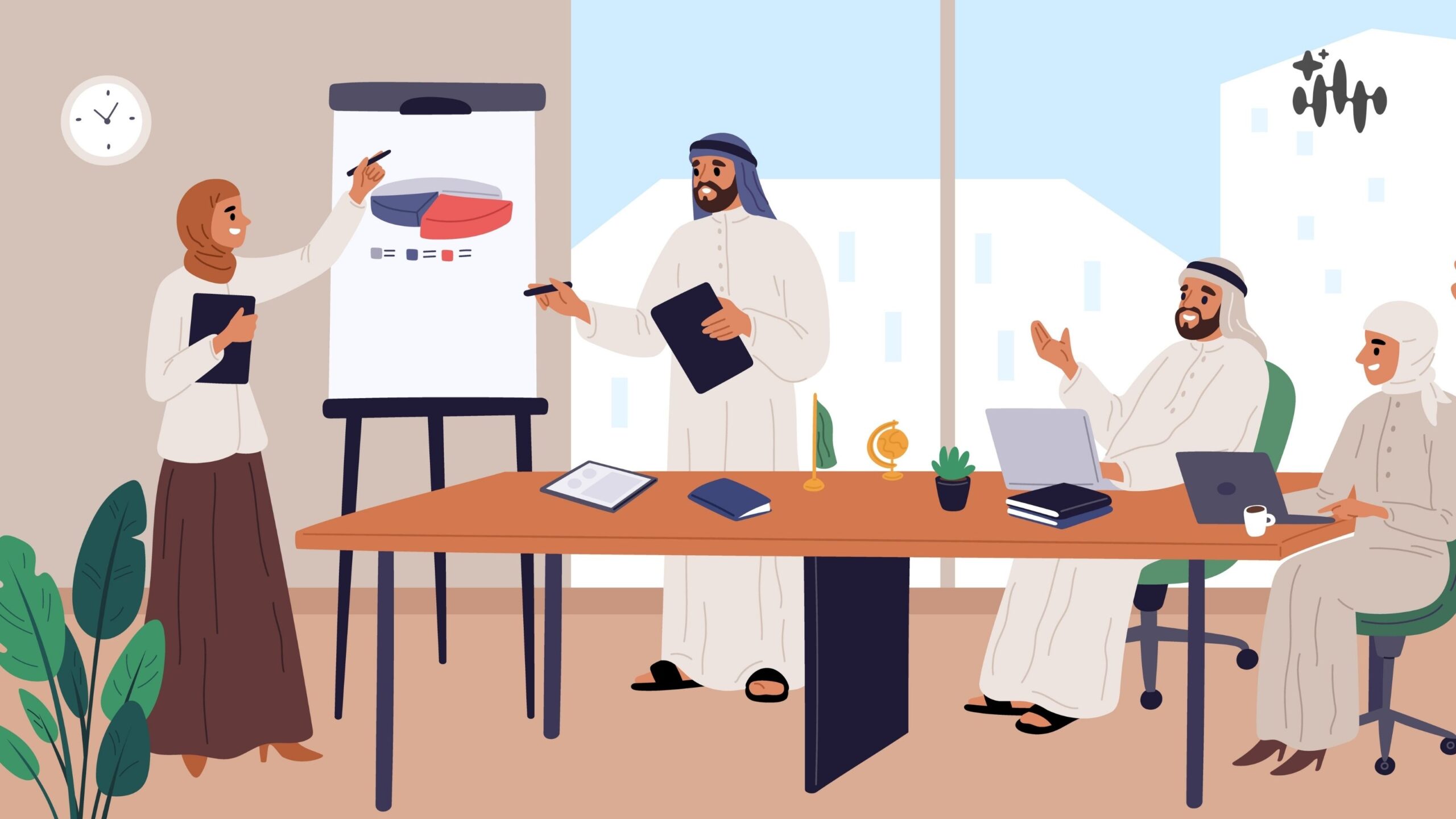
Soft skills training in Dubai refers to structured programmes that develop interpersonal, communication, leadership, and emotional intelligence competencies at work. The five most effective steps to improve workplace skills are: run a skills gap assessment, choose the right delivery format, contextualise training to your industry, build structured practice into the programme, and measure and reinforce learning over time.
Key Takeaways
- Soft skills communication, EQ, leadership, adaptability are as critical as technical skills in Dubai’s multicultural workforce
- A structured 5-step approach beats one-off workshops: diagnose, design, contextualise, practise, and measure
- AI-powered tools are changing how organisations scale soft skills development across distributed teams
- Training without manager reinforcement and measurement rarely produces lasting behaviour change
- Vocaliv delivers blended, AI-integrated soft skills training for SaaS, EdTech, and L&D organisations in Dubai and globally
Think about the last time a project went sideways at work. Was it a technology failure or was it a communication breakdown? A lack of leadership clarity? Someone who could not manage pressure in a high-stakes client meeting?
More often than not, the root cause is a soft skills gap. In Dubai, where teams are multicultural, businesses scale fast, and professional expectations are high, that gap has real consequences lost talent, missed deals, and dysfunctional teams.
The important thing to know is that soft skills are completely trainable. With the right approach to soft skills training in Dubai, individuals and organisations can build the communication, leadership, and emotional intelligence that actually move the needle.
What Are Soft Skills and Why Do They Matter in Dubai’s Workplace?
Soft skills are the behavioural and interpersonal competencies that determine how people work, communicate, and lead. Unlike technical skills, they transfer across every role, industry, and seniority level.
In Dubai’s professional environment where global businesses, government entities, and fast-growing tech startups coexist these capabilities are not a “nice to have.” They are a competitive differentiator.
- Communication: Clear, confident articulation across cultures, languages, and mediums
- Emotional Intelligence (EQ): Managing your own responses and understanding the emotions of others
- Leadership: Inspiring, directing, and developing people with clarity and empathy
- Adaptability: Thriving in fast-changing, ambiguous environments without losing effectiveness
- Collaboration: Working productively within diverse, cross-functional, and hybrid teams
- Problem-solving: Approaching challenges with structured thinking and creative confidence
- Time management: Prioritising intelligently under competing deadlines and demands
Key statistics:
- 92% of talent professionals say soft skills matter as much or more than technical skills LinkedIn Workplace Learning Report, 2024
- 85% of professional success is attributed to people skills, not technical expertise Carnegie Mellon / Stanford Research
- $1.3 trillion lost annually to disengagement and poor workplace communication Gallup State of the Workplace, 2023

Why Is Soft Skills Training Particularly Important in Dubai?
Dubai is one of the most multicultural professional markets in the world, with over 200 nationalities sharing offices, meeting rooms, and video calls daily. Communication styles, leadership expectations, and professional norms vary enormously across those cultures.
This creates a layer of complexity that generic, off-the-shelf training often fails to address. A workshop designed for a Western corporate audience may land very differently with an Emirati manager, a South Asian team lead, or a European expat professional.
Effective soft skills training in Dubai must account for cultural intelligence alongside core competencies. The goal is not to standardise behaviour it is to build a shared professional language that helps diverse teams collaborate, lead, and communicate with confidence.
Beyond culture, Dubai’s business pace is fast. The city’s position as a regional hub for finance, technology, real estate, and logistics means professionals regularly operate in high-pressure environments where emotional regulation, clear communication, and decisive leadership are essential, not optional.
What Are the 5 Steps to Improve Workplace Skills Through Soft Skills Training?
There is no shortage of communication workshops and leadership seminars in Dubai. What separates programmes that produce real results from those that do not is a structured process that connects learning directly to business outcomes.
Step 1: Run a Skills Gap Assessment Before Anything Else
The most common reason soft skills training fails is that organisations skip the diagnostic step. Without understanding exactly where the gaps are by role, team, or seniority level training becomes guesswork.
A meaningful assessment uses 360-degree feedback surveys, validated behavioural tools such as DiSC or Hogan, and structured conversations with managers to build a precise skills map. This is the foundation of every Vocaliv L&D engagement because training without data is expensive guesswork.
Step 2: Choose the Right Delivery Format for Your Team’s Reality
In a city where hybrid work is mainstream and teams are spread across Dubai, Abu Dhabi, and remote locations globally, a single delivery format rarely works. The most effective programmes combine live instructor-led sessions for experiential practice, e-learning modules for self-paced reinforcement, and on-the-job coaching for real-time application.
Vocaliv’s SaaS-based training platform makes it possible to deliver consistent, scalable programmes across distributed teams without sacrificing learning quality.
Step 3: Contextualise the Content to Your Industry and Team Culture
Generic soft skills content does not stick because it does not feel relevant. The programmes that produce lasting change are built around the actual situations your team faces every day.
For a SaaS sales team in Dubai Media City, that might mean assertive negotiation and objection handling. In case of a finance leadership cohort in DIFC, it could be executive presence and influencing without authority. For an EdTech team scaling rapidly, it might be cross-functional collaboration and giving feedback across cultural lines.
Step 4: Build Structured Practice Into the Programme
Soft skills do not develop through watching videos or reading frameworks. They require deliberate practice, real-time feedback, and repeated application in meaningful contexts.
The most effective programmes include role-play scenarios with structured debrief, AI-powered conversation simulations that provide instant feedback, peer coaching and accountability partnerships, and real-world assignments where new behaviours are applied in actual work situations.
Step 5: Measure Progress, Reinforce Behaviours, and Sustain the Learning
The most common failure point in soft skills development is treating training as a one-time event rather than a process. Behaviour change takes time, consistency, and structural support.
Effective programmes close the loop with post-training behavioural assessments, manager coaching conversations aligned to learning goals, quarterly micro-learning reinforcement, and measurable KPIs tied to team performance. Vocaliv’s LMS gives L&D leaders a real-time dashboard to track engagement, skill progression, and business impact.
Which Soft Skills Training Format Is Right for Your Organisation?
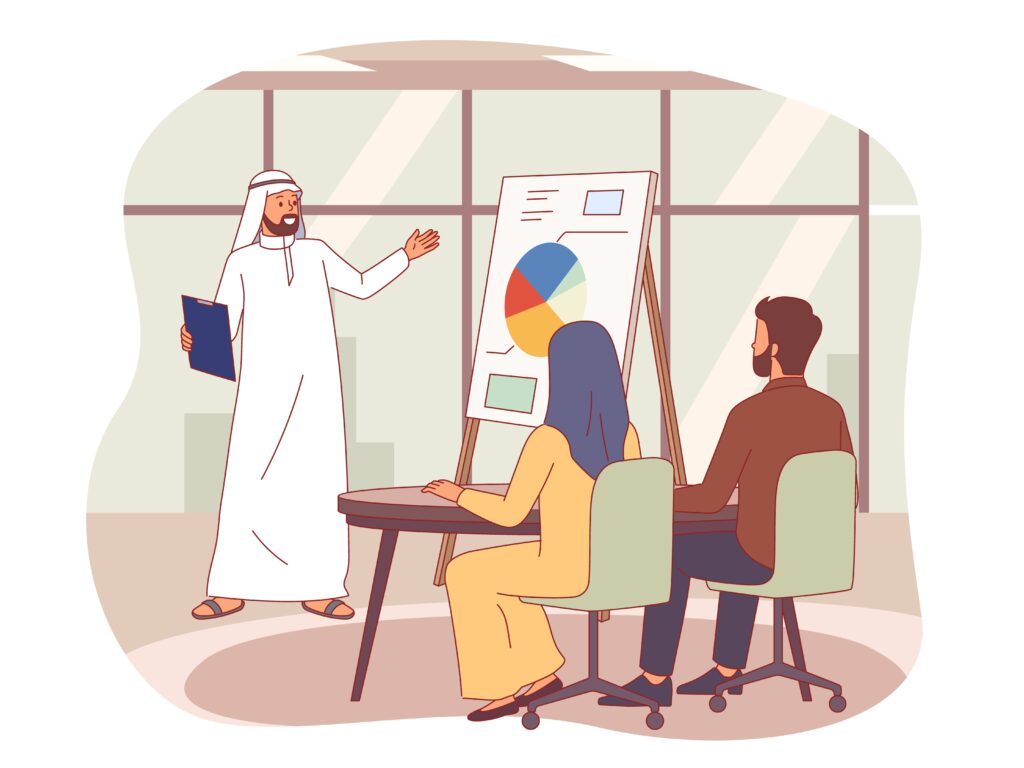
Choosing the right format is as important as the content itself. Here is a quick comparison to help L&D managers in Dubai decide what works best.
| Format | Best For | Delivery | Scalability | ROI Timeline |
| Instructor-Led Workshops | Leadership, teamwork, conflict resolution | In-person / Live Virtual | Small to mid-size groups | Short-term |
| E-Learning Modules | Communication, EQ, time management | Self-paced / LMS | Highly scalable, global | Medium-term |
| AI-Powered Simulations | Sales conversations, negotiation, presenting | Digital / App-based | Fully scalable, personalised | Short to medium |
| Executive Coaching (1:1) | Senior leaders, individual plans | In-person / Virtual | Individual / small cohorts | Long-term |
| Micro-Learning Programmes | Ongoing reinforcement, hybrid teams | Mobile / LMS push | Enterprise-scale | Ongoing cumulative |
How Is AI Changing Soft Skills Training in Dubai?
Artificial intelligence is not replacing the human element in workplace learning it is making human-centred development more precise, more personalised, and more scalable than before.
For L&D teams managing large or distributed workforces across Dubai and the broader GCC region, AI-powered tools remove the constraints of traditional training. Instead of running the same workshop for 300 employees, AI-driven platforms deliver a targeted experience to each individual based on their specific role, communication style, and development gaps.
At Vocaliv, AI is embedded into our soft skills training design not bolted on as a feature. It allows our clients across Dubai’s SaaS, EdTech, and government sectors to train smarter, measure more accurately, and develop talent at scale.
Specific Ways AI Enhances Soft Skills Development
- Conversational AI coaches that simulate high-stakes workplace scenarios and deliver instant, nuanced feedback
- Natural language processing (NLP) tools that analyse communication patterns to surface development areas
- Personalised learning pathways that adapt content, difficulty, and pacing based on each learner’s progress
- Sentiment analysis that helps teams understand how their communication style is perceived by others
- Live analytics dashboards giving L&D managers real-time visibility into skill progression and programme ROI
What Are the Most Common Mistakes in Workplace Soft Skills Training?
Plenty of organisations in Dubai invest in soft skills development and see minimal return. Here is what typically goes wrong and how a more intentional approach prevents it.
- Treating training as a one-time event: A single workshop produces no lasting behaviour change without reinforcement and accountability structures
- Skipping the needs assessment: Training without diagnosis means spending budget on content that may not address the actual gaps
- Ignoring manager involvement: If line managers do not reinforce new behaviours, skills regress within weeks
- Using generic content: Training that does not reflect your team’s real challenges and cultural context is quickly forgotten
- Failing to measure outcomes: Without defined KPIs and post-training assessment, it is impossible to demonstrate ROI
- Overlooking cultural nuance: In Dubai’s multicultural workforce, communication norms differ significantly training must account for this
Frequently Asked Questions
Soft skills training is the process of developing interpersonal abilities such as communication, teamwork, leadership, problem solving, and emotional intelligence to improve workplace effectiveness.
The 7 major soft skills are communication, teamwork, problem solving, adaptability, leadership, time management, and emotional intelligence.
The 5 C’s of soft skills are communication, collaboration, critical thinking, creativity, and confidence.
Ten examples of soft skills are communication, teamwork, problem solving, adaptability, leadership, time management, emotional intelligence, critical thinking, creativity, and conflict resolution.
Conclusion
Vocaliv designs and delivers AI-powered soft skills training for EdTech, SaaS, and L&D organisations across Dubai and the GCC. Tell us your goals we will build a programme that fits your workforce, your culture, and your timeline.


